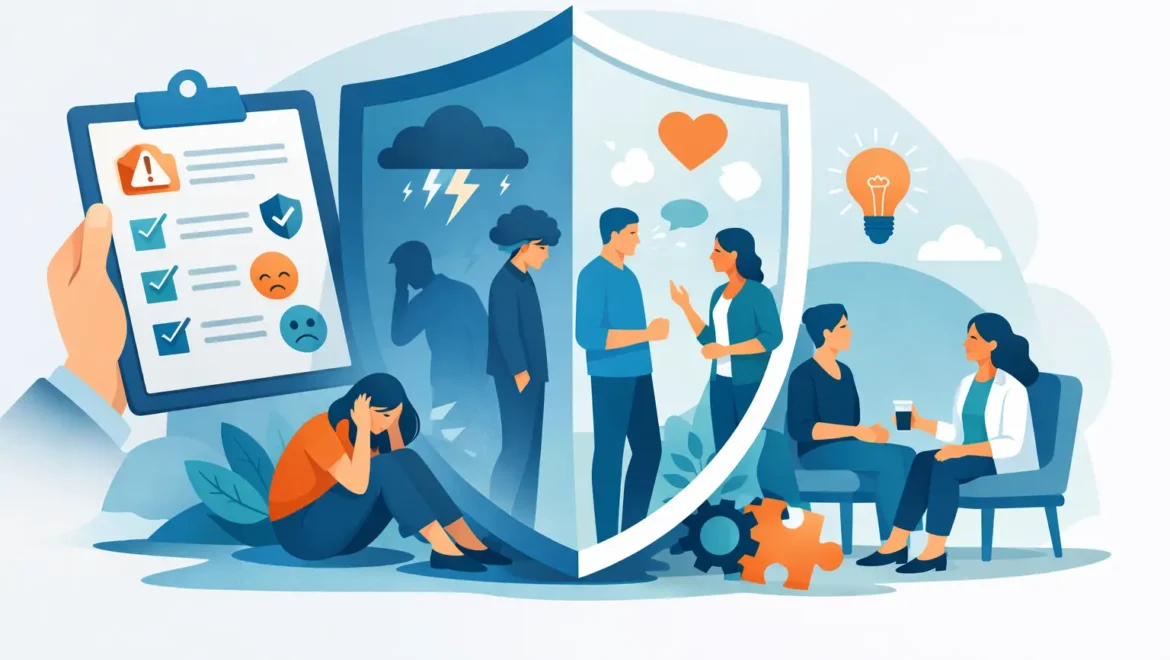
Category Archives: Mental Health

Employee Wellbeing Strategy That Works

Employee Wellbeing Strategy That Works

A fruit bowl in the kitchen and a mindfulness app subscription might look like a wellbeing program. They do very little, however, when your managers are overloaded, job demands are unrealistic, and people are quietly burning out. That is where an effective employee wellbeing strategy starts – not with perks, but with how work is designed, led and supported.

For Australian employers, this is no longer a nice extra. It sits at the intersection of performance, retention, legal duty and culture. When wellbeing is handled as a side project owned by HR alone, results are usually patchy. When it is treated as an operational and leadership priority, organisations are far more likely to reduce psychosocial risk, lift engagement and improve productivity.

What an employee wellbeing strategy should actually do

A strong employee wellbeing strategy is not a calendar of awareness days. It is a clear plan for improving the conditions that shape how people function at work. That includes workload, role clarity, manager capability, team culture, psychological safety, recovery, support pathways and the systems that influence day-to-day pressure.

The real test is simple. Does the strategy change work, or does it just ask employees to cope with unhealthy work more effectively?

That distinction matters. Resilience training can be valuable. So can mental health education, coaching and employee support services. But if those interventions sit on top of poor job design, low manager confidence or unresolved psychosocial hazards, they will not deliver the commercial or human outcomes leaders expect.

An effective strategy should help an organisation do three things at once. It should reduce risk, improve capability and support performance. If one of those is missing, the strategy is likely to underperform.

Why businesses are taking employee wellbeing strategy seriously

The business case is not hard to make. Poor mental health at work contributes to absenteeism, presenteeism, turnover, conflict, mistakes and workers compensation costs. It also affects leadership effectiveness and customer outcomes. In high-pressure sectors, the flow-on effects can be significant.

There is also a stronger compliance lens than many employers realise. Psychosocial hazards are now firmly on the agenda for boards, executives and WHS teams. That means organisations need more than good intentions. They need evidence that they have identified hazards, assessed risk and taken reasonable steps to manage them.

This is why mature organisations are shifting away from one-off wellbeing activities and towards integrated strategy. They want measurable impact. They want fewer psychological injury claims, stronger manager capability and healthier performance over time. They also want an approach that stands up to scrutiny if regulators, insurers or senior stakeholders ask hard questions.

The foundations of a practical employee wellbeing strategy

The best strategies are usually less glamorous than people expect. They focus on the basics that influence mental health every day.

Start with risk, not assumptions

Most organisations have a theory about what their people need. Fewer have quality data. A practical strategy starts with assessment. That may include psychosocial hazard reviews, people data, engagement feedback, absenteeism trends, exit themes, claims data, manager insights and direct employee consultation.

Without this step, it is easy to spend money on visible initiatives that miss the real problem. A team experiencing chronic overload will not be fixed by lunchtime yoga. A workforce with low role clarity needs sharper systems and better leadership communication, not another awareness poster.

Focus on the work environment

Employee wellbeing is shaped by the environment more than the individual. Workload, support, autonomy, civility, fairness and change management all matter. So does whether employees feel safe speaking up when something is not working.

This is where psychological safety becomes commercially relevant. Teams that can raise concerns early are more likely to address pressure before it becomes injury, burnout or disengagement. That reduces risk and improves decision-making.

Build manager capability

Most employee experience is local. People do not work for the organisation in the abstract. They work for a manager, inside a team, under certain pressures. If managers cannot recognise early signs of strain, hold supportive conversations, manage performance fairly and escalate issues appropriately, even a well-designed strategy will stall.

Manager training should be practical. Leaders need clear scripts, realistic case examples and guidance they can use in the next one-to-one, team meeting or performance discussion. Awareness alone is not enough.

Make support pathways usable

Many workplaces technically have support available, but employees do not trust it, do not understand it, or do not access it until problems are severe. A good strategy makes support visible, credible and easy to navigate.

That includes internal reporting pathways, external support options, escalation processes after critical incidents and clear role boundaries for managers. The goal is not to turn leaders into clinicians. It is to help them respond early and appropriately.

What to include in your strategy

The exact design will depend on workforce size, sector, risk profile and operating model. A government agency, a childcare provider and a multinational professional services firm will not need identical interventions. Still, most effective strategies include a similar mix of components.

Leadership commitment comes first. If executives frame wellbeing as separate from performance, teams notice. If leaders link psychological safety, workload management and healthy culture to business outcomes, the strategy gains traction.

Next comes governance. Someone needs to own implementation, reporting and accountability. Cross-functional involvement matters here. HR, WHS, operational leaders and executive sponsors all have a role. When wellbeing sits in one silo, blind spots increase.

From there, organisations usually need a layered action plan. That often includes psychosocial hazard management, leadership and manager training, employee education, critical incident capability, policy review, communication planning and measurement. The key is sequencing. Trying to launch everything at once often leads to noise rather than progress.

Common mistakes that weaken results

The first mistake is treating wellbeing as a campaign. Campaigns create attention. Strategy creates change. If there is no shift in workload, leadership behaviour, team norms or reporting confidence, the campaign may look active while outcomes remain flat.

The second is over-relying on individual responsibility. Encouraging employees to look after themselves is reasonable. Expecting them to carry the burden of poor systems is not. A strategy that puts all the emphasis on self-care can unintentionally increase frustration.

The third is failing to define success. If the only measure is participation in a webinar, you are not measuring impact. Better indicators may include reductions in absenteeism, improved manager confidence, stronger employee perceptions of support, fewer unresolved conflict issues and lower exposure to key psychosocial hazards.

A final mistake is assuming one solution fits every part of the business. Frontline teams, remote workers and leaders in high-risk environments face different pressures. Your strategy should have a clear organisation-wide framework, but enough flexibility to respond to local context.

How to measure whether the strategy is working

If wellbeing matters commercially, it should be measured like any other business priority. That does not mean reducing people to a spreadsheet. It means tracking whether your investment is improving conditions and outcomes.

Start with a baseline. Understand current risk exposure, confidence levels, absence patterns, turnover trends and employee feedback. Then identify a small number of lead and lag indicators. Lead indicators might include manager training completion, confidence to have early intervention conversations, or reported psychological safety. Lag indicators might include claims trends, absenteeism, turnover or engagement scores.

Not every metric will move quickly. Cultural shifts take time. But you should be able to see signs of progress if the strategy is well targeted and supported. If nothing is changing after a meaningful period, that is useful information. It may point to weak implementation, low leadership ownership or interventions that are not addressing the actual drivers of harm.

From policy to practice

The biggest gap in most organisations is not intent. It is translation. Leaders say wellbeing matters, yet managers are promoted without support, teams absorb constant change without recovery time, and policies sit untouched in shared drives.

Closing that gap requires practical capability-building. Workshops, masterclasses, assessments and targeted consulting all help when they are tied to real operational issues. The goal is to equip leaders and teams to make better decisions under pressure, not simply to increase awareness.

That is where specialist support can accelerate progress. Providers such as Workplace Mental Health Institute work with organisations to build capability that is evidence-based, commercially grounded and realistic for busy teams. The value is not in adding more theory. It is in helping employers create systems and leadership habits that people can actually use.

A credible employee wellbeing strategy does not promise a stress-free workplace. No serious leader should. What it can do is reduce unnecessary harm, strengthen resilience, improve psychosocial safety and support better performance across the organisation.

If your current approach relies more on perks than prevention, or more on posters than leadership practice, that is not a failure. It is a signal to reset. The most effective strategies begin with one honest question: what in our workplace is helping people thrive, and what is getting in the way?

20 workplace wellbeing survey questions

20 workplace wellbeing survey questions

If your wellbeing survey tells you people are “stressed” but not why, it is not giving you a decision-making tool. The right workplace wellbeing survey questions help you identify psychosocial risks, spot leadership gaps, measure psychological safety and prioritise action that improves performance, retention and risk reduction.

Too many organisations run broad engagement surveys and assume wellbeing is covered. It rarely is. Engagement data can tell you whether people feel connected to the business. It does not always tell you whether workloads are sustainable, whether managers are contributing to harm, or whether employees feel safe to speak up before pressure becomes burnout, conflict or psychological injury.

That distinction matters. In Australia, employers are under growing pressure to manage psychosocial hazards with the same seriousness they apply to physical safety. A wellbeing survey should not be a morale exercise. It should be a practical diagnostic that gives HR, WHS leaders and executives usable evidence.

What good workplace wellbeing survey questions should measure

Useful workplace wellbeing survey questions do more than ask whether staff are happy. They test the conditions that shape wellbeing at work. That includes workload, role clarity, autonomy, support, inclusion, leadership behaviour, team climate, recovery and confidence in reporting concerns.

This is where many surveys fall short. They ask broad questions such as “Do you feel valued?” or “Are you satisfied at work?” These can be helpful, but they are not enough on their own. If the results are poor, you still do not know what to fix. If the results are positive, you may still miss hidden risks inside particular teams or leadership layers.

A stronger approach is to combine sentiment with operational drivers. Ask people how they feel, but also ask what is causing that experience. That gives you cleaner data and a much better chance of turning survey findings into action.

20 workplace wellbeing survey questions that give you useful data

The best survey questions are clear, behaviour-based and tied to factors leaders can influence. These 20 questions are a strong starting point.

Workload and job demands

  1. My workload is manageable within my ordinary working hours.
  1. I have enough time to complete my work to the expected standard.
  1. I am able to take regular breaks and switch off from work when I am not working.
  1. Competing priorities are managed effectively in my role.

These questions matter because workload is one of the fastest ways wellbeing problems become business problems. If people are consistently over capacity, you will usually see it in absenteeism, errors, turnover, presenteeism and declining morale.

Role clarity and control

  1. I am clear about what is expected of me in my role.
  1. I have enough control over how I plan and complete my work.
  1. I receive the information I need to do my job effectively.

When role clarity is low, stress rises quickly. People waste energy guessing priorities, second-guessing decisions and trying to satisfy conflicting expectations. That is not just frustrating. It is inefficient.

Manager and leadership support

  1. My manager checks in on workload and wellbeing in a useful way.
  1. I feel comfortable raising concerns with my manager.
  1. Leaders in this organisation make decisions that support sustainable performance.
  1. My manager responds constructively when someone is struggling.

Leadership behaviour has an outsized impact on psychological safety and team wellbeing. One capable manager can stabilise a high-pressure team. One poorly equipped manager can create avoidable risk, even in a business with a strong wellbeing strategy on paper.

Team climate and psychological safety

  1. People in my team treat each other with respect.
  1. I feel safe to speak up about risks, mistakes or concerns.
  1. Conflict is managed appropriately in my team.
  1. I feel included and accepted at work.

These questions help identify whether the day-to-day team environment is protective or harmful. Psychological safety is often discussed as a cultural ideal. In practice, it is a performance issue. Teams that cannot raise concerns early tend to carry hidden problems for longer.

Support, recovery and capability

  1. I know where to find support if work is affecting my mental health or wellbeing.
  1. This organisation provides practical support that helps people stay well at work.
  1. I have the skills and resources to manage pressure in my role.

Support is not just about having a policy or helpline. Employees need to know what support exists, trust that it is appropriate, and believe using it will not damage their standing.

Change, fairness and trust

  1. Change is communicated clearly and managed well in this organisation.
  1. I trust this organisation to take employee wellbeing concerns seriously.

Periods of change often expose weaknesses in communication, decision-making and leadership visibility. If your organisation is going through restructure, growth, mergers or operating model shifts, these questions become even more important.

How to write better workplace wellbeing survey questions

The wording matters more than many organisations realise. If questions are vague, leading or emotionally loaded, your data will be noisy. That makes it harder to interpret results and harder to justify action.

Keep questions short and specific. Focus on observable conditions rather than assumptions about intent. For example, “My manager provides clear direction” is more useful than “My manager cares about me”. The first points to a behaviour that can be developed. The second is subjective and harder to act on.

A rating scale works well for most organisations, especially a five-point agreement scale. It gives enough variation without overcomplicating the response process. Include a small number of free-text questions if you have the capacity to analyse them properly. If not, you may end up collecting anecdotal detail without a clear path to action.

There is also a trade-off between depth and participation. A long survey may produce richer data, but response rates often fall. A shorter survey may be easier to complete, but too shallow to identify real risk drivers. For many organisations, the best option is a focused core survey supported by deeper follow-up in higher-risk teams.

What to avoid in a wellbeing survey

The fastest way to undermine trust is to ask for feedback and do nothing with it. Employees notice. So do managers. Survey fatigue does not come from being asked a question. It comes from seeing no meaningful response.

It also helps to avoid questions that blur personal life and work factors unless you are very clear about why you are asking. A workplace wellbeing survey should focus primarily on work-related conditions the organisation can influence. Employers cannot control every pressure in a person’s life, but they are responsible for the systems, behaviours and demands they create at work.

Avoid using the survey as a branding exercise. If the wording sounds like it was designed to prove the culture is positive, employees will read that immediately. The result will be lower trust and less honest data.

Turning survey results into action

The value of a survey sits in what happens next. Start by looking for patterns, not just averages. Organisation-wide scores can hide serious problems in one function, one site or one manager cohort. Segment the data carefully while protecting confidentiality.

Then prioritise. You do not need to fix everything at once, and trying to do so usually leads to scattered action. Focus on the issues with the greatest combination of risk, scale and business impact. That might be workload in frontline teams, low confidence in managers, poor role clarity during change, or weak reporting culture.

From there, assign ownership. If the issue is manager capability, the answer may be targeted leadership training. If the issue is workload, review job design, resourcing and decision rights. If the issue is psychological safety, look at leader behaviour, communication habits and team norms. Different problems need different interventions.

This is where many organisations move too quickly to wellbeing perks. Perks can be useful, but they do not offset harmful work design. Yoga classes will not solve chronic overload. A wellbeing app will not fix poor supervision. The highest return usually comes from addressing root causes.

At Workplace Mental Health Institute, this is the practical shift we encourage clients to make: move from awareness to capability, and from generic wellbeing activity to measurable risk reduction and performance improvement.

When to run a wellbeing survey

Annual surveys are common, but they are not always enough. If your organisation is experiencing high change, rising claims, poor engagement, elevated turnover or known psychosocial risks, a yearly pulse may be too slow.

A mixed rhythm often works better. Use a more comprehensive survey periodically, then shorter pulse checks to monitor specific risk areas and whether interventions are working. That approach gives leaders feedback they can actually use, rather than a static report that is out of date within weeks.

The strongest wellbeing surveys are not the ones with the nicest scorecards. They are the ones that tell the truth clearly enough for leaders to act. Ask better questions, and you give your organisation a real chance to build a safer, healthier and higher-performing workplace.

Employee Wellbeing Measurement Tools That Work

Employee Wellbeing Measurement Tools That Work

A wellbeing strategy usually starts with good intent and ends with a familiar question from leadership: what changed? That is where employee wellbeing measurement tools matter. If you cannot show movement in risk, capability, engagement, absenteeism or psychological safety, wellbeing stays stuck as a nice idea instead of becoming a business discipline.

For HR leaders, WHS professionals and executives, measurement is not about reducing people to a score. It is about making better decisions. It helps organisations identify psychosocial hazards earlier, target investment where it will have the most impact, and show whether leaders, managers and teams are actually building healthier ways of working.

What employee wellbeing measurement tools should measure

The first mistake many organisations make is measuring only participation. Counting how many employees attended a webinar or opened an app tells you very little about whether wellbeing improved. Activity data has a place, but it is not an outcome.

Useful employee wellbeing measurement tools track both lead and lag indicators. Lead indicators help you spot emerging pressure before it becomes injury, conflict or turnover. Lag indicators show the business cost once problems are already established. You need both, because one without the other creates blind spots.

At a practical level, that means looking across psychological safety, workload sustainability, manager capability, role clarity, connection, recovery, help-seeking confidence and trust in leadership. It also means connecting these softer indicators to harder outcomes such as unplanned leave, workers compensation claims, turnover, engagement scores, grievance trends and productivity drag.

This is where many organisations get caught. They run a broad engagement survey once a year and assume it covers wellbeing. It usually does not. Engagement and wellbeing overlap, but they are not the same. A team can be highly committed and still be heading towards burnout.

The main types of employee wellbeing measurement tools

The right mix depends on your risk profile, size and operational complexity. A national employer with frontline exposure, fatigue risk and psychological injury claims will need a different measurement system from a professional services firm with turnover and workload issues.

Survey-based tools

Surveys remain one of the most common employee wellbeing measurement tools because they can scale quickly across large workforces. When designed properly, they give organisations a baseline, reveal hotspots by team or cohort, and provide a repeatable way to track progress over time.

The value sits in the questions. Generic pulse surveys often miss psychosocial risk factors that matter in real workplaces. Better tools assess workload, autonomy, support, civility, change fatigue, confidence to speak up, role clarity and perceptions of leader behaviour. If you are serious about risk reduction, these dimensions matter more than broad questions about whether staff feel happy at work.

Short pulse surveys can be especially useful during periods of change. They pick up movement faster than annual surveys and let leaders respond before problems harden into claims, resignations or long-term absence. The trade-off is depth. A pulse can tell you something is shifting, but not always why.

Psychosocial risk assessments

For Australian employers, this category matters more than ever. Psychosocial hazard obligations have changed the conversation from optional wellbeing activity to more formal risk management. A psychosocial risk assessment looks at the work itself, not just how individuals feel about it.

That distinction is critical. If your data shows rising stress in a team, the next question is whether the cause is job design, workload, poor support, traumatic exposure, conflict, bullying risk, low control or unclear expectations. A risk assessment helps organisations move from symptom tracking to prevention.

This is particularly valuable for boards, executives and WHS teams that need evidence they are identifying, assessing and responding to psychosocial hazards in a structured way. It also helps avoid a common trap: placing responsibility for coping entirely on employees when the work environment is the primary issue.

HR and operational data

Some of the most powerful wellbeing insights are already sitting inside the business. Absenteeism, turnover, exit interview themes, injury claims, EAP utilisation trends, overtime patterns, rostering instability and grievance data can all act as early warning signals.

On their own, these metrics are imperfect. A low EAP usage rate might reflect low distress, or it might reflect low trust. High attendance might signal commitment, or presenteeism. That is why operational data works best when combined with employee feedback and manager insight.

Still, these measures matter because they translate wellbeing into commercial language. When burnout shows up as rising sick leave, delayed projects, safety incidents or leadership churn, the case for action becomes much harder to dismiss.

Qualitative tools

Focus groups, listening sessions and structured interviews often reveal what dashboards miss. They help organisations understand context, especially in complex environments where numbers alone can flatten the real picture.

For example, survey results may show low trust in one division. Qualitative follow-up can uncover whether that comes from poor communication during change, inconsistent manager behaviour, unrealistic KPIs or unresolved conflict. Without that context, interventions often miss the mark.

The caution here is consistency. Qualitative methods can be rich, but they should be structured enough to identify themes rather than amplify the loudest voices in the room.

How to choose the right tools

The best system is rarely a single tool. It is a measurement framework that matches your workforce risks and business priorities.

Start with purpose. Are you trying to meet psychosocial compliance obligations, reduce psychological injury claims, improve retention, lift manager confidence, or build a stronger wellbeing strategy? Usually it is a combination, but the priorities shape the measurement approach.

Then look at your operating environment. A dispersed workforce, shift-based workforce or trauma-exposed workforce will need different questions and different reporting rhythms from an office-based team. The same goes for maturity. If your organisation is early in its journey, a clear baseline assessment may be more valuable than a complicated dashboard with too many indicators.

Good tools should also be credible to employees. If staff do not trust confidentiality, or they believe nothing will change, response quality drops fast. Measurement is not just technical. It is cultural. The process has to show people that feedback leads to action.

What good measurement looks like in practice

Effective measurement has three features. It is regular enough to show trends, specific enough to guide action, and connected enough to business outcomes that leaders pay attention.

A practical model might combine a baseline psychosocial risk and wellbeing assessment, quarterly pulse checks in priority teams, and monthly review of core operational indicators such as absenteeism, turnover and claims. From there, targeted focus groups or manager debriefs can help interpret the data.

This is also where capability matters. Measurement without response can make things worse. If a survey identifies excessive workload, poor manager support and low psychological safety, leaders need a plan. That may mean manager training, job redesign, clearer escalation pathways, leadership coaching, workload reviews or team-based interventions.

The point is not to collect more data than you can use. It is to collect the right data and act on it with discipline.

Common mistakes that weaken wellbeing measurement

One common mistake is treating wellbeing as an annual campaign rather than an operating metric. Another is relying on vanity measures such as event attendance or app downloads while ignoring fatigue, workload and leadership behaviour.

A third mistake is separating wellbeing from WHS, performance and culture. In practice, these issues interact constantly. Psychological safety affects speaking up. Speaking up affects risk reporting. Risk reporting affects incident prevention. Wellbeing is not a side program. It sits inside how work gets done.

There is also a tendency to overcomplicate things. Not every organisation needs a huge metric suite. In many cases, a smaller set of well-chosen indicators, tracked consistently and tied to action, will outperform an impressive-looking dashboard that nobody uses.

Why this matters now

Australian employers are facing tighter scrutiny on psychosocial hazards, rising expectations from employees, and growing pressure to do more with limited capacity. That combination makes poor measurement expensive. If you cannot see where risk is building, you are left reacting to claims, conflict, turnover and disengagement after the damage is done.

By contrast, strong employee wellbeing measurement tools help leaders move earlier and with more precision. They support compliance, but they also do something more valuable. They show where better leadership, better job design and better support can improve resilience, retention and performance at the same time.

For organisations that want wellbeing to be more than a poster campaign, measurement is not the admin task at the end. It is the mechanism that turns good intentions into accountable action. Start there, measure what matters, and let the data lead you towards a workplace people can actually sustain.

Vicarious Trauma Training for Staff That Works

Vicarious Trauma Training for Staff That Works

Some roles ask people to stay steady while absorbing other people’s distress all day. That might be a child protection team, a contact centre handling crisis calls, a people leader managing repeated critical incidents, or a frontline worker exposed to trauma narratives week after week. In these settings, vicarious trauma training for staff is not a nice-to-have. It is a risk control, a capability investment, and a practical way to protect performance.

When organisations miss this, the cost rarely shows up in one dramatic moment. It appears in creeping exhaustion, blunted empathy, lower concentration, rising sick leave, disengagement, conflict, and avoidable turnover. In more serious cases, it contributes to psychological injury claims and long recovery periods. For employers managing psychosocial hazards, that makes training both a people issue and a business issue.

What vicarious trauma training for staff should actually cover

Good training does more than explain what vicarious trauma is. Awareness matters, but awareness on its own does not change behaviour, team norms, or escalation pathways. Staff need practical skills they can use during a demanding shift, after a difficult interaction, and over the long term.

At a minimum, training should help people recognise the difference between normal stress, burnout, compassion fatigue, and vicarious trauma. Those experiences can overlap, but they are not interchangeable. If staff are told that every sign of strain is simply burnout, the response can become too generic. Vicarious trauma has a specific link to cumulative exposure to other people’s trauma, and the control measures need to reflect that.

Training should also cover early indicators in a way that feels usable rather than clinical. Changes in worldview, emotional numbing, increased vigilance, irritability, intrusive thoughts, reduced patience with clients or colleagues, and a growing sense of hopelessness are all relevant. The point is not to turn staff into diagnosticians. It is to help them notice when exposure is starting to shape how they think, respond, and function at work.

Just as importantly, effective programs teach protective practices. That includes boundaries around exposure, deliberate decompression routines, peer support, reflective supervision, help-seeking pathways, and team habits that reduce cumulative load. Staff need language for these issues and confidence to raise them early. Managers need the skill to respond without minimising, overreacting, or pushing the problem back onto the individual.

Why awareness-only training falls short

Many organisations have delivered a one-hour session on trauma and assumed the box was ticked. It rarely is. If the content stops at definitions and warning signs, staff may leave more informed but no better equipped.

That creates a common problem. People can now identify the risk, but they still do not know what to do in the middle of a high-pressure week when caseloads are heavy, stories are confronting, and operational demands keep moving. Without practical application, training can even increase frustration because staff recognise the issue more clearly while the system around them stays the same.

A stronger approach links education to role-specific scenarios and operating conditions. What does healthy boundary-setting look like in a service environment where urgency is real? How should a manager run a check-in after a confronting incident? When should exposure be rotated, and when is rotation unrealistic? These are the questions decision-makers need answered.

This is where organisations often see the biggest return. Training that changes day-to-day practice supports lower risk exposure, better team functioning, and earlier intervention. It also signals that psychological safety is being managed seriously, not reduced to a generic wellbeing message.

The business case for training

Senior leaders do not need convincing that people matter. What they often need is a clearer line between vicarious trauma and business impact. That line is not difficult to draw.

Repeated exposure to traumatic material affects attention, judgement, emotional regulation, communication, and decision quality. In client-facing or high-risk environments, those effects can compromise service quality and increase the chance of mistakes. Over time, they also undermine morale and make retention harder, especially in sectors already dealing with workforce shortages.

There is also a compliance dimension. Psychosocial hazards are now firmly on the agenda for Australian employers. If staff are routinely exposed to traumatic material or distressed individuals, that exposure should be considered in risk management processes. Training is not the whole answer, but it is a defensible and necessary control when combined with supervision, workload management, escalation pathways, and leadership capability.

For many organisations, the financial case becomes clearest when they look at absenteeism, workers compensation exposure, turnover costs, and manager time spent dealing with preventable issues. Replacing experienced staff is expensive. So is leaving leaders unsupported to manage complex emotional risk without the tools to do it properly.

How to design vicarious trauma training for staff

The most effective training starts with the reality of the role. A generic session delivered the same way to every team will only go so far. Exposure profiles differ between sectors and functions. A family violence service, a school wellbeing team, an investigations unit, and a contact centre handling aggressive or distressed callers may all face trauma-related risk, but the patterns of exposure are different.

That means content should be tailored to three levels.

At the staff level, the focus is on recognition, boundaries, recovery practices, and help-seeking. At the manager level, it is about psychologically safe leadership, noticing changes in team functioning, having effective conversations, and activating supports early. At the organisational level, the work is broader again: supervision structures, workload design, incident response, peer support systems, and clear protocols for repeated exposure.

Delivery format matters too. One-off eLearning can support baseline awareness, but it is usually not enough on its own for higher-risk roles. Facilitated workshops, scenario-based discussion, and manager capability sessions create better transfer into the real workplace. Some organisations benefit from refresher sessions or short masterclasses because the risk is ongoing, not seasonal.

There is also a trade-off to manage. Training needs to be psychologically informed without becoming heavy or overwhelming. Too much graphic detail can do harm. Too little realism and the session feels detached from the work. Skilled facilitators know how to hold that line and keep the focus on practical capability rather than emotional overload.

What leaders and managers need to do differently

If staff training happens in isolation, results will be limited. Team culture is shaped by leaders. If managers reward constant availability, ignore warning signs, or treat emotional impact as personal weakness, training will not stick.

Managers need a clear framework for prevention and response. They should know how to structure check-ins, what language reduces defensiveness, how to monitor cumulative exposure, and when to adjust work or escalate support. They also need permission from the organisation to act. There is little value in training managers to identify risk if they have no practical options once they do.

Leaders set the tone in other ways too. When executives talk about psychosocial safety as part of operational excellence, teams are more likely to treat it as legitimate business practice. When they frame support as resilience-building and risk reduction rather than fragility, engagement tends to improve.

This is one reason specialist providers such as Workplace Mental Health Institute focus on capability, not just content. The goal is to help organisations build habits, supervision quality, and leadership confidence that continue long after the workshop ends.

How to know if the training is working

A good program should produce more than positive feedback forms. Organisations should look for leading indicators and operational outcomes.

In the short term, that may include better manager confidence, earlier reporting of concerns, stronger use of supervision, and clearer team language around boundaries and exposure. Over time, the measures become broader: retention, psychological safety scores, absenteeism patterns, incident follow-up quality, and reductions in psychosocial risk hotspots.

Not every benefit will show up immediately, and causation is rarely neat. Even so, training should be evaluated against business outcomes, not just attendance. If the program is effective, leaders should see changes in behaviour, not merely improved awareness.

The strongest organisations treat this as part of their broader psychosocial risk strategy. They do not ask training to solve workload design problems or poor leadership. Instead, they use it as one essential piece of a system that supports safer work, stronger teams, and more sustainable performance.

When people are exposed to others’ trauma as part of doing their job, the answer is not to tell them to toughen up or simply practise more self-care. The better response is to build a workplace where skill, supervision, leadership, and systems work together. That is what makes support credible, and that is what keeps good people well enough to keep doing important work.

Suicide Prevention Training for Workplaces

Suicide Prevention Training for Workplaces

A manager notices a high performer has gone quiet, missed deadlines and started withdrawing from the team. They know something is off, but they do not know what to say, what not to say, or when a situation has crossed into real risk. That gap is exactly why suicide prevention training for workplaces matters. It gives leaders and employees practical capability to recognise warning signs, respond early and escalate appropriately, rather than hoping someone else will step in.

For employers, this is not a fringe wellbeing topic. It sits at the intersection of psychosocial risk, psychological safety, leadership capability and duty of care. When organisations get this wrong, the cost is human first, but it is also operational. Teams lose trust. Managers avoid difficult conversations. Absenteeism rises. Psychological injury claims become more likely. Training will not remove every risk, and it should never be treated as a substitute for clinical care, but it can materially improve how a workplace identifies, responds to and reduces harm.

What suicide prevention training for workplaces actually does

Good training does more than raise awareness. Awareness alone rarely changes behaviour under pressure. In a real situation, people need a clear framework for noticing changes, starting a conversation, asking direct questions when needed, responding without panic and connecting the person to the right support pathway.

That matters because most workplace risks do not arrive labelled. Distress can present as conflict, presenteeism, uncharacteristic mistakes, emotional withdrawal, agitation or a sudden drop in engagement. Without training, managers often misread these signs as performance problems only. With training, they are better equipped to consider whether distress, overwhelm, trauma exposure or suicide risk may also be in the picture.

The strongest programs also clarify boundaries. Managers are not expected to become counsellors. HR is not expected to provide therapy. Colleagues are not expected to carry risk alone. Effective training defines roles, escalation points, documentation expectations and crisis response pathways so the organisation can act quickly and consistently.

Why organisations are prioritising this now

There is a commercial reason and a legal reason, but there is also a culture reason. Australian employers are operating in a tighter psychosocial risk environment, with stronger expectations around prevention, not just response. If a workplace has high job demands, poor support, bullying, traumatic content exposure, fatigue, role ambiguity or low manager capability, the risk profile increases. Suicide prevention training does not solve all of those hazards, but it helps organisations identify when pressure is becoming dangerous and respond before harm escalates.

The business case is straightforward. When managers feel unprepared, they delay conversations or handle them inconsistently. That can increase risk, create confusion and drive avoidable disruption across teams. By contrast, trained leaders are more likely to intervene earlier, use appropriate language, follow internal protocols and maintain trust. That improves psychological safety, reduces uncertainty and supports better decision-making in moments that matter.

It also sends a clear signal about leadership standards. Employees do not expect perfection. They do expect their workplace to take mental health risk seriously and equip leaders with more than generic wellbeing messages.

What effective workplace suicide prevention training includes

The quality of training varies widely. Some sessions are too theoretical to be useful. Others are so compliance-heavy that people leave knowing the policy but not how to have the conversation. The most effective workplace programs balance clinical credibility with operational reality.

At a minimum, training should cover warning signs, common misconceptions, how suicide risk may present at work, how to ask about someone’s safety in a calm and direct way, what immediate actions to take, and when to escalate. It should also address the organisational environment around the person, including workload, interpersonal conflict, trauma exposure and support systems.

For managers, scenario practice is essential. Reading a slide about supportive conversations is not the same as speaking to an employee who is distressed, defensive or trying to brush the issue aside. Practical rehearsal builds confidence and reduces the chance that a manager will default to vague language or avoid the issue altogether.

For HR and WHS teams, training should go further. They often need stronger capability in case coordination, post-incident response, documentation, privacy considerations, referral pathways and psychosocial hazard management. In higher-risk sectors, training may also need to account for shift work, remote sites, critical incidents, customer aggression or repeated trauma exposure.

One size does not fit every workforce

This is where many organisations waste budget. They buy a standard session and assume the job is done. In practice, training should reflect the workforce, the risk profile and the level of responsibility held by participants.

A frontline manager needs different skills from an executive. A contact centre team facing aggression from customers needs a different lens from a professional services firm dealing with chronic overload and burnout. A national employer with dispersed teams needs a more scalable and consistent response model than a single-site business.

It also depends on training maturity. Some organisations are starting from low confidence and need foundation capability. Others already have strong mental health literacy and need more advanced training focused on risk recognition, escalation and postvention planning. The best approach is usually staged, with role-specific learning rather than a single awareness session for everyone.

Training is only effective if systems back it up

This is the main trade-off leaders need to understand. Training builds capability, but capability without process creates risk. If you teach people to identify warning signs and ask direct questions, you also need a clear internal response pathway. Otherwise, employees and managers may recognise danger but still be unsure what happens next.

That means having practical protocols in place. People should know who to contact, how urgent concerns are escalated, what after-hours options exist, how to document concerns, and how to support the wider team if an incident occurs. If your organisation has high-risk roles or remote workers, those pathways need to be even clearer.

It also means looking upstream. If your workplace is marked by chronic overload, poor role clarity, weak supervision or unmanaged conflict, suicide prevention training should sit within a broader psychosocial risk strategy. Training helps people respond. Good work design helps reduce the conditions that can intensify distress in the first place.

How to choose the right provider

For a topic this sensitive, provider quality matters. You need facilitators with genuine mental health expertise, but that alone is not enough. They also need to understand organisational realities – leadership pressure, legal exposure, frontline constraints, escalation processes and the difference between awareness and capability.

Look for training that is practical, interactive and aligned to your operating environment. Ask whether it can be customised by role, sector and risk level. Ask what participants will actually be able to do differently afterwards. Ask how the provider approaches psychologically safe delivery, because poor facilitation can unsettle participants without building useful skill.

Measurement matters too. If the only outcome is attendance, you cannot prove value. Strong programs assess shifts in confidence, knowledge, behavioural readiness and leader capability. Over time, organisations may also track indicators such as manager intervention confidence, support uptake, psychological safety scores, absenteeism trends and critical incident response quality.

This is where specialist providers stand apart. Workplace Mental Health Institute, for example, frames training as part of broader organisational capability – not a standalone awareness event, but a practical intervention linked to risk reduction, leadership effectiveness and stronger psychosocial safety.

What successful implementation looks like

The organisations that get results usually treat this as a leadership and systems issue, not just a learning event. They brief leaders properly, position the training clearly, tailor it to the audience and integrate it with existing wellbeing, WHS and people processes.

They also pay attention to timing and follow-through. If a workforce is under significant pressure, a single workshop without reinforcement will fade quickly. Refresher sessions, manager toolkits, escalation guides and post-training communication help turn knowledge into consistent practice. In some workplaces, it makes sense to start with leaders and HR, then expand to broader teams once the internal support structure is ready.

Just as important, successful organisations avoid overpromising. Training improves preparedness. It does not make every manager an expert, nor does it eliminate risk. What it does is move the workplace from uncertainty to action. That shift alone can be significant.

For leaders weighing the investment, the question is not whether every workplace needs the same program. It is whether your people currently know how to respond if someone is at risk. If the answer is unclear, that uncertainty is a risk in itself. Practical, evidence-based training gives your organisation a better chance of responding early, responding well and building a workplace where people are more likely to be seen before a crisis deepens.

Manager Mental Health Training That Works

Manager Mental Health Training That Works

A manager can spot a slip in performance long before HR sees a trend line. They hear the strain in a one-on-one, notice when a reliable employee starts withdrawing, and shape whether a team feels safe speaking up. That is why manager mental health training matters so much. It is not a feel-good extra. It is a frontline capability that affects risk, retention, performance and culture every day.

Many organisations still expect managers to carry this responsibility with little more than goodwill and a policy document. That gap shows up quickly. Managers avoid difficult conversations because they fear saying the wrong thing. Employees stay silent until issues escalate. Early warning signs are missed. Teams begin to normalise overload, conflict or psychological strain as just part of the job.

For Australian employers, the cost of that hesitation is rising. Psychosocial hazards are now firmly on the agenda for boards, executives, HR and WHS leaders. Businesses are under pressure to show they are not only aware of mental health risks, but actively building capability to prevent harm and respond appropriately. Training managers is one of the most direct ways to do that.

Why manager mental health training is a business issue

When a manager lacks confidence in this area, the consequences are rarely contained to one conversation. Poor responses can contribute to burnout, absenteeism, presenteeism, conflict, disengagement and psychological injury claims. Even when harm is unintentional, the commercial impact is real.

On the other hand, capable managers strengthen protective factors at work. They set reasonable expectations, hold clearer boundaries, notice changes in behaviour, respond earlier and escalate concerns appropriately. They also influence the everyday conditions that support psychological safety, such as respect, clarity, fairness and manageable workloads.

This is where many organisations get stuck. They treat mental health as a wellbeing stream, while operational leaders see performance as a separate issue. In practice, they are tightly connected. Teams do better work when they are led well, when psychosocial risks are managed, and when managers know how to have effective conversations under pressure.

That makes training a commercial lever as much as a people initiative. Better manager capability can reduce avoidable risk, improve leader confidence and support more consistent decision-making across the organisation.

What good manager mental health training should include

Not all training delivers the same outcome. Awareness-only sessions might improve intent, but they often fail to change day-to-day management behaviour. If the goal is measurable impact, the content needs to move beyond general education.

Strong manager mental health training should help leaders recognise early signs of distress without expecting them to diagnose anyone. That distinction matters. Managers are not clinicians, and training should never position them as such. Their role is to notice, respond, support within role boundaries, and connect people with the right internal pathways.

It should also cover how work itself contributes to mental health outcomes. Excessive job demands, poor role clarity, low support, conflict, poor change management and lack of control are not abstract concepts. They are practical management issues. If training ignores psychosocial hazards and focuses only on individual coping, it misses the point.

A useful program will also teach managers how to start conversations that are direct, respectful and legally aware. That includes what to say, what not to say, how to document concerns appropriately, when to involve HR or WHS, and how to balance care with accountability. Managers need scripts, scenarios and rehearsal, not theory alone.

Finally, the training should be designed for application. Workshops, facilitated discussion, realistic case studies and practical tools usually outperform passive learning when behaviour change is the goal. The strongest programs leave managers with clear actions they can use in their next one-on-one, team meeting or performance conversation.

The difference between awareness and capability

This is where many organisations waste budget. They run a broad mental health awareness session, then assume managers are equipped. Usually, they are not.

Awareness helps people understand that mental health matters. Capability helps them act effectively under real workplace conditions. Those are different outcomes. A manager may leave an awareness session agreeing with the message, but still feel unsure about responding to a distressed employee, managing a team through fatigue, or addressing behaviour that is affecting others.

Capability-based training is more demanding, but it is also more useful. It builds judgment, confidence and consistency. It gives managers a framework for responding to issues without overstepping their role. It also helps reduce the fear that often causes inaction.

For leaders in high-pressure environments, this distinction is critical. If managers are expected to manage performance, support wellbeing, reduce psychosocial risk and maintain team output, they need training that reflects that reality.

What outcomes organisations can expect

Well-designed training does not solve every workplace mental health issue on its own. Culture, systems, workload design and leadership expectations still matter. But manager training is one of the most practical interventions because it targets the people who shape the daily employee experience.

The most common early gains are improved confidence and faster intervention. Managers become more willing to initiate conversations, identify risk factors earlier and use internal support processes more appropriately. That can reduce the lag between someone struggling and someone stepping in.

Over time, organisations often see broader operational benefits. These may include lower absence rates, fewer escalated people issues, more consistent management behaviour and stronger employee trust in leaders. In some settings, it also contributes to fewer psychological injury claims and improved retention, especially where manager behaviour has been a known pressure point.

The exact return depends on the starting point. A business with high turnover, poor role clarity and unmanaged workload issues will not fix everything through training alone. But training can still play a central role by changing how managers identify and respond to those risks.

How to choose the right manager mental health training

The best program for your organisation depends on context. A national employer with dispersed teams will need something scalable and consistent. A high-risk environment may need a stronger focus on psychosocial hazards, trauma-informed leadership or post-incident support. A growth-stage business might need to start with manager fundamentals before building deeper capability.

What matters most is fit for purpose. Training should reflect your sector, your risk profile, your leadership maturity and your legal obligations. Generic content can be a useful entry point, but it often falls short when managers need to apply learning in complex environments.

Look for providers that combine mental health expertise with a clear understanding of leadership and workplace systems. The strongest facilitators can translate clinical knowledge into practical management action. They can also speak the language of risk, performance and compliance, which matters when you need executive buy-in.

It is also worth asking how outcomes will be measured. Attendance is not an outcome. Better indicators include manager confidence, behaviour change, application of tools, escalation quality, and shifts in team-level risk factors over time. If training cannot be evaluated beyond participant satisfaction, it will be harder to justify ongoing investment.

Making training stick after the workshop

One workshop can create momentum, but sustained change needs reinforcement. Managers need ongoing signals that mental health capability is part of leadership performance, not an optional extra.

That means aligning training with policies, escalation pathways, performance expectations and senior leader messaging. If managers are told to support wellbeing but rewarded only for short-term output, the training will struggle to hold. The environment has to back the message.

Refresher learning also helps. Skills fade when they are not used, especially in areas that involve judgement and confidence. Short follow-up sessions, leader toolkits, scenario practice and manager check-ins can all improve transfer into daily practice.

This is also where specialist providers can add value. Workplace Mental Health Institute, for example, approaches training as capability building rather than awareness alone, which is often the difference between a good session and a measurable organisational shift.

Why this matters now

Manager mental health training is no longer just a wellbeing initiative for progressive employers. It is part of how modern organisations manage psychosocial risk, strengthen leadership and protect performance.

The pressure on managers is real. They are expected to lead through change, manage competing demands and support increasingly complex teams. Giving them better tools is not lowering the bar. It is meeting the moment with the level of capability the role now requires.

The organisations that do this well are not waiting for claims, burnout or attrition to force action. They are building managers who can spot risk earlier, respond better and lead teams with more confidence. That is good for people, and it is good for business.

If your managers are the first line of leadership, they should also be one of the first places you invest.

Psychosocial Safety Assessment at Work

Psychosocial Safety Assessment at Work

A spike in stress claims rarely arrives without warning. Most organisations can see the signs well before a formal complaint, injury claim or turnover surge – managers under pressure, teams running hot, poor role clarity, conflict left unchecked, and leaders unsure what their obligations actually look like in practice. A psychosocial safety assessment gives you a structured way to identify those risks early, measure where exposure sits, and decide what action will reduce harm while improving performance.

For Australian employers, this is no longer a nice-to-have. Psychosocial hazards are now firmly on the agenda for boards, executives, HR and WHS teams because the costs are real. Psychological injury claims are often more complex and expensive than physical claims, absenteeism and presenteeism erode productivity, and poor psychosocial conditions undermine retention, engagement and leadership credibility. The question is not whether risk exists. The question is whether your organisation is assessing it with enough rigour to act.

What a psychosocial safety assessment actually measures

A psychosocial safety assessment examines the work-related factors that may cause psychological harm or contribute to mental ill health. That includes hazards such as high job demands, low role clarity, poor support, bullying, remote or isolated work, traumatic exposure, low job control, poor organisational change processes, and inadequate reward and recognition.

The key point is that this is not a personality test and it is not a general wellbeing pulse check. It looks at how work is designed, led and experienced. That distinction matters because employers do not control every aspect of an employee’s life, but they do control workload allocation, reporting lines, manager capability, systems, staffing, communication and expectations.

A strong assessment also goes beyond surface sentiment. If a survey tells you people are stressed, that is useful but incomplete. Decision-makers need to know why stress is showing up, where it is concentrated, which hazards are driving it, and which controls are missing or ineffective.

Why psychosocial safety assessment matters commercially

Too many businesses still frame psychosocial risk as a wellbeing issue sitting somewhere near perks and culture initiatives. That is a costly mistake. A psychosocial safety assessment sits at the intersection of legal compliance, operational risk and business performance.

When psychosocial hazards are unmanaged, organisations tend to pay for them several times over. They pay in sick leave, workers compensation exposure, turnover, grievances, investigations, underperformance, leadership time, and reputational damage. They also pay in slower execution because overwhelmed teams make poorer decisions, avoid difficult conversations and struggle to sustain output.

On the other hand, when organisations assess risk properly and act on the findings, the upside is practical. Better workload management improves productivity. Clearer role expectations reduce friction. Stronger manager capability lowers escalation rates. Safer team climates support engagement, retention and customer outcomes. This is why mature employers treat psychosocial safety as a business system, not a poster campaign.

What good assessment looks like in practice

The quality of a psychosocial safety assessment depends on methodology. If the process is too light, it produces vague findings and no clear path forward. If it is too academic, it stalls in analysis and loses operational relevance. The right approach is evidence-based, practical and tied to decision-making.

Most effective assessments use a combination of data sources. That usually includes employee survey data, leader and worker consultation, policy and process review, incident and claims data, absenteeism trends, turnover patterns, and qualitative insights from focus groups or interviews. Looking at one source in isolation can distort the picture. For example, low survey participation might signal disengagement, fear of speaking up, or simply poor communication about the process.

Good assessment also segments risk. A whole-of-business average can hide serious exposure in specific cohorts such as frontline teams, contact centre staff, healthcare workers, leaders in high-conflict environments, or teams managing repeated organisational change. Risk needs to be understood by work group, role type and context.

Then there is the issue of control measures. Identifying hazards is only half the job. A useful assessment reviews what controls already exist, whether people understand them, and whether they are actually reducing risk. Many organisations have policies on paper but weak implementation in practice. That gap is where liability and performance problems often sit.

Common mistakes that weaken results

One of the most common errors is treating psychosocial risk as an employee resilience problem. Resilience matters, but it cannot compensate for chronically excessive demands, poor supervision or badly managed change. If the assessment focuses only on how individuals are coping, it misses the system factors that need redesign.

Another mistake is relying on a single anonymous survey and calling the job done. Surveys are useful, but without consultation and follow-through they can create cynicism. Staff quickly learn the difference between being asked and being heard.

Timing matters too. An assessment conducted during a merger, restructure or high-pressure period may show elevated risk, but that does not make the data invalid. It means interpretation needs care. Sometimes the right response is immediate control action, not waiting for perfect baseline conditions.

A final problem is failing to connect findings to leaders. If the output sits in a report that only HR reads, nothing changes. Managers need practical guidance on what the risk means for their teams and what action is expected next.

How to use a psychosocial safety assessment to drive action

The value of assessment comes from what happens after the findings land. This is where many organisations either build momentum or lose it.

First, prioritise by risk and impact. Not every issue can be solved at once, and not every hotspot carries the same level of exposure. Focus on hazards with the greatest potential for harm, the clearest legal significance, and the strongest links to performance disruption.

Second, assign ownership. Psychosocial safety cannot sit with HR alone. Executives, operational leaders, WHS specialists and people leaders all have roles to play. Work design issues usually require operational decisions, not just wellbeing messaging.

Third, build controls that match the hazard. If role ambiguity is a problem, leader training alone will not fix it. You may need clearer position descriptions, better decision rights, tighter onboarding and improved communication rhythms. If harmful behaviour is surfacing, the response may include reporting pathways, investigation capability, manager coaching and stronger behavioural standards.

Fourth, measure progress. Repeat assessment at sensible intervals, track lead and lag indicators, and test whether interventions are changing the experience of work. Improvement should be visible in both people metrics and operational metrics.

Psychosocial safety assessment and leadership capability

No assessment framework will succeed if leaders cannot translate findings into day-to-day management. This is where many otherwise well-intentioned organisations fall short. They gather data, identify hazards, and then leave managers without the skills to address workload, conflict, role clarity, team dynamics or psychologically safe communication.

Leaders do not need to become clinicians. They do need to recognise psychosocial hazards, hold clear and respectful conversations, manage pressure without normalising overload, and escalate concerns early. When manager capability improves, assessment findings become actionable instead of abstract.

That is why the most effective psychosocial risk programs combine diagnostics with training, leadership development and implementation support. Workplace Mental Health Institute takes this capability-building approach because organisations need more than awareness. They need practical skills that change how work is led.

What decision-makers should ask before choosing an approach

Before commissioning a psychosocial safety assessment, ask whether the methodology is aligned to Australian WHS expectations, whether the findings will be specific enough to guide action, and whether the provider understands both mental health and operational leadership. Those three factors shape whether the assessment becomes a compliance tick-box or a real business improvement tool.

You should also ask how confidentiality is managed, how worker voices are captured, and how recommendations will be prioritised. A long list of generic suggestions is not especially useful. Decision-makers need clear, realistic actions that fit their workforce, risk profile and operating environment.

The best assessment is not the one with the thickest report. It is the one that gives your leaders confidence about where the risk sits, what to do next, and how to reduce the chance of harm while strengthening performance.

Psychosocial safety is built through the everyday conditions of work – how people are led, what pressures they carry, how clearly expectations are set, and whether problems are addressed early. A serious assessment helps you see those conditions clearly, and that clarity is where better decisions begin.

Trauma Informed Care Training Workplace Guide

Trauma Informed Care Training Workplace Guide

A manager notices a high performer has gone quiet in meetings, is missing deadlines, and reacts sharply to routine feedback. In many workplaces, that gets labelled as a performance issue first and a human issue second. That is exactly where trauma informed care training workplace programs change the conversation. They help leaders respond with clarity, boundaries and skill, instead of assumption, avoidance or overreach.

For employers, this is not about turning managers into therapists. It is about building a psychologically safer workplace where people leaders understand how trauma can affect behaviour, communication, concentration, trust and regulation at work. Done well, this kind of training strengthens performance, reduces risk and gives teams a more consistent way to respond when people are under pressure.

Why trauma informed care matters at work

Trauma is not rare, and it does not stay neatly outside business hours. Employees may be living with the effects of family violence, grief, accidents, discrimination, bullying, moral injury, community crises or exposure to distressing material through their role. Some workplaces also carry direct operational risk, particularly in sectors such as healthcare, community services, emergency response, defence, education and customer-facing environments.

The workplace impact is often misunderstood. Leaders may see withdrawal, irritability, hypervigilance, absenteeism, conflict or sudden drops in output without understanding what is driving them. That does not mean every behavioural change is trauma-related. It does mean organisations need a more informed framework for responding to distress and dysregulation without escalating harm.

There is also a clear business case. Teams with stronger psychological safety tend to report better engagement, better speaking-up cultures and lower avoidable conflict. From a WHS and psychosocial hazard perspective, employers are also under growing pressure to identify risks, respond reasonably and equip leaders to act early. Trauma-informed capability supports that broader duty. It can reduce the chance that a well-meaning but poorly handled conversation becomes a bigger cultural, legal or health issue.

What trauma informed care training workplace programs actually cover

A credible program should be practical, role-relevant and grounded in workplace realities. Awareness on its own is not enough. Leaders need to know what to do, what not to do, and where their responsibilities begin and end.

Most effective training covers the signs that someone may be under significant stress, the ways trauma can affect attention, memory, behaviour and communication, and the importance of predictability, choice, respect and emotional safety. It should also address common leadership moments such as giving feedback, managing conflict, supporting return to work, handling disclosures and responding after a critical incident.

Crucially, good training reinforces boundaries. Managers should not investigate personal histories, push for disclosure or try to counsel staff. Their role is to notice, respond appropriately, reduce unnecessary triggers where possible, and connect people with the right supports. That distinction matters. Without it, organisations can create liability while exhausting leaders who are already carrying significant people responsibilities.

For frontline teams, the focus may be slightly different. Employees often need skills in respectful communication, de-escalation, peer support boundaries and recognising when workplace processes may unintentionally re-trigger distress. Senior leaders, meanwhile, need to understand the organisational settings that either support recovery and stability or compound harm.

The operational benefits are broader than wellbeing

One of the common mistakes in this space is treating trauma-informed training as a wellbeing extra. In practice, it sits much closer to leadership capability, risk management and culture performance.

When managers know how to create calmer, clearer interactions, performance conversations improve. Expectations can still be firm, but they are less likely to be delivered in ways that trigger defensiveness or shutdown. Teams also become more consistent in how they handle distress, conflict and critical incidents. That consistency protects culture.

There are risk reduction benefits too. Poorly managed responses to trauma can contribute to grievances, psychological injury claims, prolonged absence and turnover. They can also damage trust in leadership. Training does not eliminate those risks, but it can lower them by improving early response, documentation practices, referral confidence and day-to-day communication.

This is especially relevant for organisations working to strengthen psychosocial safety. A trauma-informed lens helps employers examine whether ordinary systems such as rostering, workload allocation, incident reviews, complaints handling and disciplinary processes are being delivered in a way that is fair, predictable and respectful. Sometimes the issue is not a lack of care. It is a lack of structure.

What good implementation looks like

The most effective organisations do not stop at a single workshop. They treat trauma-informed capability as part of a broader workplace mental health and psychosocial safety strategy.

That usually starts with identifying where exposure and risk are highest. In some businesses, that will be customer aggression, vicarious trauma or repeated exposure to distressing content. In others, the issue may be poor manager confidence, inconsistent leadership behaviour or a recent critical incident that exposed capability gaps. The training design should match those realities rather than applying a generic mental health session across the board.

Managers should receive scenario-based training that reflects real conversations they are likely to face. Generic theory rarely changes behaviour under pressure. Leaders need practice in how to ask supportive questions, how to maintain performance expectations, how to pause an escalating discussion, and how to refer without sounding clinical or detached.

It also helps to align training with policy, reporting pathways and support systems. If leaders are taught to respond early but do not know where to send someone, the organisation has only solved half the problem. Likewise, if employees are encouraged to speak up but fear inconsistent treatment, training will not shift culture on its own.

Measurement matters here. Organisations should look at manager confidence, employee perceptions of psychological safety, absenteeism trends, incident data, turnover in high-exposure teams and the quality of post-incident responses. The point is not to force a simplistic ROI figure onto a complex issue. It is to make sure capability-building translates into operational improvement.

Common mistakes that weaken outcomes

Some organisations overcorrect and make everything trauma-related. That creates confusion, lowers accountability and can make leaders hesitant to address legitimate performance issues. A trauma-informed approach is not a no-standards approach. It simply means using a safer, more informed way to hold those standards.

Others keep the training too soft. If the session is all empathy and no application, managers leave with good intentions but little behavioural change. The workplace test is practical: can leaders run difficult conversations better, spot risk earlier and use appropriate support pathways with confidence?

Another common issue is ignoring manager load. Leaders cannot be expected to absorb complex people risk without support themselves. If they are carrying excessive workloads, receiving little supervision and dealing with repeated distressing situations, training alone will not protect them. Organisational design still matters.

There is also an implementation trap in assuming one audience needs the same content as another. Executives need governance and risk insight. Managers need conversation skills. Teams need shared language and respectful behaviours. High-exposure roles may need more advanced content around cumulative stress, boundaries and recovery. Tailoring improves relevance and uptake.

How to choose the right training partner

Not all providers approach trauma-informed work with the same level of rigour. For employers, credibility matters. The training should be led by professionals with genuine mental health expertise, strong facilitation capability and a clear understanding of workplace systems, not just clinical concepts.

Ask whether the program is designed for organisational settings rather than community care environments. The principles overlap, but workplaces need training that speaks to performance, psychosocial hazards, leadership accountability and legal context. It should be evidence-based, commercially realistic and suitable for your sector.

Look for practical delivery. Strong programs use case studies, discussion, role play and implementation tools rather than relying on awareness slides. They should also be clear about limits, including what managers are not expected to do. That protects both employees and leaders.

For larger or multinational employers, consistency across regions can matter just as much as local relevance. A scalable training model with adaptable examples, digital options and leadership reinforcement often delivers better long-term value than a one-off event.

Workplace Mental Health Institute, for example, approaches this space through practical, specialist-led training that connects trauma-informed practice with psychological safety, leadership capability and measurable workplace outcomes.

Trauma informed care training workplace strategy is now a leadership issue

There was a time when trauma-informed practice sat mostly in health and community services. That is no longer the case. As organisations face rising psychosocial risk, more complex employee needs and sharper expectations on leadership behaviour, trauma informed care training workplace capability has become a business issue as much as a care issue.

The organisations doing this well are not lowering standards or becoming overly clinical. They are building managers who can lead with steadiness, respond without causing further harm and maintain performance in a way people can actually hear. That is good for culture, good for risk management and good for results.

If your leaders are already having these conversations, the question is not whether trauma affects your workplace. It is whether your people have the capability to respond well when it does.

Burnout Prevention in the Workplace

Burnout Prevention in the Workplace

A team that keeps missing deadlines, snapping at each other and burning through sick leave rarely has a motivation problem. More often, it has a work design problem. That is why burnout prevention in the workplace matters to HR leaders, executives and managers – not as a wellbeing extra, but as a risk, performance and retention priority.

Burnout does not arrive overnight. It tends to build through chronic job stress that has not been managed properly: sustained overload, low control, poor role clarity, inadequate support, values conflict or constant exposure to distress without recovery. Left unchecked, the impact shows up in absenteeism, disengagement, turnover, customer errors, interpersonal conflict and psychological injury claims. For employers, the commercial cost is real. For workers, the human cost is even higher.

What burnout looks like at work

Burnout is often misunderstood as simple tiredness. In practice, it is broader and more damaging. People may feel emotionally drained, detached from their work, less effective, more cynical and less able to recover between workdays. High performers are not immune. In fact, capable and committed employees can be especially vulnerable when they are relied on too heavily for too long.

For organisations, the warning signs usually appear before anyone uses the word burnout. Teams start operating in survival mode. Managers spend more time firefighting. Small issues become bigger because people have less bandwidth, less patience and poorer concentration. A culture of “just push through” may look productive for a quarter, but it creates a hidden debt that eventually comes due.

That is why burnout should be treated as a psychosocial risk issue, not just an individual resilience issue. Personal coping skills matter, but they cannot compensate for unreasonable workloads, poor systems or leaders who are not equipped to manage pressure in a healthy way.

Burnout prevention in the workplace starts with work design

If the work itself is the primary source of chronic stress, prevention has to start there. Many organisations still respond too late and too narrowly. They add a wellbeing webinar, promote an employee assistance program and hope people will self-manage. Those supports can help, but they do not fix structural drivers.

Effective burnout prevention in the workplace begins with a clear question: what in this job, team or system is creating sustained strain? Sometimes the answer is obvious, such as unrealistic resourcing, continuous change or unmanaged customer aggression. Sometimes it is more subtle, such as poor decision rights, low recognition, conflicting priorities or managers who unintentionally reward overwork.

This is where mature organisations separate themselves from reactive ones. They stop treating burnout as a personal weakness and start examining workload, role clarity, leadership capability, support structures and expectations around availability. If the standard for commitment is constant accessibility, skipped breaks and after-hours work, burnout risk is built into the culture.

The leadership factor is impossible to ignore

Managers are one of the strongest protective factors against burnout – or one of the biggest contributors to it. A technically strong manager who cannot set priorities, have supportive conversations or notice early warning signs can amplify pressure across an entire team.

Leaders do not need to become clinicians. They do need practical capability. That includes knowing how to redistribute workload, clarify expectations, address chronic overtime, respond to distress appropriately and create psychological safety so people can speak up before they hit the wall. In high-pressure environments, that capability is not optional. It is core risk management.

There is also a credibility issue. Employees quickly notice when senior leaders talk about wellbeing while rewarding unsustainable behaviour. If the people who leave on time are seen as less committed, or if annual leave is quietly discouraged, the message is clear. Burnout prevention fails when culture and policy point in different directions.

Where organisations get it wrong

Most businesses do not ignore burnout on purpose. The problem is that their response is often fragmented. They focus on symptoms rather than causes, or they launch initiatives without giving managers the authority and skills to make real changes.

One common mistake is over-relying on individual resilience training without addressing job demands. Resilience matters, but it has limits. Asking people to be more resilient in a fundamentally unsustainable environment is like handing out umbrellas in a cyclone.

Another mistake is treating burnout as an HR issue alone. HR can lead strategy, but prevention requires operational ownership. Executives need to set realistic performance expectations. People leaders need to manage workload and team climate. WHS professionals need to assess psychosocial hazards. Business units need to be accountable for how work gets done, not just what gets delivered.

The final mistake is waiting for a crisis. By the time a valued employee takes extended leave, resigns abruptly or lodges a psychological injury claim, the organisation is already paying the price of delayed action.

A practical framework for prevention

The strongest prevention strategies combine assessment, leadership capability and system change. Start with data. Look at absenteeism, turnover, overtime patterns, engagement results, claims data, pulse surveys and hotspots identified by managers. The aim is not to create more reporting for its own sake. It is to pinpoint where chronic pressure is sitting and what is driving it.

From there, focus on role and workload design. Are priorities realistic? Are teams carrying vacancies for too long? Do people have enough autonomy to do their work well? Are there repeated peaks with no planned recovery? In some settings, especially frontline, care, government and high-compliance environments, pressure cannot be removed entirely. But it can often be managed more intelligently.

Manager training is the next lever. Good leaders need more than awareness. They need scripts, decision-making tools and practice. They need confidence to have conversations about capacity, signs of strain and support options. They also need to understand their legal and organisational responsibilities around psychosocial safety.

Then look at team norms. Are breaks respected? Is after-hours contact controlled? Do meetings consume the day and force real work into the evening? Are people recognised for sustainable performance, or only for heroic overextension? Prevention often improves when organisations stop glamorising exhaustion.

Finally, create review points. Burnout risk changes during restructures, growth periods, incidents, peak seasons and leadership transitions. A strategy that worked last year may not be enough now. Prevention needs to be monitored, adjusted and led like any other business-critical risk area.

The business case is stronger than ever

For decision-makers, the case for action is straightforward. Burnout drives direct costs through leave, replacement hiring, reduced productivity and claims exposure. It also drives indirect costs that are harder to measure but impossible to ignore: poor judgement, service failures, client dissatisfaction, culture damage and the loss of trusted people.

There is a compliance dimension as well. Across Australia, employer obligations around psychosocial hazards are receiving greater scrutiny. That means organisations need more than good intentions. They need evidence that they are identifying risks, consulting workers, building leadership capability and taking reasonable steps to reduce harm.

The upside is significant. Teams with psychologically safe leadership, clearer work design and stronger manager capability tend to show better retention, stronger engagement and more sustainable performance. Burnout prevention is not about lowering standards. It is about creating the conditions for people to perform well without paying for it with their health.

What effective action looks like now

If your organisation is serious about burnout, start by dropping the idea that one initiative will fix it. This is a leadership, systems and culture issue. It needs a coordinated response that combines psychosocial hazard management with practical skill-building for leaders and teams.

That might mean running targeted assessments in high-risk areas, equipping managers with tools for early intervention, reviewing workload allocation, refining escalation pathways after critical incidents or strengthening expectations around recovery and leave. For some organisations, the first priority is awareness. For others, it is governance, accountability and sharper operational discipline. It depends on your risk profile, workforce and current capability.

The most effective programs are practical, measurable and tied to business outcomes. They do not stop at raising awareness. They build confidence, change behaviour and improve how work is structured day to day. That is where meaningful return on investment sits.

At Workplace Mental Health Institute, we see the strongest results when organisations treat burnout prevention as part of performance strategy, not separate from it. When leaders know how to spot risk early, teams have permission to speak up, and systems support sustainable work, people do better and businesses do too.

A healthier workplace is rarely the product of one big gesture. More often, it comes from leaders making better decisions about workload, support and expectations before pressure becomes harm.