
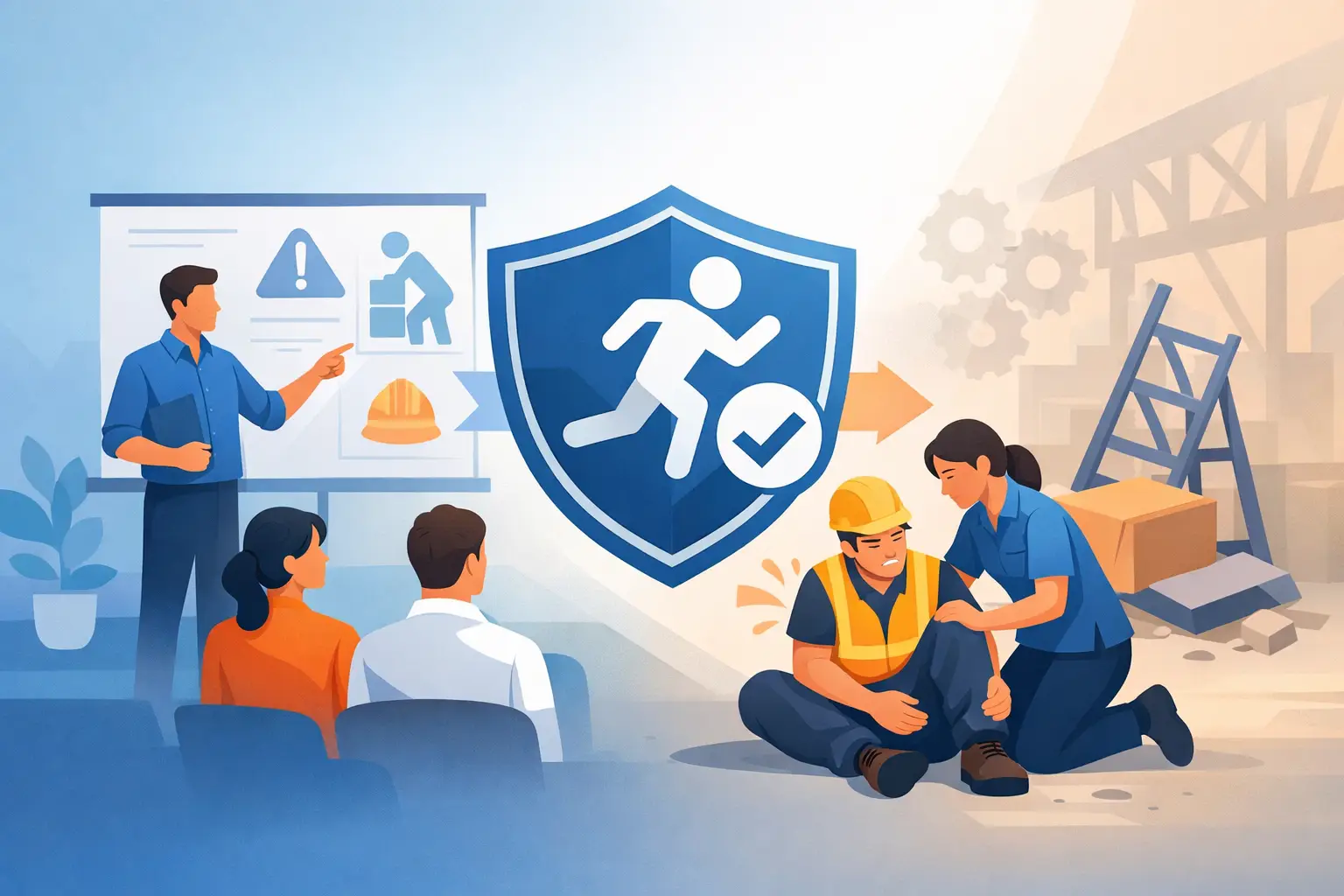
A psychological injury claim rarely begins on the day it is lodged. It often follows months of excessive workload, unresolved conflict, poor role clarity, traumatic exposure, or a manager who did not know how to respond when warning signs emerged. So, can training reduce injury claims? Yes, when it builds practical capability and sits within a genuine approach to psychosocial risk management. Training alone cannot remove every risk or guarantee that no claims will occur. It can, however, change the conditions that allow preventable harm to escalate.
For Australian employers, this is a commercial and legal issue as much as a people issue. Safe Work Australia data consistently shows that psychological injury claims tend to involve substantially more time away from work and higher costs than many physical injury claims. The impact also extends beyond the individual claim: lost capability, team disruption, turnover, manager time, reputational damage and reduced confidence in leadership all carry a price.
Can training reduce injury claims? It depends on the training
Awareness sessions have a place, but awareness is not the same as capability. An employee may understand that burnout is serious yet still be unable to raise a workload concern constructively. A manager may know that psychological safety matters yet avoid a difficult conversation because they fear saying the wrong thing. In both cases, organisational risk remains.
Training reduces risk when it teaches people what to notice, what to do next and how to do it consistently. That means scenario-based practice, clear escalation pathways, manager tools, and a shared language for discussing workload, behaviour and wellbeing. It also means training is connected to the way work is actually designed, allocated and supervised.
A one-off presentation may create interest. A capability-building program changes behaviour when participants can apply it in a team meeting, performance conversation, return-to-work discussion or response to a critical incident the following week.
Why injury claims are often a systems problem
It is tempting to view a psychological injury claim as an individual resilience issue. That approach is incomplete and can create further risk. Resilience helps people manage pressure, adapt to change and recover after setbacks. It does not make unreasonable demands, bullying, role conflict or poor leadership safe.
Psychosocial hazards are created or amplified through everyday systems. Unrealistic deadlines, inadequate staffing, unclear authority, poorly managed change and inconsistent behaviour standards can all increase harm. Training can help leaders identify these exposures earlier, but leaders must also have authority and support to act on what they find.
Consider a frontline manager overseeing a team through a major restructure. If their only message is to ‘check in’ with employees, the organisation has missed the central risk. Effective training gives that manager a stronger operating model: clarify what is known and unknown, identify workload pinch points, invite concerns without defensiveness, document actions, escalate resourcing gaps and maintain respectful communication. These are risk controls, not soft skills.
The manager effect is significant
Direct managers influence how work feels on a daily basis. They set priorities, interpret organisational change, allocate work, address conflict and respond when someone is struggling. A technically strong manager without people leadership capability can unintentionally increase psychosocial risk, particularly during periods of pressure.
Manager training should therefore cover more than empathy or general wellbeing. It should equip leaders to conduct early, appropriate conversations; identify observable changes in performance or behaviour; manage workload and role clarity; respond to reports of unreasonable behaviour; and refer matters through established internal processes. It must also establish boundaries. Managers are not expected to diagnose or become counsellors. Their role is to lead safely, respond respectfully and activate the right support and controls.
What effective training looks like in practice
The strongest programs are tailored to the organisation’s risk profile. A contact centre dealing with high emotional demand needs different scenarios from a construction business managing fatigue and subcontractor coordination, or a government team navigating complex public-facing work. Generic content can still be useful, but it is less likely to shift day-to-day decisions.
Effective training generally has four features:
- It uses real workplace scenarios, allowing participants to rehearse conversations and decisions before they face them under pressure.
- It distinguishes individual support from hazard control, so leaders do not treat systemic problems as personal coping failures.
- It gives managers simple tools for workload reviews, team check-ins, conflict response, escalation and follow-up.
- It is reinforced through leadership expectations, policies, reporting processes and measures that show whether behaviour is changing.
This approach is particularly valuable for geographically dispersed teams and organisations with high numbers of new or first-time managers. Consistency matters. Employees should not receive a safe, skilled response only because they happened to report to the ‘good’ manager.
Training must be paired with real risk controls
Training is a preventive control, but it is not a substitute for fixing known hazards. If a team is routinely working unsustainable hours, a resilience workshop without workload intervention may be perceived as performative. If complaints of bullying are not investigated fairly, training on respectful behaviour will not restore trust.
The practical question for executives and WHS leaders is: what will change after people complete the program? There should be a visible answer. It may include clearer workload thresholds, better role design, improved incident and grievance pathways, regular psychosocial risk reviews, or leadership accountabilities built into performance expectations.
Start by identifying where claims, absence, turnover, employee feedback and employee relations issues are clustering. Look for patterns by business unit, manager cohort, job type, tenure and change activity. Quantitative data is useful, but it should be tested against employee experience. A low-reporting area is not automatically a low-risk area. It may simply be a team where people do not feel safe speaking up.
From there, prioritise the hazards that are both material and controllable. Training can then be designed around the specific moments that matter most: a manager receiving a complaint, a team absorbing a workload spike, an employee returning after time away, or a leader communicating difficult change.
Measuring whether training is reducing risk
Completion rates are not an outcome. Neither are positive workshop ratings. They indicate reach and participant satisfaction, but not whether risk has reduced.
A more useful measurement framework combines leading and lagging indicators. Leading indicators might include manager confidence in handling psychosocial risks, the quality of workload conversations, timely escalation of concerns, participation in team check-ins and the completion of corrective actions. Lagging indicators can include absence patterns, turnover, complaints, workers compensation claim frequency, claim duration and claim costs.
Interpret the data carefully. An initial increase in reporting may be a positive sign that employees trust the process more, rather than evidence that the program has failed. Similarly, a reduction in claims may reflect several factors, including workforce composition or changes in work volume. The goal is not to claim perfect causation from one workshop. It is to build a credible picture that capability, controls and culture are improving together.
For organisations with significant exposure, baseline assessments before training are especially valuable. They help target investment, give leaders a clear starting point and make later evaluation more meaningful. Workplace Mental Health Institute programs are designed around this practical connection between capability, psychosocial safety and measurable organisational improvement.
The business case is prevention, not paperwork
Reducing injury claims is not about discouraging people from reporting harm. It is about creating work where fewer people are harmed in the first place, and where concerns are addressed early and fairly when they arise. That protects employees while reducing costly disruption for the organisation.
The return on training is strongest when leaders view it as an operational investment. Better conversations can surface workload issues before they become absence. Confident managers can address conflict before it becomes a formal complaint. Clearer systems can prevent employees from carrying risks alone until a claim becomes their only remaining option.
The most useful next step is not to ask whether your people need more awareness. Ask which workplace risks your leaders are currently unequipped to see, discuss and control. The answer will point directly to the capability that can protect both your people and your organisation.