
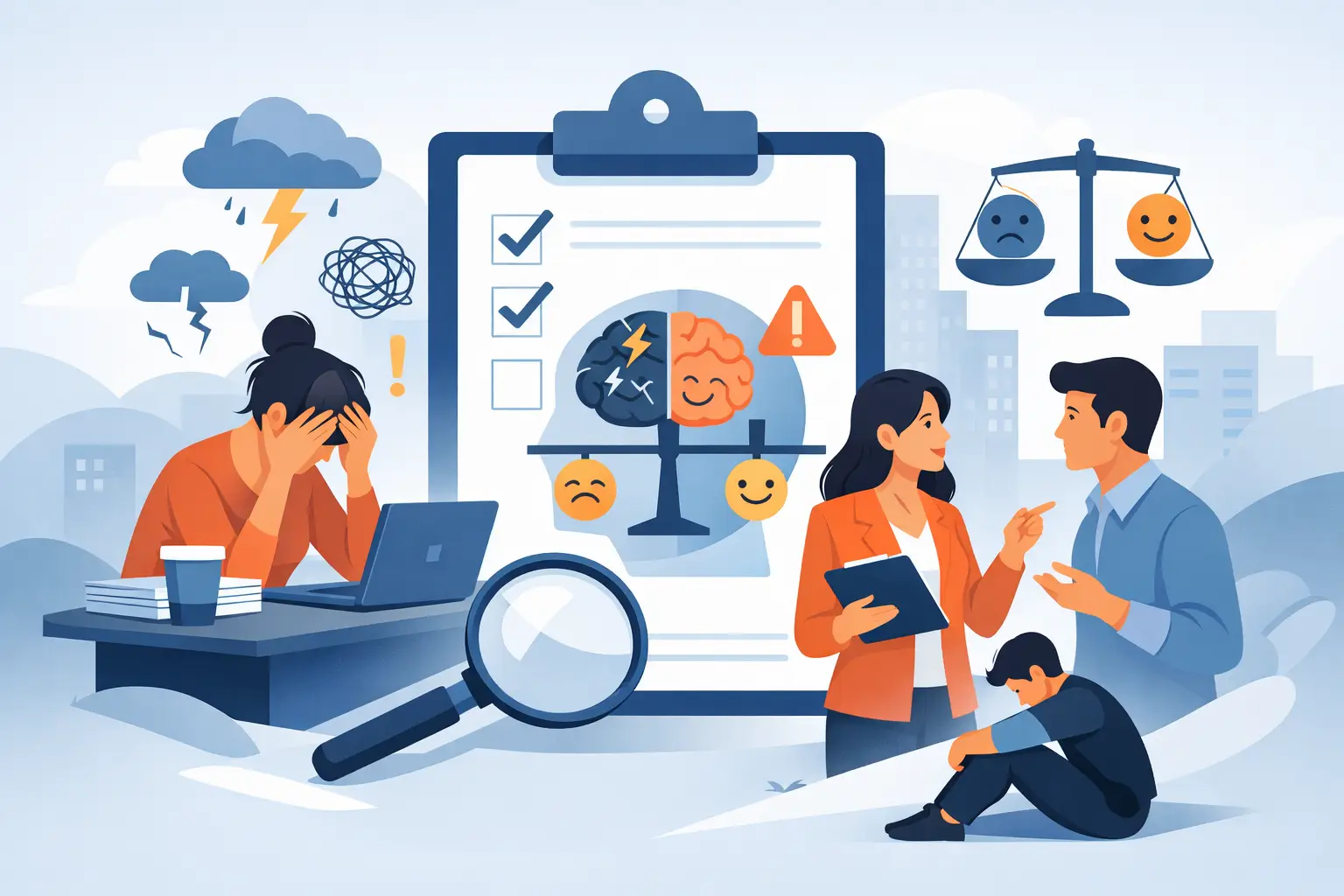
A stressed team rarely announces itself with one dramatic event. More often, the warning signs show up in ordinary business data – higher sick leave, more conflict, poor decision-making, rising turnover, and managers spending more time on people issues than performance. That is exactly where a psychosocial risk assessment example becomes useful. It turns vague concern into a structured process that helps employers identify hazards, assess risk, and put controls in place that reduce harm and improve performance.
For Australian organisations, this is not just a wellbeing exercise. Psychosocial hazards sit squarely within work health and safety obligations, and poor management of these risks can lead to psychological injury claims, absenteeism, reputational damage, and reduced productivity. The commercial case is as clear as the legal one. When work is designed well, people perform better, recover faster, and stay longer.
What a psychosocial risk assessment example should actually show
A useful example does more than list hazards. It shows how an organisation moves from observation to action. That means identifying the psychosocial hazards present in a team or work area, understanding who may be affected and how, rating the level of risk, reviewing current controls, and deciding what additional measures are reasonably practicable.
The strongest assessments also avoid a common trap – treating psychosocial risk as an individual resilience problem. Resilience matters, but it is not a substitute for safe systems of work. If workload is chronically excessive, role clarity is poor, and support from managers is inconsistent, no amount of motivational messaging will fix the root cause.
Psychosocial risk assessment example for an Australian workplace
Imagine a medium-sized customer service team in a national organisation. The team has 35 employees, two frontline managers, and a sustained increase in complaint volumes after a recent system change. Over the last six months, the business has recorded higher unplanned leave, two formal bullying complaints, lower engagement scores, and several resignations from experienced staff.
The organisation decides to assess psychosocial risk in this work area. It gathers information from incident reports, turnover data, absenteeism trends, employee feedback, manager observations, and a confidential survey. It also runs short consultation sessions with workers to understand what daily work actually feels like.
Step 1: Identify the psychosocial hazards
The assessment finds several clear hazards. Job demands are high because call volumes have increased while staffing has not. Workers report emotional demands from dealing with distressed and aggressive customers. Role clarity has declined since the system change, with conflicting instructions from different leaders. Support is inconsistent, especially for newer team members. There are also signs of poor organisational change management, because staff were not adequately trained before the new system went live.
At this stage, the organisation is not trying to prove fault. It is identifying conditions that could reasonably contribute to psychological harm. That distinction matters, because a sound process is focused on prevention.
Step 2: Assess who is exposed and how serious the risk is
The team then considers exposure. All staff in the customer service function are affected, but the risk is higher for new starters, team members handling escalations, and managers carrying both people leadership and service targets.
The organisation rates the risk by looking at likelihood and consequence. In this example, the likelihood is high because the hazards are frequent and ongoing. The potential consequence is also high because the business is already seeing signs of harm – conflict, fatigue, disengagement, and complaints. The overall risk rating is assessed as high.
This is where many employers hesitate. They worry that a high rating creates legal exposure. In practice, the greater exposure often comes from failing to identify and act on obvious risks. A documented assessment, paired with reasonable controls, shows due diligence and a commitment to risk reduction.
Step 3: Review existing controls
Current controls are limited. Staff have access to an employee assistance program, managers hold fortnightly team meetings, and there is a general code of conduct. These measures have some value, but they do not adequately address the main hazards.
That is a critical lesson in any psychosocial risk assessment example. Support services and policies are not enough if the work design itself is contributing to harm. A policy cannot compensate for unsustainable workloads. A helpline does not remove role ambiguity. Controls need to match the hazard.
Step 4: Select additional controls
The organisation decides on a mix of immediate and medium-term controls. It adjusts staffing levels during peak periods, changes performance targets to better reflect system delays, and introduces structured escalation support for difficult customer interactions. It also clarifies role expectations, standardises manager communication, and provides targeted training so supervisors can identify psychosocial hazards early and respond consistently.
For the system change issue, the business introduces a clearer change process that includes consultation, practical training, and a staged implementation plan for future operational changes. It schedules regular check-ins for high-exposure staff and reviews team rosters to reduce prolonged periods of high-intensity work.
Some controls are quick wins. Others require budget, workforce planning, or leadership commitment. That is normal. The key is to prioritise the highest risks first and assign clear accountability.
Step 5: Document actions, owners and review dates
The risk assessment records each hazard, the current and proposed controls, the risk rating, the responsible person, and the timeframe for review. For example, the operations manager owns workload redistribution within 30 days. HR supports manager capability training within 60 days. The executive sponsor reviews progress and leading indicators at the next quarterly WHS meeting.
Without this level of discipline, assessments often become paperwork rather than a management tool. Good documentation is not bureaucracy for its own sake. It creates visibility, accountability, and a basis for continuous improvement.
Why this example works in practice
This example works because it connects psychosocial safety to real operating conditions. It does not rely on assumptions or generic wellbeing language. It uses business data, worker consultation, and practical controls that address the source of the risk.
It also recognises that not every psychosocial hazard can be eliminated completely. Customer-facing roles, emergency work, and high-accountability environments will always involve pressure. The goal is not to remove all challenge from work. The goal is to make work manageable, supportive, and designed in a way that does not create avoidable harm.
That is where judgment matters. A fast-growing business may need to accept periods of intense demand, but it still has choices about staffing, communication, manager support, and recovery time. A healthcare team may face emotional strain as part of the role, but it can still build stronger supervision, debriefing, and workload controls. Context matters, but duty of care remains.
Common mistakes employers make
One of the biggest mistakes is relying only on complaints to identify risk. By the time a formal complaint is lodged, the issue has often been present for months. Leading indicators such as absenteeism, turnover, incident trends, overtime, and engagement data usually tell the story earlier.
Another mistake is assessing risk at a whole-of-business level only. Organisation-wide data is useful, but it can hide local hot spots. One team, one leader, or one workflow can create a very different risk profile from the rest of the business.
A third mistake is treating training as the only control. Training is valuable, especially for leaders and managers, but it works best when paired with changes to job design, systems, workload, and reporting pathways. Capability without structural support has limited impact.
Turning assessment into measurable improvement
A psychosocial risk assessment should lead to measurable change. That means deciding in advance what success looks like. Depending on the hazard, relevant indicators may include lower unplanned leave, reduced turnover, fewer conflict reports, improved engagement scores, faster return to work outcomes, or stronger manager confidence.
This is the point many executive teams care about most, and rightly so. Psychological safety is not separate from performance. Teams with manageable demands, clear expectations, and supportive leadership tend to make better decisions, collaborate more effectively, and sustain performance under pressure. Risk reduction and performance improvement are closely linked.
For organisations that want consistency across multiple sites or business units, a standard assessment framework is worth building. That may include a shared risk matrix, common hazard definitions, consultation protocols, and leadership training so assessments are completed with the same level of rigour across the business. Workplace Mental Health Institute often sees stronger outcomes when psychosocial hazard management is treated as an operational capability, not a one-off compliance task.
A practical standard to aim for
If your assessment cannot answer three simple questions, it is probably too superficial. What are the hazards? How do we know they are present? What are we doing about them, by when, and who is accountable?
That level of clarity is what gives a psychosocial risk assessment real value. It helps boards, executives, HR teams, and managers move from good intention to practical control. And when that happens, the organisation is not just reducing legal and human risk. It is building the conditions for stronger leadership, better retention, and more sustainable performance.
The most useful place to start is rarely a perfect template. It is one work area, one honest assessment, and one set of actions that make the job safer and more workable for the people doing it every day.