Category Archives: Self Care

Toxic-Workplace

5 Signs You Might Have a Toxic Culture

A toxic environment is a disease to any business. Unhappy people are demotivated and easily drawn out of the business, which, depending on the industry, can lead to the business having a bad reputation amongst potential employees. So not only is it important that your business doesn’t have a toxic culture, it’s also imperative to know the symptoms that indicate you might and what you can do to stop the disease from spreading. Here are the five most obvious symptoms and what you can do to remedy them:

Dysfunctional relationships among staff.

Signs of infection:

  • Cliquishness
  • Favouritism
  • Lack of communication
  • Grudge-holding
  • Staff are pitted against each other

Remedy:

Team bonding, as clichéd as it sounds, should never be underestimated. Friday afternoon drinks and other social events such as Christmas parties or a quarterly dinner, with 100% inclusion, will work wonders with turning your bitter group of individuals into a team. To further reinforce this, set team based rewards and incentives rather than individual ones. This stops team members feeling like the person next to them is their rival and not their teammate.

Don't forget to subscribe to our monthly eMag - WorkLife

Expert insights and tips on how to build resilient and mentally healthy workplace cultures delivered straight to your inbox each month.


Your people feel they have a lack of work-home balance.

Signs of infection:

Remedy:

Be mindful of the mental health of your staff. Assure them it is your number 1 priority. Be a trusted rock for your staff. If they are having troubles in their personal life, be someone understanding that they can talk to, and if they need it, allow them the time away from work to tend to their personal needs. A happy team member is a lot more effective in an 8-hour day than a miserable one is in a 12 or 15-hour one.


Low morale.

Signs of infection:

  • People are unmotivated
  • People appear downtrodden and frustrated
  • People openly talk about not wanting to be there

Remedy:

Having a high morale will go a long way to ensuring you do not have a toxic work culture. Managing your people with a foundation of positive reinforcement, even when critiquing their performance, is pivotal to curing low morale. Nobody wants to be told they aren’t good enough or aren’t trying hard enough. “Good job” goes a long way in the good times. “We are doing great and will get through this” goes even further in the hard times. Also, be sure to trust your people. Micro-managing them will breed frustration and annoyance among your staff: trust that they know how to do their job and if and when they could do it better, give them feedback.


High turnover of staff.

Signs of infection:

  • New people don’t stay very long
  • You are constantly recruiting and training new employees

Remedy:

High staff turnover is the most obvious sign that something isn’t right in your business. Unfortunately, the reasons for it can be multi layered. It could be due to any of the other symptoms mentioned. To cure this, you must cure the other symptoms because constantly having to hire and bed in new staff will slow your progress and cost you a lot of money. Whereas a happy, experienced team who know the business will get more done, better and faster.


(Uh oh) You.

Signs of infection:

  • You set unrealistic expectations of your staff
  • You are cold and unsympathetic
  • You do not listen to your staff
  • You instil fear in your staff
  • You are hypocritical
  • You scapegoat individuals

Remedy:

Whoa there! That comes off seriously judge-y doesn’t it? I firmly believe that as leaders, we are doing the best we can, with the resources we have.  But this doesn’t stop employees in a toxic culture thinking (even saying) things like this about you.  Being a strong leader, who makes decisions and manages their staff from a place of positivity and genuine care, will cure every symptom of a toxic culture that you have. Take the steps to build and nurture your people into a team who work for one another to achieve their goals. Make your staff feel wanted and appreciated through positive reinforcement. Make them stay because they are loyal to you, their team members and the work culture you have built.

Toxic cultures are nasty places to be.  But as a leader, wouldn’t you like to be part of the clean up crew?

Author: Peter Diaz
Peter-Diaz-AuthorPeter Diaz is the CEO of Workplace Mental Health Institute. He’s an author and accredited mental health social worker with senior management experience. Having recovered from his own experience of bipolar depression, Peter is passionate about assisting organisations to address workplace mental health issues in a compassionate yet results-focussed way. He’s also a Dad, Husband, Trekkie and Thinker.

Connect with Peter Diaz on:
Peter Diaz on Face Book Peter Diaz on LinkedIn

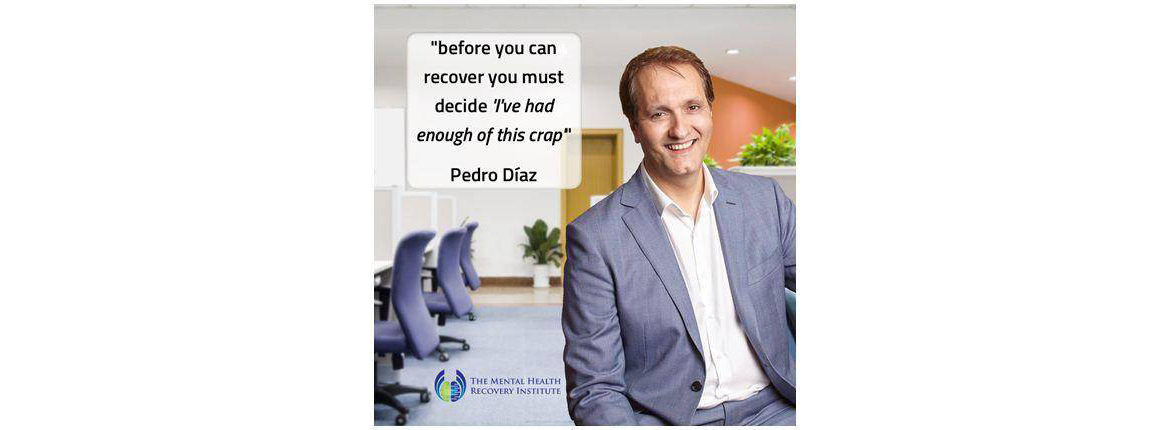
Before-you-can-recover

I’ve had enough

I remember like it was yesterday the moment I decided I was going to recover.

I looked in the bathroom mirror and I had one of those moments of clarity and in that moment I realised I had been a people pleaser, and that my life, was not my life. A rage built up within me and I yelled (at my own reflection) ‘what the F*&k are you doing?’. That pivotal moment changed my life. I crawled myself out of that hole I was in. I used the anger as leverage. And pulled myself out. I started using the resources available to me. More importantly, I started to see the options and resources available to me, that I had never noticed before.


Read more on mental health recovery…


Don't forget to subscribe to our monthly eMag - WorkLife

Expert insights and tips on how to build resilient and mentally healthy workplace cultures delivered straight to your inbox each month.

In short, I took responsibility for my feelings.

No, this was not an overnight thing and I have made many mistakes in this journey, but I was, and still remain, determined to live my life by my standards. It’s been an arduous journey to say the least but it’s been a worthwhile one.

Interestingly, the research on Recovery shows that my moment is a fairly common one. A lot of people who recover have had a moment like that. My tip? Don’t be afraid of a little anger and of making mistakes. Or even more scary, that the people you have around you now will not love you anymore if you change. The price of not changing is too high. Don’t pay it. Move towards recovery and freedom.

Author: Peter Diaz
Peter-Diaz-AuthorPeter Diaz is the CEO of Workplace Mental Health Institute. He’s an author and accredited mental health social worker with senior management experience. Having recovered from his own experience of bipolar depression, Peter is passionate about assisting organisations to address workplace mental health issues in a compassionate yet results-focussed way. He’s also a Dad, Husband, Trekkie and Thinker.

Connect with Peter Diaz on:
Peter Diaz on Face Book Peter Diaz on LinkedIn

What-kind-of-fathers

What kind of father is worse?

I grew up with a father who loved me but was incapable of saying it. I knew he loved me because he’d discipline me very harshly and tell me it was for my own good, but in 50 years he was never able to say it. Even when I said it at the end of every phone call. Now, this is not strange. I know many people have grown up in this kind of environment. And many people have it many times worse than I had it. At least, I’m certain I was loved.

But, I’m wondering, what’s worse? a physically present but emotionally unavailable parent or a physically absent parent? I am reminded of this today simply because a client-friend of ours just forwarded me a link to a Canadian article saying that Presenteeism – when people are physically present but ‘not there’ – is costing Canada up to 3 times more than Absenteeism – when people are not there at all. This is because their performance is impaired, the quality of work declines, they make errors and fall behind. I believe that, at last count, the same is true for Australia. It’s an important topic for workplaces when we are talking costs of billions of dollars per year, don’t you think?


Read more on mental health and wellbeing….


Don't forget to subscribe to our monthly eMag - WorkLife

Expert insights and tips on how to build resilient and mentally healthy workplace cultures delivered straight to your inbox each month.

And then, there’s another aspect to this. Managers. What kind of a manager are you? are you a manager that suffers from management presenteeism? What I mean is, are you physically there for your staff but are you emotionally unreachable? I’ve met many managers that have been taught to be like that. They’ve been told to have ‘professional detachment’. What does that even mean? and how effective is that in a business world where your success depends on your ability to form relationships? And, more importantly, what do you think the impact of having professional detachment is on your team?

For all of you who grew up with emotionally unavailable parents, don’t repeat the same mistake. Be available and contribute meaningfully to each other.

Food for thought, right?

Author: Peter Diaz
Peter Diaz profile

Peter Diaz is the CEO of Workplace Mental Health Institute. He’s an author and accredited mental health social worker with senior management experience. Having recovered from his own experience of bipolar depression, Peter is passionate about assisting organisations to address workplace mental health issues in a compassionate yet results-focussed way. He’s also a Dad, Husband, Trekkie and Thinker.

Connect with Peter Diaz on:
Facebook-logo Podcast Icon LinkedIN-logo

women-with-mental-health-problem

Why 65% of people won’t get help if they have a mental problem

The reasons as to why people do anything, are many and complex. The research shows that around 65% of people won’t even seek treatment if they experience mental distress. The World Health Organization (WHO) says that stigma, discrimination and neglect prevent care and treatment from reaching people with mental disorders. What about the many people in workplaces that don’t have a full blown mental disorder but are at risk? Here we look at three major reasons people have identified as to why they won’t ask for help.

It’s just stress. The most common mental disorders (anxiety and depression) tend to be insidious, in that they gradually worsen over time. Many sufferers don’t even realise they have a mental health issue, until it’s been months or even years since they’ve felt happy. It’s convenient for a sufferer to dismiss their situation as temporary or ‘just stress’. But there is a difference between ‘stress’ and something more serious.

Just suck it up. People tend to compare themselves with others, and if everyone else seems fine, then they don’t want to be the exception, or the ‘weak one’. People will compare themselves to their parents who ‘did it tough and never complained’. (The truth is that it’s likely they faced the same issues and felt the same way, it’s just that the conditions were less understood and there weren’t the resources widely available to assist.) It’s also very easy to feel inadequate when you’re seeing all your friends on social media, having a great time and appearing successful, when the reality is, that while few people share their fears and failures for all to see, they most certainly have them. When everyone around you seems to be coping and thriving, the act of admitting you need help and seeking it out can feel like you’ve failed somehow. And a lot of people would rather endure the symptoms than admit they need help.


Read more on workplace mental health and wellbeing….


Don't forget to subscribe to our monthly eMag - WorkLife

Expert insights and tips on how to build resilient and mentally healthy workplace cultures delivered straight to your inbox each month.

Career suicide. Numerous surveys from Australia, the UK, US and Canada have shown that people with a mental health problems are unlikely to disclose it to their employer for fear of being treated less favourably. Even employment lawyers have been quoted advising employees to think twice before disclosing. Many employees believe that, if they disclose, they’ll be passed over for project and promotion opportunities, or that their ‘internal brand’ will be tarnished, or that the organisation will take steps to exit them.

As you can see, these are real concerns people have. There’s a need for management to take the lead and address these concerns lest them become part of the culture.

If you’d like Workplace Mental Health Institute to run the Suicide Prevention Skills course in your workplace, please Call us on (02) 8073 7686 or take the comprehensive self paced online course.

Author: Peter Diaz
Peter Diaz profile

Peter Diaz is the CEO of Workplace Mental Health Institute. He’s an author and accredited mental health social worker with senior management experience. Having recovered from his own experience of bipolar depression, Peter is passionate about assisting organisations to address workplace mental health issues in a compassionate yet results-focussed way. He’s also a Dad, Husband, Trekkie and Thinker.

Connect with Peter Diaz on:
Facebook-logo Podcast Icon LinkedIN-logo

Peter Diaz-with-Lucas

A dummy in each hand and one in the mouth – values and the smart manager

Today I’m going to write a different type of blog. Stay with me. I had to share. This morning as I reached into my pocket I felt a weird, clunky thing. I didn’t know what it was but then it hit me, a dummy! My son’s dummy (“pacifier” for our international audience) How cute. It put a smile in my heart. I remembered that my son, Lucas, who is just a little over 2 years old, this morning had lots of dummies. Three to be precise. He had a dummy in each hand and one in his mouth. This morning he had to have all the dummies he could find. I found it interesting because he wasn’t distressed. So, I asked myself, why? and it dawned on me, ‘he just feels good with them’. He feels safe. But not just any kind of safe. These dummies make him feel safe emotionally. So much so that now, he treasures these dummies. He obviously doesn’t need that many dummies but he appreciates them for what he feels they give him. Safety, peace, balance. Now, obviously the dummies don’t give him these feelings, he creates them out of association. And as a result, he also now feels grateful for the dummies. Lucas VALUES his dummies because, unknowingly, he values how they make him feel.


You can read more on workplace mental health and wellbeing….


Don't forget to subscribe to our monthly eMag - WorkLife

Expert insights and tips on how to build resilient and mentally healthy workplace cultures delivered straight to your inbox each month.

Now I’m not going to go into the pros and cons of dummies for babies and children – this isn’t a parenting blog. But it made me think – what about us? Grown ups? Are we any different? Or similar? When most people think of work, their job, how do they feel? Most don’t look forward to going to work. Many even get anxious about going to work, like I did for many years. Why? If we let little people’s experience teach us, it’s because we have not linked the fulfillment of our values with what we do. We don’t think they are linked.

The smart manager will pay attention now. When people feel their values are being met in what they do, they become passionate. They are at peace with themselves. Happy. In short, it’s good for their mental health. Makes sense, right? So why isn’t this happening everywhere? Why aren’t managers helping people link their values to what they do? This is going to make them mentally healthy and more valuable employees, right?

The problem is, most managers don’t know this, and if they do, they don’t know where to start. The values conversation has been relegated to something the company does every couple of years that doesn’t mean much to anyone else but the leadership team. And it’s only a conversation about the company values, not the individual employee’s personal values. That’s what we need to change. We need to make values relevant to all our employees. We need to help them see how the values of the company relate to their individual values. We need to meaningfully engage them in the process of clarifying their own values, the values of the team and the values of the company. And then, the effective leader, will speak of them often. Regularly. Because these values have become your ‘why we do things the way we do around here’.

That makes for good mental health.

By the way, Lucas held onto the dummies until we arrived to childcare. And when we arrive he knows they go in his bag, where he can get them anytime he wants. But he’s usually having too much fun to think about them through the day. Wouldn’t it be nice if we had as much fun at our workplaces as kids do at daycare?

PS if you want help to start a mentally healthy values conversation in your workplace, give me a call and I’ll get my team onto it.

Author: Peter Diaz
Peter-Diaz-AuthorPeter Diaz is the CEO of Workplace Mental Health Institute. He’s an author and accredited mental health social worker with senior management experience. Having recovered from his own experience of bipolar depression, Peter is passionate about assisting organisations to address workplace mental health issues in a compassionate yet results-focussed way. He’s also a Dad, Husband, Trekkie and Thinker.

Connect with Peter Diaz on:
Peter Diaz on Google Plus Peter Diaz on Face Book Peter Diaz on LinkedIn Twitter-logo

Bullying in the workplace

Beware Declaring War on Bullying

A common mistake people make, especially at work, is to assume that it’s ‘others’ who are being a bully. And that bullying is an abuse of power by some other people more powerful than I. But this is self deceit. Many bullies don’t realise they are being a bully. It’s like having snot in the middle of your face, you are usually the last person to find out, right?

The same with acting like a bully. Ask yourself, ‘can I think of times when I’ve acted like a bully?’ before you answer rashly, think about this ‘do you like to be right?’ if you are not right, does it upset you? do you like rules? (but only your rules!)’ then it’s quite probable that, at times, you may have acted as a bully to others, even if you didn’t mean to.

Or think about it this way, have you ever taken it out on someone else? and you knew it wasn’t their fault but you had a go at them anyway? and what’s more, did you secretly enjoy it? (even if later you felt guilty about it) I think most of us have. By the way most people do. It’s not that we are bad people, it’s that we all have the potential to try to force our thoughts, actions and will onto someone else. It’s usually a response to our own fears and uncertainties.


Read more on workplace bullying….


Don't forget to subscribe to our monthly eMag - WorkLife

Expert insights and tips on how to build resilient and mentally healthy workplace cultures delivered straight to your inbox each month.

One of the common scenarios we see in workplaces goes like this – someone doesn’t agree with a colleagues’ idea, opinion, or direction. For some reason, they feel it’s personal. They feel hurt, upset, disappointed, or frustrated. Now they start to see their colleague differently. As a evil, bad, some kind of bitch or bastard. A villain. And it’s ok to stop perpetrators, right? Don’t we have a moral obligation to stop them? …and the reasons for judging, labelling and attacking keep coming.

By the way, this is completely normal and to be expected when you have a group of people coming together to work on something. But if the person is not aware of what is going on, it may not be too long before they start to feel they are being bullied or victimised. And in response, they launch an all out attack on the colleague. Does this sound at all familiar? Now who is doing the bullying in this scenario? The wise person will catch themselves in this.

We need to be careful before we react, to make sure that we ourselves have not become a bully in response. This means a certain level of self awareness and self honesty is required. Rather than declare war on bullying, check to make sure you are responding with compassion, kindness, understanding and assertion, not aggression.

Author: Peter Diaz
Peter-Diaz-AuthorPeter Diaz is the CEO of Workplace Mental Health Institute. He’s an author and accredited mental health social worker with senior management experience. Having recovered from his own experience of bipolar depression, Peter is passionate about assisting organisations to address workplace mental health issues in a compassionate yet results-focussed way. He’s also a Dad, Husband, Trekkie and Thinker.

Connect with Peter Diaz on:
Peter Diaz on Google Plus Peter Diaz on Face Book Peter Diaz on LinkedIn Twitter-logo

Addressing Stigma in the workplace

How can I address stigma in the workplace about mental health?

According to the studies, 9 out of 10 people experience some kind of discrimination in relation to mental health, and one in 10 employees have resigned as a result of feeling unsupported with a mental health condition.

Many people think that the key to addressing stigma about mental health is to run some awareness campaigns – put on a morning tea, maybe put some posters up, get people talking about mental health. And to a degree, that’s right. It is a good idea to raise awareness about mental health, start to make it OK to have a conversation about it.

BUT, in our experience training hundreds of organisations around Australia, those workplaces where stigma exists need a lot more than just some ‘awareness’ activities.


Read more on workplace mental health and wellbeing….


Don't forget to subscribe to our monthly eMag - WorkLife

Expert insights and tips on how to build resilient and mentally healthy workplace cultures delivered straight to your inbox each month.

In these environments, if awareness activities are run without a proper educational program to support it, or a longer term action plan in place, they can often be ridiculed, resulting in the completely opposite effect than what was intended in the first place! The well meaning HR Manager has put a lot of effort into this activity, but it doesn’t have the desired effect long term.

And then there’s the education itself. Training needs to be more than just providing information about mental health, it needs to be designed and delivered in such a way that it actually shifts attitudes. It must touch the individual people in the room, as human beings not just as their job title. It has to move them to build empathy for their colleagues, and help them to face their fears in talking about mental health.

After all, the majority of people who are stigmatising or making jokes about people with mental health issues, do so because they are uncomfortable with the topic themselves. Maybe they have had their own experiences themselves, or been through something with a friend or family member. Whatever the case is, the person stigmatizing is usually not a bad person, they wouldn’t mean to hurt someone else, they’re just struggling with how to respond emotionally. And when you have someone who is socially influential who is in that space, its not long before other colleagues follow suit and before you know it the workplace environment is one where people do not feel safe to reach out for help. And when that happens, people bottle it up, don’t get help, and often there can be very dire, sometimes fatal consequences.

We’ve been to workplaces like this where it is only after someone has taken their life that colleagues respond with ‘I never saw it coming’.

And this is just one of the reasons why we strongly encourage workplaces who have this problem to make sure they couple their ‘awareness campaign’ with some solid, transformational education, over a period of time. You are looking to change culture after all, and that takes a series of consistent actions over time.

Author: Peter Diaz
Peter-Diaz-AuthorPeter Diaz is the CEO of Workplace Mental Health Institute. He’s an author and accredited mental health social worker with senior management experience. Having recovered from his own experience of bipolar depression, Peter is passionate about assisting organisations to address workplace mental health issues in a compassionate yet results-focussed way. He’s also a Dad, Husband, Trekkie and Thinker.

Connect with Peter Diaz on:

Peter Diaz on Google Plus Peter Diaz on Face Book Peter Diaz on LinkedIn Twitter-logo

Mental Health for Bottom Line

Taking care of the bottom line through good mental health

I was reading an article from the UK about a lady who had a mental health crisis working in the retail industry, with a strict employer who constantly demanded their minimum wage employees push clients to spend thousands of pounds in one transaction. She talks about the high turnover rates among the 100 plus employees, and the impact the working environment had on her mental health.

And it got me thinking – how many employers are there out there who spend such a huge portion of their time, effort and resources focussing on creating sales, to generate higher and higher income, while at the same time they completely forget that the ways in which they treat their staff can end up costing them much, much more. Turnover is just one aspect of this – the cost of recruitment, and time spent hiring and training up a new employee. But then if it’s not a good working environment, it won’t be long before they are spending on more sick leave and having to replace that employee too. Not to mention the costs involved if someone actually puts in a stress claim! That can be a huge drain on the business.


Read more on workplace mental health….


Don't forget to subscribe to our monthly eMag - WorkLife

Expert insights and tips on how to build resilient and mentally healthy workplace cultures delivered straight to your inbox each month.


And it’s not necessarily that managers or businesses are bad or evil. They are people too. And they are likely doing their best to keep everything running, to keep people in jobs. There is a lot of stress involved there too, and sometimes, in cases like this it can filter down to the frontline staff. Before you know it it’s a downward spiral.

BUT!!! it can so easily be reversed by:

1. Training managers in how to better support people within the workplace.

2. Making sure the managers have the support of the executive team – that they are committed to addressing mental health and wellbeing

3. Communicating the plan clearly to all staff, and following through.

Not only will this directly help the bottom line in terms of generating more income – the evidence is very clear that with a healthy and happy workforce, productivity, customer service, and all the other good stuff increases dramatically. But it will also have a huge impact in terms of the money saved in all those places where it is just being drained at the moment.

And besides the financial incentive, what about the fact that the people working in the business are real people too, with thoughts and feelings? Work is such a huge part of our lives, why not make it a pleasurable place to be, rather than one staff dread coming to each day. Now of course it doesn’t mean that you’ll stop all mental health problems – people are still people, and they still have personal lives too, but when someone does have something difficult happening in their personal life, the approach of the manager at work can make all the difference as to whether they spiral downwards and end up needing time off or whether work can become a haven for the person. This makes all the difference not just for the person, but for the business too.

Author: Peter Diaz
Peter-Diaz-AuthorPeter Diaz is the CEO of Workplace Mental Health Institute. He’s an author and accredited mental health social worker with senior management experience. Having recovered from his own experience of bipolar depression, Peter is passionate about assisting organisations to address workplace mental health issues in a compassionate yet results-focussed way. He’s also a Dad, Husband, Trekkie and Thinker.

Connect with Peter Diaz on:

Peter Diaz on Google Plus Peter Diaz on Face Book Peter Diaz on LinkedIn Twitter-logo

When-is-the-right-time

When is the right time to talk about suicide?

It’s a beautiful morning. Its cold outside but the sun is shining. I’m sitting in a café across from the water starting my work day. And it hits me, today 8 people in Australia will take their own life. 8 people will feel so desperate, so alone, so hopeless, they will take drastic action to end their life deliberately.

I don’t mean to startle you. In fact, we had this conversation in our team just yesterday. You see, we’re developing our online suicide prevention course, and the question was, how do we help people to see how important, how urgent this is, without scaring people? How do we help people to look at something that so often we as a society don’t want to look at or think about? How do we make it OK to talk about suicide, to learn about suicide?

I think the time for downplaying it has ended. In Australia we now have a situation where more people die each day from suicide than through road accidents. Let that sink in. More people deliberately take their own life, than by accident on the road. And 6 of those will be men. What is going on for men? Well there are many and complex issues, which I won’t go into right now, that’s for another article.


Read more on workplace wellbeing….


Don't forget to subscribe to our monthly eMag - WorkLife

Expert insights and tips on how to build resilient and mentally healthy workplace cultures delivered straight to your inbox each month.

You know we’ve seen increasing rates of suicide over the last few years, despite the growing focus on mental health issues. How can that be? Well, there are a number of factors, but one thing I think is important to realise is that much of the focus has been on ‘awareness campaigns’. Now that is a good start, and in many cases, where there is a big taboo that is the best place to start – just to get people talking about mental health is an improvement. But if we really want to make a difference it can’t end there. People need real skills, they need to know what to watch for in their colleagues and friends, and they need to know what to do, how to respond.

If we are looking to make a difference in the lives of Australians (and we are), workplaces are a great place to start, as we spend so much of our lives at work, hours at a time, day after day with the same people by our side.

But here I have a frustration too. My frustration is that so many workplaces mean to equip their staff in this area. They want to give them those skills, they want to make a difference to their staff. But with all the competing priorities and demands, mental health training often gets left for later. But I come back to my initial statement. Today 8 people will take their life, tomorrow another 8 people, and the day after that, and the day after that. Every day that we put off mental health training til ‘the next quarter’, or ‘after the restructure’, or ‘when Bob gets back from leave’, is another day that we are at risk of losing a valued colleague, a good friend. Simply because someone didn’t have the training, didn’t notice the warning signs, or didn’t know what to do.

And I get it, I’ve been in senior management positions for a while now. There are competing demands. It’s the reality of business. But if you knew that someone in your team was going to attempt to take their life, would that suddenly make it more urgent? It is unfortunate that so many groups we train, have decided to implement some mental health education AFTER there has been a crisis like this. It’s sad. I just wish they would do it earlier. Do it now. It’s not unusual to have 80% of the room know someone who has taken their life. And yet we don’t hear about it. Part of that is because of the way suicide is reported, but also I think, we don’t want to hear about it. Because we feel helpless, we don’t know what to do. This is where just a little bit of training can make all the difference. I cant count the number of times that someone has come up to us after training, to let us know they used one or some of the techniques we taught them, and that it made such a big difference in the lives of their friend/colleague/family member.

Well, that’s my thoughts for today. I hope it hasn’t been too much of a downer for you. Suicide is a serious matter, and we need to act, we need to do something. But life is meant to be enjoyed too. So As I said, it’s a beautiful day today. I’m going to enjoy it, be grateful for the simple things like the sunshine on the water. The fresh clean water in my glass. And keep working to get the message out there.

Author: Peter Diaz
Peter-Diaz-AuthorPeter Diaz is the CEO of Workplace Mental Health Institute. He’s an author and accredited mental health social worker with senior management experience. Having recovered from his own experience of bipolar depression, Peter is passionate about assisting organisations to address workplace mental health issues in a compassionate yet results-focussed way. He’s also a Dad, Husband, Trekkie and Thinker.

Connect with Peter Diaz on:
Peter Diaz on Google Plus Peter Diaz on Face Book Peter Diaz on LinkedIn Twitter-logo