Brain Rot: Why It Feels Real and Why Workplaces Should Pay Attention
People joke about having “brain rot” after a long night of scrolling. But most of us know the feeling itself isn’t funny.
Mental fog. Zoning out. Losing interest in tasks that used to feel manageable. It creeps in quietly, and lately, it’s showing up more often. The digital world has accelerated, and our brains are trying to keep pace with systems they were never designed to keep up with indefinitely.
“Brain rot” is not a medical diagnosis. It’s a cultural shorthand people use to describe a cluster of experiences linked to digital fatigue and cognitive overload. And while the term is casual, the science behind those experiences is well established.
Is Brain Rot a Real Phenomenon?
There is no clinical condition called brain rot.

But what people describe closely aligns with concepts researchers have been studying for years, including attention fragmentation, cognitive fatigue, and reduced working memory capacity.
Across psychology, neuroscience, and media studies, research consistently shows that how we engage with digital technology affects our ability to focus, retain information, and regulate mental and emotional energy. These findings are not new, and they are not controversial.
One pattern appears again and again.
The faster and more fragmented the content, the harder it becomes for the brain to sustain deep focus.
Short-form content has effectively put that pattern under a microscope.
What Science Actually Says About Short-Form Content
To keep this grounded, here is what the research actually shows.
Working memory and sustained attention are affected by constant task switching.
A comprehensive review by Wilmer, Sherman and Chein (2017) found that frequent device switching is associated with poorer working memory and reduced capacity for sustained attention.
Attention patterns vary depending on media consumption style.
Research published in Nature Communications (2023) found measurable differences in attention stability between people who prefer rapid reward, short-form media and those who consume longer formats. The study did not claim that short-form video “destroys” attention, but it did demonstrate a clear relationship between media habits and attention regulation.
Heavy social media use is linked to cognitive fatigue and emotional strain.
A 2022 study in Frontiers in Psychology documented associations between high levels of social media use, increased cognitive fatigue, emotional exhaustion, and reduced mental energy.
Digital overload and constant exposure to negative content increase stress and anxiety.
Twenge and colleagues (2019) identified strong links between digital consumption patterns and mood disturbances across large population samples.
Late-night screen use disrupts sleep quality.
Levenson, Shensa and Sidani (2016) showed that social media use before sleep is associated with poorer sleep quality, which directly impacts attention, memory, and emotional regulation the following day.
None of these studies use the phrase “brain rot.” But together, they describe a mental state many people recognise immediately.
Why the Term Took Off
“Brain rot” gives people language for a shared experience.
The symptoms tend to look familiar:
- Difficulty concentrating
- Low motivation
- Forgetfulness
- Emotional flatness
- Slower thinking and reduced creativity
This is not limited to younger generations.
Pew Research Center (2023) found that adults across age groups report feeling mentally drained by the volume and pace of digital content in daily life.
The phrase spread because it captured something people were already experiencing but struggling to articulate.
Why It’s Showing Up More at Work
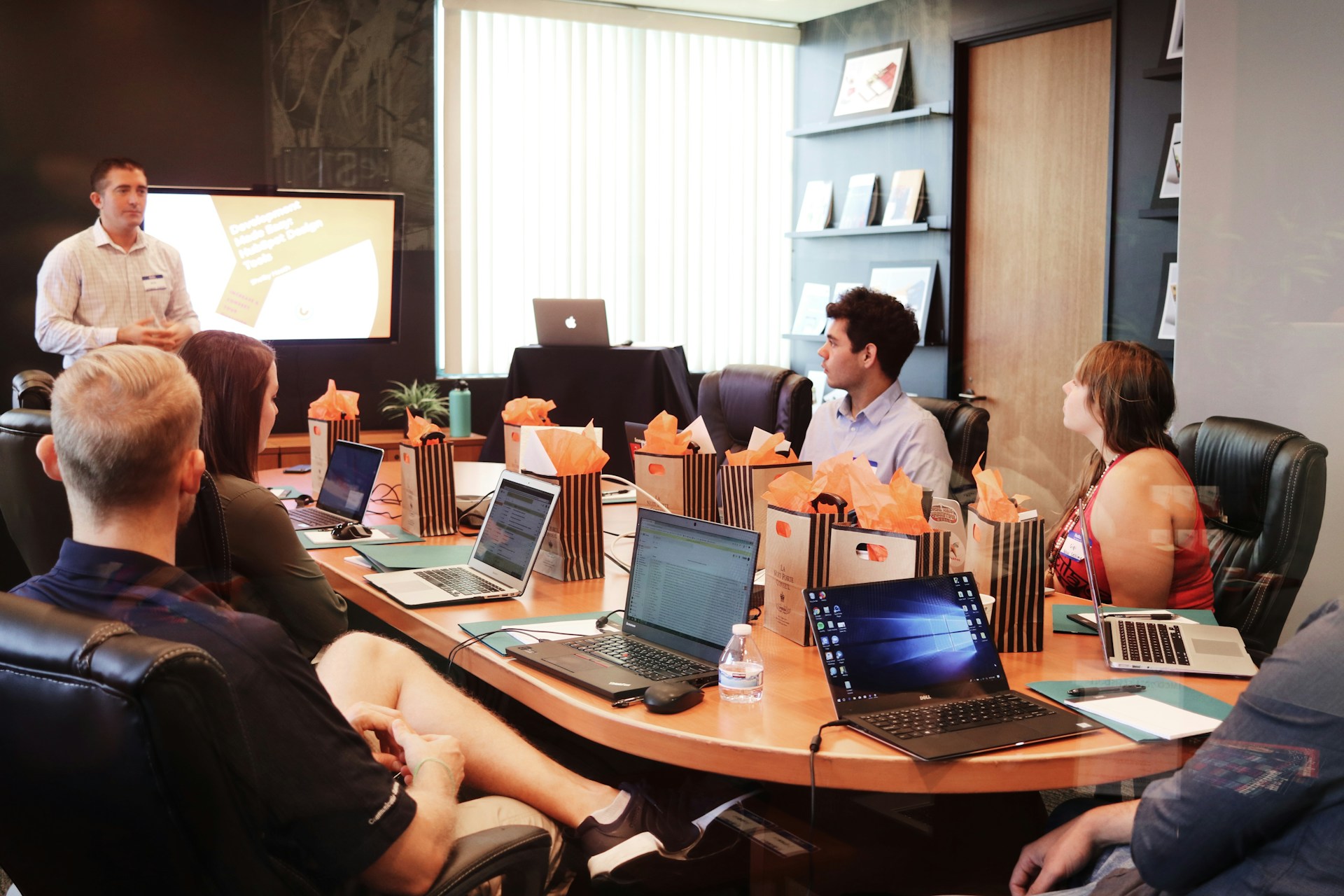
Workplaces have quietly become one of the biggest sources of cognitive overload.
Since the pandemic, many employees operate inside a constant stream of digital inputs. Meetings overlap. Notifications arrive from multiple platforms. Messages come through different channels with an unspoken expectation of immediate response. The boundary between work time and personal time blurred, and for many, it never fully returned.
The World Health Organization identifies workplace stress as a leading contributor to poor mental health. Digital overload is not the sole cause, but it significantly intensifies the problem.
A brain that is constantly interrupted struggles to recover. It cannot enter deep focus, and it cannot sustain high-quality output for long periods.
When this becomes ongoing, organisations begin to see clear consequences:
- Slower thinking and reduced creativity
- Increased errors
- Burnout and disengagement
- Lower psychological safety
- Higher turnover
These impacts are not abstract. They show up in performance data, engagement surveys, and everyday team interactions.
How Workplaces Can Respond
The solution is not to remove technology. It is to use it in ways that support, rather than drain, cognitive capacity.
- Protect uninterrupted focus time
Teams perform better when there are designated periods for deep work without messages, calls, or constant interruptions. - Reduce unnecessary meetings
Many video meetings can be replaced with clear written updates or brief check-ins that do not require sustained screen time. - Normalise digital boundaries
After-hours emails, pressure to respond immediately, and weekend messaging erode recovery. Leaders play a critical role in setting expectations. - Build digital wellbeing and resilience skills
Evidence-based training helps people manage cognitive load, regulate stress, and work more sustainably in high-stimulus environments. - Create psychological safety around overload
Employees should be able to say they are mentally overloaded without fear of being seen as disengaged or ineffective.
Taking Back Cognitive Space in a Noisy World
Brain rot may be a meme, but the experience behind it is real.
People are not imagining the fog. Their minds are responding to environments that demand constant attention, rapid switching, and sustained output without adequate recovery.
When workplaces take this seriously, they do more than prevent burnout. They build teams that can think clearly, work with intention, and maintain the mental capacity required for meaningful, creative work.
The digital world is not slowing down.
But organisations still have a choice about how much cognitive load they place on their people, and how well they support them to manage it.
Sources
- Wilmer, H. H., Sherman, L. E., & Chein, J. M. (2017). Smartphones and Cognition: A Review of Research. Psychonomic Bulletin & Review.
- Nature Communications (2023). Media format preference and attention dynamics.
- Frontiers in Psychology (2022). Social media use and cognitive fatigue.
- Twenge, J. M., et al. (2019). Age, Period, and Cohort Trends in Mood Disorder Indicators. Journal of Abnormal Psychology.
- Levenson, J. C., Shensa, A., & Sidani, J. E. (2016). Social Media Use Before Bed and Sleep Quality. Sleep Health.
- Pew Research Center (2023). The State of Digital Well-Being.
- World Health Organization. Mental health and work reports.