Category Archives: Tips

4 Simple Strategies for workplace

The 4 Simple Strategies Top Performers Use To Neutralise Setbacks & Stay Confident

Wouldn’t it be nice if everything you touched turned to gold and just worked? And everyone loved it? BUT, guess what? That leadership development strategy you’ve been working on for the past three months? The CEO didn’t like it. Your carefully constructed and painstakingly recruited project team? About to be decimated due to budget cuts. And that multi-million-dollar business deal you were sure you’d nailed? Fell through at the last second because someone changed their mind…In the business world, you don’t always get what you want, right?—even if you’re the boss. (if you don’t believe me, just ask your boss). In fact, you can often feel like you’re caught in the middle between helping your company advance and pressures that are beyond your control. That’s when setbacks happen.

The Psychological Impact of Setbacks

When you’re a relatively inexperienced leader or if you suffer from anxiety, these types of setbacks can be demoralising and humiliating—especially because so many people are aware of them. Sometimes, you might even feel like you’re a failure in the eyes of your own team. And that can compound your negative emotions and anxiety even further.

Setbacks produce a form of psychological pain that can warp our perceptions. As a result, we feel less capable of achieving specific goals, plus, we perceive those goals as much more challenging to attain. What’s more, we believe that whether we succeed or fail isn’t within our control.

It should be clear that when you fall prey to these kinds of misperceptions, they negatively impact your ability to do your job and most likely affect your quality of life.


Read more on workplace wellbeing strategies…


Don't forget to subscribe to our monthly eMag - WorkLife

Expert insights and tips on how to build resilient and mentally healthy workplace cultures delivered straight to your inbox each month.

Foster Resilience to Turn Setbacks into Stepping Stones

Of course, setbacks are part of life and business. Successful people haven’t gotten to where they are without failures and disappointments, but what sets successful people apart is their resilience—in other words, their ability to bounce back from failure, maintain good workplace mental health, and keep moving forward in a constructive manner.

The good news is that you can learn how to become more resilient—and heal that psychological pain that’s distorting your perception of your abilities. Here’s what you need to do:

  1. Analyse the setback. Take a high-level look at the incident and objectively analyse what factors contributed to your failure. Was it really due to something you did or didn’t do? Or was it an external factor?
  2. Learn from your failures. Once you’ve determined why something didn’t work out, brainstorm what you could have done differently to produce a better outcome. Knowing you’ve learnt something from the setback will help empower you to take positive action.
  3. Manage your self-talk. You can’t let that voice of self-doubt influence your confidence or actions. Every time you hear yourself thinking negatively about yourself, stop, and instead, think something positive about your achievements and your ability to learn from past experiences.
  4. Keep moving forward. Avoiding challenges isn’t going to do your career or your confidence any good. Every time you do overcome a challenge or meet your goals, it helps build your confidence and strengthen your resilience.

Bouncing back from a setback isn’t always easy. But with the points above in mind, you can become more resilient and better prepared to give every business opportunity your best effort.

Remember: realising you’re only human is actually productive. It means you’re capable of learning, adapting, and moving forward after any disappointment or setback.

Author: Peter Diaz
Peter-Diaz-AuthorPeter Diaz is the CEO of Workplace Mental Health Institute. He’s an author and accredited mental health social worker with senior management experience. Having recovered from his own experience of bipolar depression, Peter is passionate about assisting organisations to address workplace mental health issues in a compassionate yet results-focussed way. He’s also a Dad, Husband, Trekkie and Thinker.

Connect with Peter Diaz on:
Peter Diaz on Face Book Peter Diaz on Twitter Peter Diaz on LinkedIn

five-ways-to-motivate-team

5 Ways to Motivate Your Team for the New Year

A lot of employees find that motivation drags most in the weeks after Christmas holidays. To get the new year off to a positive start, you need to have powerful motivation strategies in place. For most people, this doesn’t mean pep talks; when those work at all, their influence wears off pretty quickly. Instead, use these five tested techniques:

1. Listen to the people on your team & tell/show you value them.

The relationship between an employee and their direct manager is the most important factor that influences engagement and motivation. If it is an open and honest relationship, that sets the tone for everything that goes on in the workplace. Listening to the people who work with you is a big part of that. This means listening when they have concerns as well as being open to their ideas. When the people around you feel like they are heard, they feel like they are valued, as well.


Read more on workplace leadership and wellness strategies….


Don't forget to subscribe to our monthly eMag - WorkLife

Expert insights and tips on how to build resilient and mentally healthy workplace cultures delivered straight to your inbox each month.

2. Learn what motivates each team member.

Some people really thrive on praise and feedback. Others are all about responsibility and freedom to get things done. Still others want a workplace where they feel that work/life balance is prized and protected. Learn what makes everyone you work with tick. By learning how they work and what drives them to do a job well, you can craft an environment that helps them be their best. Learning can come from a combination of closed-door, one on one meetings, surveys and questionnaires and simply observing people in action to see how they work best and what they respond to.

3. Make group goals.

Instead of always working to motivate each team member individually, create goals that everyone can work toward together. Make sure that everyone knows their roles and their responsibilities — remember, when more than one person is responsible for something, that can mean that no one is. Each person needs specific tasks and a way to check them off for accountability.

Goals should be broken down into milestones, short term goals and long term ones. Meet regularly to see where everyone is and what they need for the next steps or the bigger picture. Think about rewards for steps along the way. This combination of short and long term provides some reward for each step while helping keep focus on the larger, long term goal, which can help prevent fatigue. Making it easy for people to see small accomplishments help them drive toward larger ones and helps boost emotional and mental health at work.

4. Give team members responsibility.

People feel happiest at work when they know that they are important to an enterprise’s success. By giving people responsibility and the freedom to complete the work the way they want, it can help them take ownership of what they are doing. Allow different people to take leadership positions at different times. For instance, instead of a manager always leading meetings, ask different individuals on your staff to take charge. This allows different people to shape the discussion, giving you a variety of points of view. And, when this happens, people feel that their contributions are more important and are more likely to feel motivated about making them happen.

5. Show your team the bigger picture.

When people are just tasked with little pieces of the whole goal, their feeling about their importance might feel small, too. There is no value in deciding that information about the larger goals is over someone’s pay grade. Make sure that everyone knows what their contribution means to the success of the whole. Update regularly about how each of their tasks and projects works toward the organization’s bigger success.

This sort of transparency means that people know that the work they are doing means something. It helps them understand the value that they bring to the project. When people understand that, they feel more empowered and invested at work. They will do better work and feel more motivation each day to do it.

Keeping a team motivated is an ongoing task. It’s more than a few meetings or buzzwords. It comes down to a constant dedication to being the sort of leader who brings the best out of people. While that’s a big job, these are a few simple policies and actions to put into place to start. These and other tips to motivate your team can help make the coming new year a productive and fulfilling year.

Author: Peter Diaz
Peter-Diaz-AuthorPeter Diaz is the CEO of Workplace Mental Health Institute. He’s an author and accredited mental health social worker with senior management experience. Having recovered from his own experience of bipolar depression, Peter is passionate about assisting organisations to address workplace mental health issues in a compassionate yet results-focussed way. He’s also a Dad, Husband, Trekkie and Thinker.

Connect with Peter Diaz on:
Peter Diaz on Face Book Peter Diaz on LinkedIn

Toxic-Workplace

5 Signs You Might Have a Toxic Culture

A toxic environment is a disease to any business. Unhappy people are demotivated and easily drawn out of the business, which, depending on the industry, can lead to the business having a bad reputation amongst potential employees. So not only is it important that your business doesn’t have a toxic culture, it’s also imperative to know the symptoms that indicate you might and what you can do to stop the disease from spreading. Here are the five most obvious symptoms and what you can do to remedy them:

Dysfunctional relationships among staff.

Signs of infection:

  • Cliquishness
  • Favouritism
  • Lack of communication
  • Grudge-holding
  • Staff are pitted against each other

Remedy:

Team bonding, as clichéd as it sounds, should never be underestimated. Friday afternoon drinks and other social events such as Christmas parties or a quarterly dinner, with 100% inclusion, will work wonders with turning your bitter group of individuals into a team. To further reinforce this, set team based rewards and incentives rather than individual ones. This stops team members feeling like the person next to them is their rival and not their teammate.

Don't forget to subscribe to our monthly eMag - WorkLife

Expert insights and tips on how to build resilient and mentally healthy workplace cultures delivered straight to your inbox each month.


Your people feel they have a lack of work-home balance.

Signs of infection:

Remedy:

Be mindful of the mental health of your staff. Assure them it is your number 1 priority. Be a trusted rock for your staff. If they are having troubles in their personal life, be someone understanding that they can talk to, and if they need it, allow them the time away from work to tend to their personal needs. A happy team member is a lot more effective in an 8-hour day than a miserable one is in a 12 or 15-hour one.


Low morale.

Signs of infection:

  • People are unmotivated
  • People appear downtrodden and frustrated
  • People openly talk about not wanting to be there

Remedy:

Having a high morale will go a long way to ensuring you do not have a toxic work culture. Managing your people with a foundation of positive reinforcement, even when critiquing their performance, is pivotal to curing low morale. Nobody wants to be told they aren’t good enough or aren’t trying hard enough. “Good job” goes a long way in the good times. “We are doing great and will get through this” goes even further in the hard times. Also, be sure to trust your people. Micro-managing them will breed frustration and annoyance among your staff: trust that they know how to do their job and if and when they could do it better, give them feedback.


High turnover of staff.

Signs of infection:

  • New people don’t stay very long
  • You are constantly recruiting and training new employees

Remedy:

High staff turnover is the most obvious sign that something isn’t right in your business. Unfortunately, the reasons for it can be multi layered. It could be due to any of the other symptoms mentioned. To cure this, you must cure the other symptoms because constantly having to hire and bed in new staff will slow your progress and cost you a lot of money. Whereas a happy, experienced team who know the business will get more done, better and faster.


(Uh oh) You.

Signs of infection:

  • You set unrealistic expectations of your staff
  • You are cold and unsympathetic
  • You do not listen to your staff
  • You instil fear in your staff
  • You are hypocritical
  • You scapegoat individuals

Remedy:

Whoa there! That comes off seriously judge-y doesn’t it? I firmly believe that as leaders, we are doing the best we can, with the resources we have.  But this doesn’t stop employees in a toxic culture thinking (even saying) things like this about you.  Being a strong leader, who makes decisions and manages their staff from a place of positivity and genuine care, will cure every symptom of a toxic culture that you have. Take the steps to build and nurture your people into a team who work for one another to achieve their goals. Make your staff feel wanted and appreciated through positive reinforcement. Make them stay because they are loyal to you, their team members and the work culture you have built.

Toxic cultures are nasty places to be.  But as a leader, wouldn’t you like to be part of the clean up crew?

Author: Peter Diaz
Peter-Diaz-AuthorPeter Diaz is the CEO of Workplace Mental Health Institute. He’s an author and accredited mental health social worker with senior management experience. Having recovered from his own experience of bipolar depression, Peter is passionate about assisting organisations to address workplace mental health issues in a compassionate yet results-focussed way. He’s also a Dad, Husband, Trekkie and Thinker.

Connect with Peter Diaz on:
Peter Diaz on Face Book Peter Diaz on LinkedIn

silent-scream

Office Rage: Handling Anger in the Workplace

Anger. Everyone feels it at some stage in their lives. Putting a person – any person – in the pressure cooker that is the work place for a period of time and they are guaranteed to get angry at some point. That includes you, the manager, as well. A strong leader knows how to identify anger within themselves and others and knows what steps to take in order to rectify the situation.

As mentioned, there are two types of anger in the work place: yours and that of your people, each with their own two separate sub-types, overt and covert anger. Overt anger is visible and easy to spot, both within yourself and your people. It is out in the open, most likely used in a confrontation.


Read more on mental health and wellbeing…


Don't forget to subscribe to our monthly eMag - WorkLife

Expert insights and tips on how to build resilient and mentally healthy workplace cultures delivered straight to your inbox each month.


Covert anger is the anger that nobody was able to spot in time and became overt anger. This is the one to look out for. It is annoyance, irritation or passive aggression. Feelings we have all been told not to show, to grin and bear, to the point where sometimes, we don’t even notice they are there. But, they still manifest in a variety of different ways:

    • Procrastination
    • Perpetual or habitual lateness
    • A liking for sadistic or ironic humour
    • Sarcasm or cynicism
    • Frequent sighing
    • Clenching of fists or jaws
    • Facial tics
    • Passive aggressiveness

If you’ve noticed any of these within a member of your team, you will want to subtly investigate the cause so you can decide what to do next.

The best way to approach this is by being casual. Instead of pulling the person into your office for a chat, which may only exacerbate the situation, align your lunch with theirs, ask them about their day, their lives. Allow them to open up to you. If it is an issue at work, work with them to address it.

If it is an issue at home, be patient with them and allow them time to sort it out, and of course, offer your support if you can and it is appropriate. For anybody, having a manager that they can confide in and is understanding is of great comfort. It makes it much easier for them to “leave it at the door.”

And the same applies to you, the manager too. If you notice these feelings or signs, talk to someone about them, even if it is a member of your staff (showing that you trust them helps build their trust in you). It is important not to let this anger bubble under the surface, because it will eventually explode and either you or a member of your staff to will find themselves in a very compromising situation.

All overt anger was once covert anger. However, the length of time it has been bubbling under the surface can vary. It can be built up over weeks or months, or it can boil over in a matter of minutes. If confronted with this sort of anger in a member of your staff, it is important to remove them from the situation immediately. Again, taking them to the intimidating confines of your office for a chat has potential to make matters worse, therefore, it is best to take them for a walk or a coffee and talk to them calmly about what is making them feel this way.

Getting angry yourself will only make matters worse.

It is important to be a calming influence. Again, this is done by showing patience and care. Having a calm, rational and friendly chat with the employee will allow them to open up and tell you their grievances in order for you to help resolve them.

If you find these feelings boiling over within yourself, it is important to remove yourself from the situation, compose and control yourself and let the initial anger dissipate before you confront the source. This is especially important if the source of your anger is a member of your team. Taking a breather, whether it be for 5 minutes or leaving it for the next day is invaluable as it will allow you to confront the situation calmly, rationally and maturely – ensuring you don’t hurt or break the trust and respect you have worked hard to build with your team.

Author: Peter Diaz
Peter-Diaz-AuthorPeter Diaz is the CEO of Workplace Mental Health Institute. He’s an author and accredited mental health social worker with senior management experience. Having recovered from his own experience of bipolar depression, Peter is passionate about assisting organisations to address workplace mental health issues in a compassionate yet results-focussed way. He’s also a Dad, Husband, Trekkie and Thinker.

Connect with Peter Diaz on:

Peter Diaz on Face Book Peter Diaz on LinkedIn

Pillar-7-Wrap-Around-Strategies

Building A Mentally Wealthy Workplace: 7th Pillar

How does your organisation demonstrate a commitment to developing its mental wealth?A clear tell tale sign is a preference for considered mental health initiatives over band aid solutions. That demonstrates an organisation’s commitment to developing its mental wealth. And these carefully considered and designed mental health initiatives must be ‘wrap around strategies’. That means that your mental health initiatives are, at its basic core, complex and have to take a holistic view of a person’s journey through a mental health problem. As I mentioned in the previous Pillar, awareness programs are useful, but they can’t be the only strategy. Likewise with Employee Assistance Programs. And with anti-bullying and harassment training. And with wellness programs. And so on. Each of these initiatives by themselves is useful, but when used in isolation, they have little sustainable impact.

  • We need to think more broadly than the bookend strategies of making people aware of the potential for trouble and mopping up after it happens.
  • You need to look at your prevention strategies. What are those? Are they a part of a complete strategy or an add on?
  • You need to look at your early intervention strategies. Do they move beyond the basis of EAP referral and leave?
  • You need to look at your wellness programs. Are they eclectic and are they giving you the results you are after?
  • You need to look at your leadership development programs. Are they complete?
  • Do these programs exist? Are they being used?

Don't forget to subscribe to our monthly eMag - WorkLife

Expert insights and tips on how to build resilient and mentally healthy workplace cultures delivered straight to your inbox each month.

Building a mentally wealthy culture doesn’t require a massive bolt on program, but it does require you to ensure the psychological needs of a diverse workforce are catered for. Diverse not just in age, gender or ethnicity, but diversity in work style, talent and life outlook.

Recognition of mental wealth is a paradigm shift. I realise that. So kudos for you still being here, not throwing the book down and running away. What you have been told about leading successfully: the macho, tough leadership style (even when dressed up with some sophistication and political correctness) creates less valuable companies in the long run than displaying genuine compassion and a willingness to work with people to achieve a common goal. This is not a ‘soft’ approach, it’s a proven approach. One that gets results.

And that’s such a game changer. Highly worth it, don’t you think?


Read about all the 7 Pillars of Mentally Healthy Workplace…


Author: Peter Diaz
Peter-Diaz-AuthorPeter Diaz is the CEO of Workplace Mental Health Institute. He’s an author and accredited mental health social worker with senior management experience. Having recovered from his own experience of bipolar depression, Peter is passionate about assisting organisations to address workplace mental health issues in a compassionate yet results-focussed way. He’s also a Dad, Husband, Trekkie and Thinker.

Connect with Peter Diaz on:
Peter Diaz on Face Book Peter Diaz on LinkedIn

Man-thinking

Why do many managers shy away from mental health at work?

It’s hard being a manager. Often, it can feel like you’re the meat in the sandwich, between the needs of the employees and the needs of the Senior Directors or Board. But when it comes to mental health, taking action can have a positive effect for both parties. And it’s great for business! So why do so many managers get stuck – why do they shy away from addressing workplace mental health? Here are just some of the reasons:
Will this look like harassment?

    For managers who do decide to wade into a mental health issue, a real concern is how the employee will react. What if the employee takes exception to the line of questioning? What if they feel so put out that they lodge a formal complaint against the manager for harassment? This is a valid concern, as they’re likely to be dealing with a person in a heightened state of sensitivity, with many people with a mental health issue reporting that they feel bullied or harassed more often. For a manager, having a workplace harassment or bullying judgement go against them has serious consequences: the organisation may be liable for damages, the manager themselves may be personally liable. And it can seriously curtail that manager’s confidence and ability to manage performance thereafter. Once bitten, twice shy.

Read more on workplace mental health & wellbeing…


Don't forget to subscribe to our monthly eMag - WorkLife

Expert insights and tips on how to build resilient and mentally healthy workplace cultures delivered straight to your inbox each month.


What if I make it worse?

    In reality (and we’ll discuss this later) the risk of a successful harassment or bullying claim being brought against a manager for addressing a mental health concern is very low, when done properly. And therein lies a challenge: ‘properly’. Many managers who are genuinely concerned about an employee’s mental health will avoid addressing it for fear of doing something that makes things worse. ‘What if I say the wrong thing?’, ‘What if I embarrass them?’, ‘Should I just report it to someone?’, are all common questions that go through a manager’s head. These are valid questions by the way – managing a mental health issue in a team does take a set of skills. The reason most managers don’t feel confident with this stuff is that they’ve never been taught the skills. In no business degree, MBA or even HR qualification that I know of are mental health management skills taught. Managers are really left to rely on their own experience and their emotional intelligence to deal with these situations. And in allowing that to happen, frankly, we are letting our managers down.

I really don’t have time for this.

    We don’t have to look far to realise that managers across the country are overworked. I don’t mean in a ‘we just say we’re busy so people think we’re useful’ kind of way – I mean many of our organisations are chronically under resourced. The downsizing and delayering of middle management in the late 80s and early 90s was taken too far. To use a medical analogy, companies went beyond ‘cutting out the fat’ and have cut out some of the minor muscle groups. Line and middle managers in particular are seeing their workloads and responsibilities grow for little to no extra resources or compensation as organisations downsize and rationalise. Many managers simply do not have the headspace or the energy to involve themselves in the mental health of their employees – they’re flat out managing their own.

As you can see, these are genuine considerations that need to be addressed if a workplace mental health strategy is to be effective. And they all can be addressed by educating managers about the need to (and benefits of) managing mental health effectively, but also to equip them with real and practical skills to do it right, so they are not at risk of a harassment claim, and so that they don’t make it worse.

Author: Peter Diaz
Peter-Diaz-AuthorPeter Diaz is the CEO of Workplace Mental Health Institute. He’s an author and accredited mental health social worker with senior management experience. Having recovered from his own experience of bipolar depression, Peter is passionate about assisting organisations to address workplace mental health issues in a compassionate yet results-focussed way. He’s also a Dad, Husband, Trekkie and Thinker.

Connect with Peter Diaz on:
Peter Diaz on Face Book Peter Diaz on LinkedIn

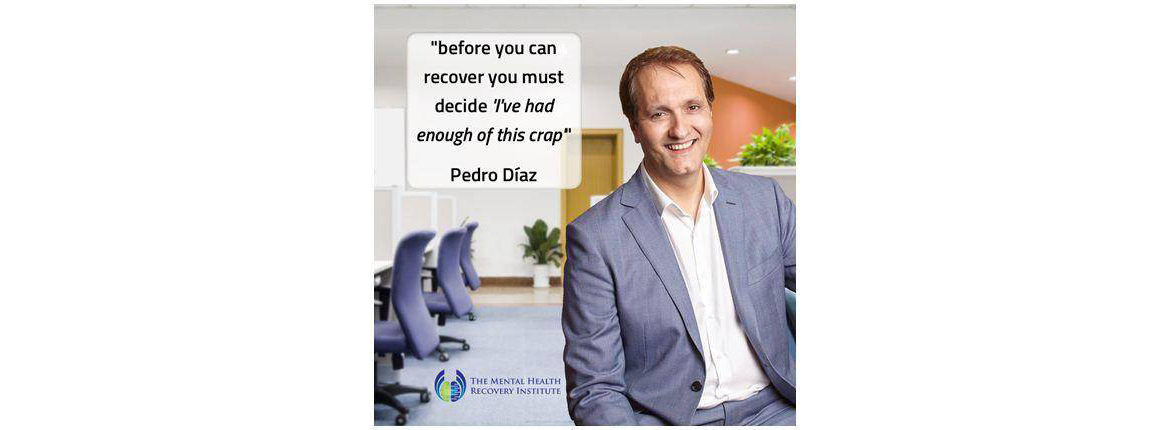
Before-you-can-recover

I’ve had enough

I remember like it was yesterday the moment I decided I was going to recover.

I looked in the bathroom mirror and I had one of those moments of clarity and in that moment I realised I had been a people pleaser, and that my life, was not my life. A rage built up within me and I yelled (at my own reflection) ‘what the F*&k are you doing?’. That pivotal moment changed my life. I crawled myself out of that hole I was in. I used the anger as leverage. And pulled myself out. I started using the resources available to me. More importantly, I started to see the options and resources available to me, that I had never noticed before.


Read more on mental health recovery…


Don't forget to subscribe to our monthly eMag - WorkLife

Expert insights and tips on how to build resilient and mentally healthy workplace cultures delivered straight to your inbox each month.

In short, I took responsibility for my feelings.

No, this was not an overnight thing and I have made many mistakes in this journey, but I was, and still remain, determined to live my life by my standards. It’s been an arduous journey to say the least but it’s been a worthwhile one.

Interestingly, the research on Recovery shows that my moment is a fairly common one. A lot of people who recover have had a moment like that. My tip? Don’t be afraid of a little anger and of making mistakes. Or even more scary, that the people you have around you now will not love you anymore if you change. The price of not changing is too high. Don’t pay it. Move towards recovery and freedom.

Author: Peter Diaz
Peter-Diaz-AuthorPeter Diaz is the CEO of Workplace Mental Health Institute. He’s an author and accredited mental health social worker with senior management experience. Having recovered from his own experience of bipolar depression, Peter is passionate about assisting organisations to address workplace mental health issues in a compassionate yet results-focussed way. He’s also a Dad, Husband, Trekkie and Thinker.

Connect with Peter Diaz on:
Peter Diaz on Face Book Peter Diaz on LinkedIn

Work-life-balance

‘Work-Life Balance’ is a trap

A colleague of mine was putting together some guidelines for her company about how to minimize workplace stress, and stay mentally and emotionally well at work, and she asked me to have a look over it and provide some feedback.

Looking at the list of strategies her company had come up with, I noticed that about 90% of them focused on things like limiting work hours to the 8 hour shift, making sure to ‘switch off’ from work as soon as you leave, not accessing work emails and phones outside of work hours, and basically adhering to a strict distinction between “work time” and “life” time. Now this isn’t an uncommon idea, we’ve all heard of the phrase ‘work-life balance’, but let’s delve in a bit deeper.

If you look at the language used in this expression and the subconscious connotations it sends, you might come to the conclusion that it would be better not to use the phrase at all, and definitely not promote it.

Firstly, when we juxtapose two ideas like this next to each other, we are implying that they are opposite of each other, or at least very distinct and different elements. This is especially dangerous when we compare ‘work’ and ‘life’. Let me ask you – what is the opposite of life? …. It’s ‘death’, right? So by juxtaposing work and life, we are actually equating ‘work’ with death! Are you not alive at work? When did ‘work’ become a bad thing?

Now I know this isn’t what is intended when people use the expression, or recommend it to others, but, psychologically, this interpretation can be made very quickly and subconsciously, without us really paying any conscious attention to it. After all, it’s not what we mean, but what is being heard.

If we really buy into the idea of work-life balance, it often is not long before we experience ‘life’ as good, and ‘work’ as bad, and then it makes sense to want to put some limits and boundaries around how long we spend in that ‘bad’ place. As a manager, is that the message you want to send your staff?

But what if work wasn’t bad at all? After all, the research shows that overall, work is good for your mental health and for recovery from mental distress. And what if work was simply a part of life? What if you even enjoyed, looked forward to, and found fulfillment in your work?  Would you want to limit how long you spent in that state?


Read more on self-care and workplace wellbeing


Now of course, our lives are rich and full of different aspects. It is important, and most people get a great sense of fulfillment from spending time, energy and attention on other things too, like family, friends, health, travel, hobbies, etc. We should make sure we do have time for these activities. But there is inherent danger in separating work from these areas, and viewing it as a negative part of life.

Don't forget to subscribe to our monthly eMag - WorkLife

Expert insights and tips on how to build resilient and mentally healthy workplace cultures delivered straight to your inbox each month.

Our recommendation would be to find work that you do enjoy, and is fulfilling, where you are not spending each day watching the clock and measuring, to make sure you give no more than you have to. If you love what you’re doing its not work anyway.

If you look at the people who are very successful in their field of endeavor, whether its business, sports, creative arts, parenting, or anything else, they don’t usually stick to a minimum number of hours. They don’t need to ‘switch off’ afterwards, because they love thinking and talking about their passion.

So, next time you catch yourself talking about ‘work-life balance’, think about this. It’s all ‘life’ – there are 24 hours a day and your life is made up of how you choose to spend your time. I hope you’re doing something you enjoy.

And if you’re a manager, I’m sure you appreciate a team of people who enjoy doing what they do, and are flexible enough to take on some additional responsibilities from time to time, or do some overtime occasionally. And of course, as a manager who is conscious of mental health and wellbeing, you wouldn’t take advantage of that flexibility, and you would appreciate and recognize that person’s contribution.

Author: Emi Golding
Emi-Golding-blog-imageEmmaline (Emi) Golding is a registered psychologist and Director of Psychology for the Workplace Mental Health Institute. With experience both at the frontline and in Senior Management positions within mental health services, Emi is passionate about educating and expanding people’s knowledge of mental health issues, particularly within workplaces. For her own well being, Emi loves to dance and spend time with friends. She also enjoys learning languages and travelling to new and exciting places around the world.

Connect with Emi Golding on
Emi Golding on Face Book Emi Golding on LinkedIn Instagram-logo

What-kind-of-fathers

What kind of father is worse?

I grew up with a father who loved me but was incapable of saying it. I knew he loved me because he’d discipline me very harshly and tell me it was for my own good, but in 50 years he was never able to say it. Even when I said it at the end of every phone call. Now, this is not strange. I know many people have grown up in this kind of environment. And many people have it many times worse than I had it. At least, I’m certain I was loved.

But, I’m wondering, what’s worse? a physically present but emotionally unavailable parent or a physically absent parent? I am reminded of this today simply because a client-friend of ours just forwarded me a link to a Canadian article saying that Presenteeism – when people are physically present but ‘not there’ – is costing Canada up to 3 times more than Absenteeism – when people are not there at all. This is because their performance is impaired, the quality of work declines, they make errors and fall behind. I believe that, at last count, the same is true for Australia. It’s an important topic for workplaces when we are talking costs of billions of dollars per year, don’t you think?


Read more on mental health and wellbeing….


Don't forget to subscribe to our monthly eMag - WorkLife

Expert insights and tips on how to build resilient and mentally healthy workplace cultures delivered straight to your inbox each month.

And then, there’s another aspect to this. Managers. What kind of a manager are you? are you a manager that suffers from management presenteeism? What I mean is, are you physically there for your staff but are you emotionally unreachable? I’ve met many managers that have been taught to be like that. They’ve been told to have ‘professional detachment’. What does that even mean? and how effective is that in a business world where your success depends on your ability to form relationships? And, more importantly, what do you think the impact of having professional detachment is on your team?

For all of you who grew up with emotionally unavailable parents, don’t repeat the same mistake. Be available and contribute meaningfully to each other.

Food for thought, right?

Author: Peter Diaz
Peter Diaz profile

Peter Diaz is the CEO of Workplace Mental Health Institute. He’s an author and accredited mental health social worker with senior management experience. Having recovered from his own experience of bipolar depression, Peter is passionate about assisting organisations to address workplace mental health issues in a compassionate yet results-focussed way. He’s also a Dad, Husband, Trekkie and Thinker.

Connect with Peter Diaz on:
Facebook-logo Podcast Icon LinkedIN-logo