
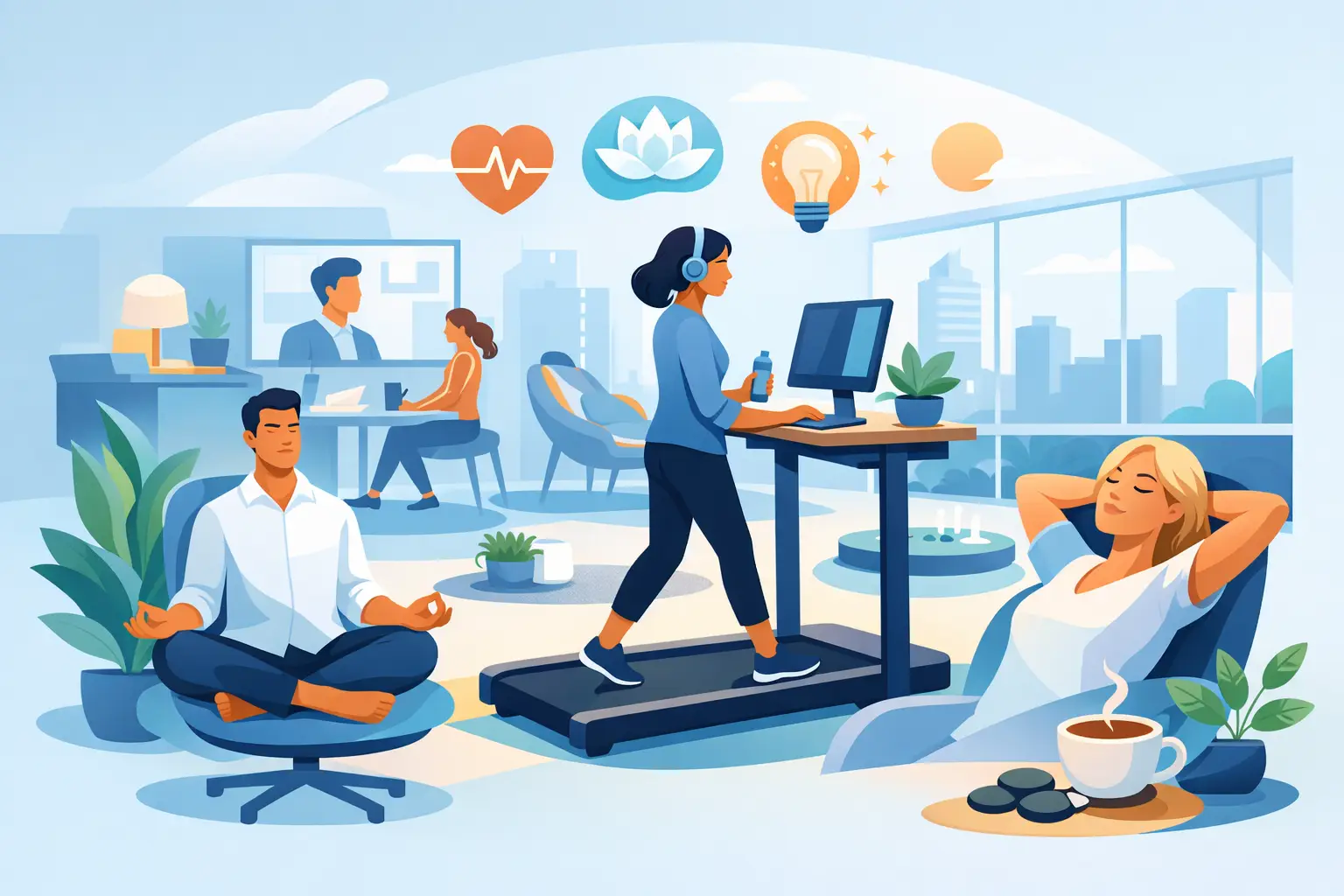
A wellbeing calendar packed with awareness days, fruit boxes and meditation apps will not protect an organisation from burnout, conflict or psychological injury. The future of workplace wellbeing is being decided in the everyday conditions of work: workload, role clarity, manager behaviour, change processes, team connection and the confidence people have to speak up early.
For Australian employers, this is no longer a peripheral people initiative. It is a business performance and WHS issue. Psychological injury claims can involve longer absences and higher costs than many physical injury claims, while poor mental health at work affects retention, productivity, customer service and leadership capacity. The organisations that move ahead will treat wellbeing as a measurable operating discipline, not a collection of good intentions.
The future of workplace wellbeing is psychosocial safety
Workplace wellbeing has traditionally been framed around individual resilience: help employees manage stress, encourage healthy habits and provide support when someone is struggling. These measures have a place, particularly when they build practical capability and make support easier to access. But they are insufficient when the work itself is creating preventable harm.
The stronger model starts with psychosocial safety. This means identifying and managing hazards such as excessive job demands, low job control, poor support, role ambiguity, bullying, traumatic events, poor organisational change and conflict. It asks a more useful question than, “How can people cope better?” It asks, “What is happening in this system, and what must change?”
This distinction matters commercially. Asking employees to become more resilient while leaving unmanageable workloads untouched can damage trust. By contrast, a well-designed psychosocial risk approach reduces exposure to harm while giving people and managers the skills to respond constructively when pressure rises.
For leaders, the practical implication is clear: wellbeing strategy needs to sit alongside safety, workforce planning, operational performance and change management. It cannot be delegated solely to an annual employee event or an employee assistance provider.
From perks to work design
The next generation of wellbeing programs will be less focused on perks and more focused on the quality of work. Flexibility, for example, can improve autonomy and retention, but only if workloads, communication norms and performance expectations are realistic. A hybrid team with constant video meetings, unclear priorities and after-hours messages is not protected simply because employees can work from home.
Good work design creates clearer boundaries, achievable demands, meaningful input into decisions and reliable support. It also recognises that one intervention will not suit every team. A frontline workforce managing traumatic customer interactions needs a different response from a professional services team facing sustained deadline pressure or a leader managing rapid organisational change.
Managers will become the critical wellbeing capability
Employees experience an organisation through their direct manager. A policy may be well written, and an executive may make a strong public commitment, but the daily reality is shaped by conversations about workload, leave, performance, conflict and flexibility.
That makes manager capability one of the highest-return investments in workplace wellbeing. Managers do not need to become clinicians. They do need to recognise early signs of distress or overload, hold respectful and psychologically safe conversations, respond appropriately to disclosures, manage conflict early and escalate concerns through the right channels.
They also need the authority to act. Training without clear processes, reasonable spans of control or senior support can leave managers feeling responsible but powerless. If a manager identifies an overloaded employee but cannot reprioritise work, obtain temporary resourcing or challenge unrealistic deadlines, the underlying risk remains.
High-performing organisations will build manager confidence through practical, scenario-based learning rather than awareness alone. That means rehearsing difficult conversations, applying tools to real team situations and understanding the limits of the manager role. It also means holding leaders accountable for the conditions they create, not just the messages they communicate.
Leadership behaviour will be measured, not assumed
Psychological safety is often discussed as a cultural aspiration. In practice, it shows up in observable behaviour. Do leaders invite challenge? Are mistakes treated as opportunities to improve systems, or as reasons to assign blame? Do people receive clear decisions during change? Can employees raise a workload concern without fearing career consequences?
These questions can be assessed. Pulse surveys, psychosocial hazard assessments, focus groups, absence patterns, turnover data, grievances and workers compensation trends all provide useful signals. No single metric tells the whole story, but together they help organisations identify where risk is concentrated and whether interventions are working.
The important shift is from measuring participation to measuring impact. Attendance at a wellbeing session is not an outcome. Improved manager confidence, lower reported role conflict, earlier resolution of team issues, reduced absence and stronger retention are far more meaningful indicators.
Data will sharpen decisions, but trust remains essential
Technology will play a larger role in the future of workplace wellbeing. Organisations can use anonymised survey data, workforce analytics and digital learning platforms to identify trends across locations, roles and teams. This makes it easier to target resources where they will have the greatest effect, particularly in large or geographically dispersed workforces.
However, more data does not automatically mean better wellbeing. Employees will only share honest feedback when they understand what is being collected, how privacy is protected and what will happen next. Collecting data without acting on it can be worse than not asking at all. It signals that the organisation is listening for appearances rather than improvement.
The best approach is proportionate and transparent. Gather the information needed to understand risk, report findings at a level that protects confidentiality, communicate priorities clearly and show people what has changed as a result. This closes the feedback loop and builds confidence in the process.
There is also a trade-off between standardisation and local relevance. Enterprise-wide data supports consistency, but team-level context explains why a result exists. A high-demand score in one area may reflect a short, well-managed project peak. In another, it may reveal chronic understaffing, poor role design or a leader who lacks the skills to set boundaries. Leaders need both the dashboard and the conversation.
Wellbeing will be tested during change and uncertainty
Restructures, new technology, economic pressure and evolving employee expectations will continue to place organisations under strain. Change itself is not necessarily harmful. Poorly managed change is.
When people do not understand why change is happening, what it means for their role or where decisions are coming from, uncertainty becomes a psychosocial hazard. Rumours fill information gaps. Workloads rise as systems and responsibilities shift. Managers may be expected to answer questions they have not been equipped to handle.
Future-ready organisations will build wellbeing into change plans from the beginning. They will assess psychosocial risks before implementation, consult meaningfully with affected workers, provide managers with clear talking points and monitor pressure points as the change unfolds. This is not a delay tactic. It is risk reduction that protects productivity and helps change stick.
Trauma-informed practices will also become more relevant in sectors where employees are exposed to distressing events, aggression, serious incidents or complex community needs. A supportive response does not mean lowering performance standards. It means recognising the effect of exposure, responding early and providing pathways for recovery while maintaining clear operational expectations.
What organisations should do now
The most effective wellbeing strategies are specific, owned and reviewed. Start by understanding the current state of psychosocial risk rather than assuming the most visible issue is the most urgent. Combine workforce data with direct employee input and examine whether particular teams, locations or job types face elevated risk.
From there, prioritise the issues that have the greatest impact on both people and performance. This may involve redesigning workload allocation, strengthening manager capability, improving change communication, clarifying roles or establishing better processes for responding to conflict and inappropriate behaviour. A long list of disconnected initiatives rarely creates momentum. A small number of well-executed priorities does.
Set measures before launching solutions. For example, if manager confidence is a concern, assess capability before and after training and track whether managers are using the expected practices. If workload is the issue, monitor overtime, leave balances, turnover, employee feedback and operational delivery. If psychological safety is the goal, measure whether people feel safe to raise concerns and whether those concerns lead to timely action.
This is where specialist training and assessment can add real value. Workplace Mental Health Institute works with organisations to translate broad commitments into practical leadership behaviours, risk controls and measurable capability. The aim is not to create another wellbeing program. It is to build a workplace where people can perform well without paying for it with their health.
The future belongs to employers willing to look closely at how work gets done. When leaders listen, managers are equipped and psychosocial risks are managed with the same discipline as other business risks, wellbeing stops being an add-on. It becomes part of how a capable organisation earns trust, retains good people and performs under pressure.