Category Archives: Mental Health

generation-X

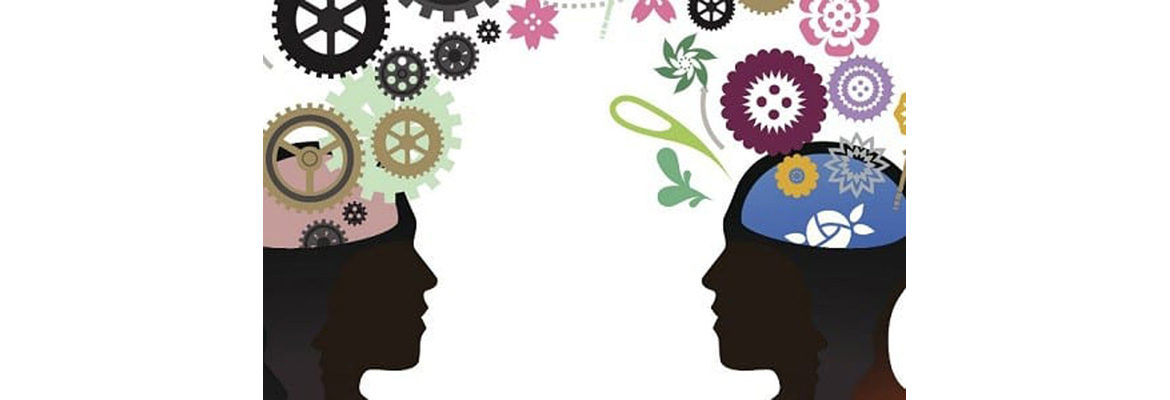
Are Gen Xers the key to staying sane while managing a multi-generational workforce?

‘The problem with Millennials is that…’ is an expression often heard. Let’s face it, it’s not easy to manage a generation that is more in contact with technology than with people. At least that’s a common opinion. There is often talk about the contribution of Millennials to the workplace and the frustrations many members of other generations experience when working with them.

At the same time, many managers are puzzled by how Generation Xers have merged seamlessly into a workforce dominated by Baby Boomers.
How did they do that?
The answer may well prove to be the key to keeping you and your team sane as more generations join the workforce.
On Millennials
In 2016, the Pew Research Center found that Millennials surpassed Baby Boomers as the largest living generation (in the US). While there is some controversy surrounding the definition of Millennials by the year they were born, one factor in what defines a Millennial remains constant. These are the children who were raised in the current technological age. They do not remember a time without Google, mobile phones, or YouTube. They do not recall a time when they had to rely on books, card catalogs, or encyclopedias for information, but instead feel as though their ability to leverage technology for information gives them a competitive advantage over their older peers.

Baby Boomers, who are more likely to be employed by a company long-term often bemoan the Millennial’s lack of employer loyalty, feeling as though their perpetual need for mobility and purpose work to the disadvantage of an employer who invests training time and capital into their experience.


Read more on mental health wellbeing and mindfulness…


Don't forget to subscribe to our monthly eMag - WorkLife

Expert insights and tips on how to build resilient and mentally healthy workplace cultures delivered straight to your inbox each month.


Meet Generation X
Generation X, on the other hand is much more defined by the years in which this population was born. Often considered the generation born from the 1960’s through the late 1970’s, Generation X currently comprises 32 percent of the workforce, only recently surpassed by Millennials, according to Pew Research Center. Generation X came of age along with the advent of the internet, making them old enough to remember life before we carried minicomputers in our pockets. This singular characteristic makes them more relatable to Boomers while being able to speak the language of technology with Millennials.

As the “sandwich generation”, Gen Xers often find themselves as the go-between for their Millennial and Boomer coworkers.
Baby Boomers
Making up just under 30 percent of the workforce, Baby Boomers are defined as those born after World War II up until 1960. While this sector of the working population are beginning to retire, and are expected to continue to decline in their employment participation, they are working far past traditional retirement years, often in conflict with their Millennial subordinates.

Boomers tend to prefer in person contact and telephone calls rather than electronic means of communication. These are the employees who value loyalty, honesty and work ethic above all else yet they are the group that most often struggles with work/life balance, sometimes neglecting their personal life out of duty to the organisation.
Cross-Generational Friction
If Millennials are defined by their use and reliance on technology and their perceived lack of loyalty, and Boomers are defined by their reliance on tradition and loyalty, it is easy to see why these two groups often find themselves in conflict with each other.

The key to building a cross-generational team that honors the experience of the Boomer while capitalising on the innovation of the Millennial may well lie in the intentional inclusion of the Generation Xer.

Experienced enough to appreciate tradition while young enough to value the usefulness of technology, the Generation X employee is able to bridge the seemingly cavernous gap between the other two generations.

Regardless of the makeup of the cross-generational team, leaders need to invest time in communicating the company’s vision, purpose and strategies to their employees. Understanding how their work contributes to the “big picture” appeals to the typical Millennial’s need to find meaning and value in their work. Understanding the strategic plan allows the Boomer and Generation Xer to capitalise on their experience to put these strategies into effect. And having a common vision helps all members of the cross-generational team to work together for a shared goal.

But bear in mind that this type of communication is not something that can be done once during an annual performance review. It must be infused into all of the leader’s communications, from informal performance reviews to regular staff meetings to corporate electronic communications.

Constant reinforcement of the shared vision allows the team to reconvene under a common purpose should it be derailed by generational misunderstandings. It also makes room for sanity and growth.

Author: Peter Diaz
Peter-Diaz-AuthorPeter Diaz is the CEO of Workplace Mental Health Institute. He’s an author and accredited mental health social worker with senior management experience. Having recovered from his own experience of bipolar depression, Peter is passionate about assisting organisations to address workplace mental health issues in a compassionate yet results-focussed way. He’s also a Dad, Husband, Trekkie and Thinker.

Connect with Peter Diaz on:
Peter Diaz on Face Book Peter Diaz on Twitter Peter Diaz on LinkedIn

3-tips-for-developing-emotional-intelligence

3 Tips for Developing Your Team’s Emotional Intelligence

As many as one in five Australian workers suffers from a mental illness such as anxiety, depression, bipolar disorder, psychosis, or substance abuse. And it’s not surprising that the majority are reluctant to tell their co-workers for fear of being treated differently. Which is why it’s critical that managers promote workplace mental health by mitigating factors that could trigger someone’s symptoms and propel him or her into ill health.

The Detrimental Impact of a Lack of Emotional Intelligence in the Workplace

Fortunately, most people interact professionally with their colleagues, even if they don’t always understand their motivations or moods. However, there’s one type of team member that isn’t likely to respond in a mature manner: someone who has a lack of emotional intelligence or emotional quotient (EQ). While people like this can be talented and productive, their inability to empathise with others can create uncomfortable working relationships and sometimes escalate into full-blown conflicts. This in turn results in damaged relationships, a stressful work environment, compromised performance, and even high turnover.


Read more on emotional intelligence…


Don't forget to subscribe to our monthly eMag - WorkLife

Expert insights and tips on how to build resilient and mentally healthy workplace cultures delivered straight to your inbox each month.

The Benefits of Developing Emotional Intelligence

Instead of leaders having to deal with the fallout of these kinds of situations (fighting fires), it’s much more conducive in the long run to develop emotional intelligence in those team members who have a low EQ. This offers the following benefits:

  • Better interactions with co-workers (not only those suffering from mental illness) resulting in a more productive work environment, enhanced performance, increased productivity—and ultimately reduced turnover.
  • Better people skills on the part of the formerly immature workers, which provides them with the essential soft skills to advance their careers. In the long term, this justifies the company’s investment of time and resources in them.

3 Tips for Developing a Team Member’s EQ

Admittedly, developing a team member’s EQ is easier said than done. The individual has to want to change in order to truly develop. Even so, keep the following tips in mind:

  • Integrate EQ development with the employee’s career coaching. This provides you with a relevant framework to address the issue.
  • Determine the team member’s career objective. Find out which goals are important to him or her.
  • Explain why positive relationships are crucial to achieving his or her goals. Focus on how mutual respect and strong network connections play an essential role in advancing.
  • Provide a factual analysis of what the team member needs to learn and how it will benefit him or her. This can include empathy, non-verbal cues, and self-assessment. For example, if the worker has previously sparked conflict by being rude to, or appearing to ‘ride’ a colleague, explain how this behaviour is damaging to the colleague and reflects poorly on the leadership credibility (current or future) of the offending team member. Then brainstorm alternative ways to respond and how that would benefit the team member. For example, offering to assist the colleague would get the job done while simultaneously building the team member’s reputation as a supportive team player.

Our Building Resilience at Work course is something to consider for building the EQ of your team. It’s designed to build mental strength, stamina and emotional mastery so you can get on with business.

Developing a team member’s EQ isn’t easy—but it can be done. And in the long run, creating an emotionally intelligent workforce will benefit both your team members and your organisation.

Author: Peter Diaz
Peter-Diaz-AuthorPeter Diaz is the CEO of Workplace Mental Health Institute. He’s an author and accredited mental health social worker with senior management experience. Having recovered from his own experience of bipolar depression, Peter is passionate about assisting organisations to address workplace mental health issues in a compassionate yet results-focussed way. He’s also a Dad, Husband, Trekkie and Thinker.

Connect with Peter Diaz on:
Peter Diaz on Face Book Peter Diaz on LinkedIn

Workplace-Mental-Risk

Workplace mental health must be given priority or else

Recent Federal Court cases have raised serious questions around when directors may find themselves facing personal penalties. It appears directors may be personally liable for issues in the work place even if their company does not break any laws. If the company is found to be at risk of breaking any laws, then directors and business owners could be in trouble,” Mr Diaz said today.

These recent cases mark quite a change in the way directors, owners and managers are seen by the courts.

Mental health is a serious issue in the work place and becoming a bigger issue for businesses.

The increased pressure of cost cutting and doing more with less, is placing significant strain, stress and pressure on staff across the country.

Many Australian businesses are competing against multi-nationals who are able to source cheaper labour overseas and invest in technology to systemise and computerise activities normally undertaken by humans. As a result, jobs are being lost, outsourced and off-shored.

This level of change, pressure and disruption in the work place combined with more challenging front line issues is creating significant stress for workers and work places generally.

It is no surprise that the presence of mental health issues in the workplace is on the rise.

While many companies have targets and programs to deal with work place accidents and other issues such as bullying and harassment, most do not have programs to deal with mental health issues.

Mental health issues silently affect absenteeism, productivity, morale, customer service and many other areas of a business. In effect, they cause financial loss.

Don't forget to subscribe to our monthly eMag - WorkLife

Expert insights and tips on how to build resilient and mentally healthy workplace cultures delivered straight to your inbox each month.

Unless companies start taking work place mental health seriously, we are going to see a rise in the number of claims against directors and business owners from staff who feel their mental health has been damaged due to poor work place practices or a lack of regard for the mental health of staff in the work place.

Managers are not trained to deal with mental health issues, they are trained to be managers and administrators. Their focus is generally operational and business related.

In the last few years, we have worked with many organisations to develop and implement programs to address and manage mental health issues in the work place.

Some of these have included organisations with large contingents of front line staff who are required to deal with angry and stressed members of the general public.  Others include businesses where there is a fair degree of pressure, particularly sales environments.

Our work involves assisting organisations to identify the risks, implement programs, train managers and establish systems to enable monitoring and action.

Organisations must start incorporating mental health into their corporate wellness programs and implementing mental health management planning and support systems into their work place strategies to support staff at all levels.  If they don’t directors and business owners may find themselves losing their homes or even worse, facing jail time. Mental health issues are just as serious as physical health issues, it is just that they can be a bit more difficult to recognise.

It’s time.

Author: Peter Diaz
Peter-Diaz-author

Peter Diaz is the CEO of Workplace Mental Health Institute. He’s an author and accredited mental health social worker with senior management experience. Having recovered from his own experience of bipolar depression, Peter is passionate about assisting organisations to address workplace mental health issues in a compassionate yet results-focussed way. He’s also a Dad, Husband, Trekkie and Thinker.

Connect with Peter Diaz on:
Peter Diaz on Face Book Peter Diaz on LinkedIn

shit-happens

Beat Post Holiday Blues With These 5 Steps

The holidays can be hectic. And, since even positive stress is still stress, they can wear people out. Even if the people on your team had only positive experiences throughout the holiday season, heading back to work afterward can leave everyone feeling let down. Productivity and mental health in the office can both suffer as a result.

How Can You Tell People Have the Holiday Blues?

It’s not as simple as someone walking around with a glum look on their face. Most of us almost automatically keep a positive or at least neutral demeanor at work, even if we’re not really feeling it. Instead, you may see post-holiday depression manifest in other ways.
Sometimes, someone who usually does stellar work will turn in stuff that just meets the minimum requirements. Others may take longer than usual to get things done. Still others may avoid chatting, come in late or call in sick more often.

No matter how people are showing that they are in a slump, you as their manager can help them turn it around to make things more positive going into the new year.


Read more on holiday stress and wellbeing…


Don't forget to subscribe to our monthly eMag - WorkLife

Expert insights and tips on how to build resilient and mentally healthy workplace cultures delivered straight to your inbox each month.

How to Battle the Blues

Putting a few policies and actions in place to start can get people out of a funk and back to being engaged and content at work. A few things that can help battle workplace depression:

1. Leave the out-of-town messages on.

When people come back to the office after a trip or a few days off for the holiday, let them know it is okay to keep their away messages on on their email and voicemail for another day or two. This gives them breathing room to catch back up with work and to get back into their routine before they are crushed with new incoming messages.

2. Show empathy.

Let people know that it’s okay for them to feel down in the wake of the holidays. Instead of worrying about wallowing, recognize that expressing emotions allows you to properly process them so that you can move on and get healthy. If you are feeling a bit of post-holiday workplace depression yourself, confide in your team members. They need to see that you trust them enough to express emotions to them and that you understand what they are feeling, too.

3. Cut everyone a little slack.

It’s perfectly normal for people to work a little slower or to make a few mistakes when they are just getting back from the holiday festivities. Be understanding when it happens. If people are feeling high stress because they are getting called out on mistakes, that will only multiple issues and make them last longer. In fact, it makes sense to lower goals for this time of year so that you account for time people spend out of the office as well as the time it takes to get them back into the groove.

4. Make healthy drinks and snacks available.

We all overindulge over the holidays. Whether it’s a bit too much to drink or suffering the effects of rich meal after rich meal, it doesn’t leave us feeling our best. Stock the break room with bottled water, seltzer, fruit and whole grain snack bars. People will appreciate the chance to keep themselves on post-holiday diets and to be able to forge healthy habits in the new year.

5. Make it possible for people to get out of work early.

When you’ve just spent a couple weeks at the beach or camping in the great outdoors, it can be hard to adjust to 10 hours a day in an airconditioned box, and an hour or two of public transport either side. If it is possible to offer a half-day here and there or stop work an hour early now and then, consider adding it. People will be grateful for both the extra free time and for the chance to get out and enjoy the sunshine.

The good news is that, after a while, people fall back into their normal routines. By making the transition back into work after the holidays easier, you can help people get back to normal faster and enjoy a healthier and more productive workplace.

Author: Peter Diaz
Peter-Diaz-AuthorPeter Diaz is the CEO of Workplace Mental Health Institute. He’s an author and accredited mental health social worker with senior management experience. Having recovered from his own experience of bipolar depression, Peter is passionate about assisting organisations to address workplace mental health issues in a compassionate yet results-focussed way. He’s also a Dad, Husband, Trekkie and Thinker.

Connect with Peter Diaz on:
Peter Diaz on Face Book Peter Diaz on LinkedIn

Rise-of-the-robots

The Rise Of The Robots

How Is Artificial Intelligence Impacting Our Mental Health?

If you are at all up to date about what’s happening in the world of technology, you know AI (that’s Artificial Intelligence) is here and about to take over a large proportion of jobs that to date, only humans have been able to do. This is not future stuff, this is NOW stuff.

Über has already deployed driverless cars and trucks with success. Google has been experimenting with driverless cars for years. So, it begs the question: What will happen to all our Über drivers, truck drivers and taxi drivers? And this is only the beginning. Just this week, the first robo-lawyer was deployed also. Now you can get legal advice from a machine. Google, Microsoft and others are spending billions in AI. And this is only what we are aware of.

If drivers, and lawyers, can be replaced by machines with highly sophisticated algorithms, and photographic memory, very similar to what has already happened to toll booth operators, who else can, and will, be replaced?

As Elon Musk recently said,

“humans need to adapt or risk becoming house cats for highly intelligent robots”

The common questions, are – what will happen to all these people looking for jobs? What will happen to the economy? etc…But, I ask another question, ‘What’s going to happen to humanity as we enter a world void of enough work? Traditionally, idle hands has meant an existential crisis in and of its own. But as we enter a new way of interacting and being in the world, it’s my bold prediction that this state of affairs will precipitate an existential crisis the likes of which we have never seen before. Nothing like this has ever happened before. Yes, some people point to the industrial revolution, but our looming revolution will make that pale in comparison.


Read more on mental health and wellbeing…


Don't forget to subscribe to our monthly eMag - WorkLife

Expert insights and tips on how to build resilient and mentally healthy workplace cultures delivered straight to your inbox each month.


Remember: distressed people are dominated by fear. They are negative, create conflict, lash out, get depressed & suicidal and try to control everyone else as a way to get control over their own lives.

“When one of us is distressed, we all pay for it. It’s not a problem you can shift somewhere else.”

We can’t avoid it. So, what can we do to face, and survive, this pending crisis? Most people are not well equipped for change and neither are the businesses they work in. But, for those of you listening and paying attention, there are some things we can get started to minimise the impact:

1 – Ensure the AI conversation includes the existential conversation. So far, the many directors and CEOs I’ve talked to, have recoiled shyly, confused, at the introduction of a topic they are ill prepared to handle both personally and as business leaders

2 – Start introducing ethical long term approaches to downsizing knowing that downsizing is coming. This includes preparing people, as much as possible, for the coming change. Talk to your people about AI and new technologies and their impact on business and how you can face it together. This will give you the chance to come up with some lateral creative solutions.

3 – Take responsibility and take action. Bring in experts to help you with the transition. Be smart and allocate significant resources to it. This is a problem that’s not going away, but that you CAN prepare for.

“By the way, this is a good time to shine as leaders and do the right thing – both for your business and your people”

Good luck 🙂

Author: Peter Diaz
Peter-Diaz-AuthorPeter Diaz is the CEO of Workplace Mental Health Institute. He’s an author and accredited mental health social worker with senior management experience. Having recovered from his own experience of bipolar depression, Peter is passionate about assisting organisations to address workplace mental health issues in a compassionate yet results-focussed way. He’s also a Dad, Husband, Trekkie and Thinker.

Connect with Peter Diaz on:
Peter Diaz on Face Book Peter Diaz on LinkedIn

Pillar-7-Wrap-Around-Strategies

Building A Mentally Wealthy Workplace: 7th Pillar

How does your organisation demonstrate a commitment to developing its mental wealth?A clear tell tale sign is a preference for considered mental health initiatives over band aid solutions. That demonstrates an organisation’s commitment to developing its mental wealth. And these carefully considered and designed mental health initiatives must be ‘wrap around strategies’. That means that your mental health initiatives are, at its basic core, complex and have to take a holistic view of a person’s journey through a mental health problem. As I mentioned in the previous Pillar, awareness programs are useful, but they can’t be the only strategy. Likewise with Employee Assistance Programs. And with anti-bullying and harassment training. And with wellness programs. And so on. Each of these initiatives by themselves is useful, but when used in isolation, they have little sustainable impact.

  • We need to think more broadly than the bookend strategies of making people aware of the potential for trouble and mopping up after it happens.
  • You need to look at your prevention strategies. What are those? Are they a part of a complete strategy or an add on?
  • You need to look at your early intervention strategies. Do they move beyond the basis of EAP referral and leave?
  • You need to look at your wellness programs. Are they eclectic and are they giving you the results you are after?
  • You need to look at your leadership development programs. Are they complete?
  • Do these programs exist? Are they being used?

Don't forget to subscribe to our monthly eMag - WorkLife

Expert insights and tips on how to build resilient and mentally healthy workplace cultures delivered straight to your inbox each month.

Building a mentally wealthy culture doesn’t require a massive bolt on program, but it does require you to ensure the psychological needs of a diverse workforce are catered for. Diverse not just in age, gender or ethnicity, but diversity in work style, talent and life outlook.

Recognition of mental wealth is a paradigm shift. I realise that. So kudos for you still being here, not throwing the book down and running away. What you have been told about leading successfully: the macho, tough leadership style (even when dressed up with some sophistication and political correctness) creates less valuable companies in the long run than displaying genuine compassion and a willingness to work with people to achieve a common goal. This is not a ‘soft’ approach, it’s a proven approach. One that gets results.

And that’s such a game changer. Highly worth it, don’t you think?


Read about all the 7 Pillars of Mentally Healthy Workplace…


Author: Peter Diaz
Peter-Diaz-AuthorPeter Diaz is the CEO of Workplace Mental Health Institute. He’s an author and accredited mental health social worker with senior management experience. Having recovered from his own experience of bipolar depression, Peter is passionate about assisting organisations to address workplace mental health issues in a compassionate yet results-focussed way. He’s also a Dad, Husband, Trekkie and Thinker.

Connect with Peter Diaz on:
Peter Diaz on Face Book Peter Diaz on LinkedIn

Legal-Risks-vs-human

What Are The Legal Risks Of Choosing A ‘Humane’ Path When Managing Performance Of Someone With A Mental Health Problem?

I recently presented as a speaker at an ‘Employment Law for HR Managers’ Masterclass, held in Sydney. It was quite an interesting experience. First, because the focus was on employment law, whereas my specialty as a psychologist is in mental health, and also because I was engaged as a panelist, alongside three lawyers. It did make sense though – they were looking for the ‘human’ angle, wanting to balance legal considerations with what is best for the person experiencing mental health problems.

So that presented the first challenge – the legally ‘right’ thing to do is so often pitted against the morally ‘right’ thing, or at least the ‘nice’, person centred way of doing things. In fact, one of the questions asked directly reflected this:

“What are the legal risks of choosing a ‘humane’ path, when managing the performance of someone with a mental health problem?”

At that moment I thought one of the lawyers in the room was going to stand up and say “I object your honour, that question is leading the witness!” It was, after all, a leading question that makes the assumption that the humane approach may be somewhat riskier than the non-humane approach. But no, no one objected. Shame. In my opinion, a humane path reduces the legal risks, not increases it!

And let me back that up with evidence. Studies from the medical field show that patients are more likely to sue their doctor, even if the doctor didn’t actually do anything technically wrong, if their bedside manner was poor. And, on the flip side, people are less likely to sue a doctor who did make a clinical mistake, if they had a good bedside manner, showed respect, and listened to the person’s concerns. It seems we just don’t want to take legal action if the person was ‘nice!’.


Read more on mental health and wellbeing…


Don't forget to subscribe to our monthly eMag - WorkLife

Expert insights and tips on how to build resilient and mentally healthy workplace cultures delivered straight to your inbox each month.


Apply this back in the workplace to performance management. A ‘humane path’, a path which is compassionate towards the person, is much less likely to end in legal problems,.

But what this question reveals to me, and what became apparent at the masterclass, was that we seem to have different ideas about what a humane path looks like.

There was an underlying assumption that a humane path meant not following through on the performance management process, stalling and delaying taking any action or follow through. It’s almost as if ‘humane’ was akin to not upsetting the person at all.

I would argue that that is actually not very humane at all. You see, sometimes as managers, we think, if we’re a bit more lenient, or we make allowances for the person, they’ll appreciate it and we won’t have to face a disgruntled employee. Now I’m all for having flexibility. Flexibility is key, but when we’re talking about things which really bend the line on what’s acceptable, that’s something else. And in fact, what happens when you deviate from the agreed fair performance management process, is that it creates all sorts of confusion for the person. When a person is experiencing a mental health problem, often it can be really hard to think clearly, or to remember details, people describe it like a ‘fog’ in their thinking. That’s just one of the reasons why, for their sake, it is really important to stick to the process. Not only that, but think about what messages are being sent to the rest of the team by accepting poor behaviour or performance from one person? Here’s just a few ideas: compassion is compromise, the leader shows favouritism, lower standards are ok, the leader is weak and can’t stick to what they said, maybe if I acted like that… you see where I’m headed. What about the message being sent to the person? The person could be hearing a number of things: ie ‘if you are anxious, depressed or stressed, you can’t cope with the job’

And yes, sometimes, in extreme cases, sticking to process will mean eventually letting a person go. If they are simply not able to perform the inherent requirements of the job, or they consistently breach conduct requirements, then it can be the best thing for everyone – the business of course, but also for them, to be let go. I’ve seen way too many organisations hold jobs open for people for way too long. They’re trying to be kind, but in fact the person would be much better off in a completely different field or industry.

So what does ‘humane’ mean then? It means being compassionate in your communication towards the person, while you stick to the process! It means respecting the person, the human, even if you don’t respect their behaviour. It means allowing them dignity through the process and ensuring the process is dignified. And THAT can actually be life changing for people.

Author: Emi Golding
Emi-Golding-blog-imageEmmaline (Emi) Golding is a registered psychologist and Director of Psychology for the Workplace Mental Health Institute. With experience both at the frontline and in Senior Management positions within mental health services, Emi is passionate about educating and expanding people’s knowledge of mental health issues, particularly within workplaces. For her own well being, Emi loves to dance and spend time with friends. She also enjoys learning languages and travelling to new and exciting places around the world.

Connect with Emi Golding on:
FaceBook LinkedIn

Police-line

The Rise Of The Senseless Crime – What ’s Mental Health Got To Do With It?

Just a couple of days ago, in Brisbane out of all places, a man approached another man, and set him on fire. When the attacker appeared in court, he’s described as ‘numb’. Then we are informed that this man has a history of mental disorders. Is there a connection? I guess we’ll never know for sure what on earth possesses a man to do something as horrible to another human being but I can tell you one thing: a mental disorder rarely does. But, drugs, any kind of drugs, do.

A number of eminent psychiatrists and scientists have been warning us for some time now about the power of drugs, medication in a medical setting, to turn us into ‘unfeeling’, ‘numb’, ‘zombies’. Or as I like to call it, ‘chemically induced psychopathy’.


Read more on mental health and wellbeing…


Don't forget to subscribe to our monthly eMag - WorkLife

Expert insights and tips on how to build resilient and mentally healthy workplace cultures delivered straight to your inbox each month.


Drugs can, and often do, impact on our ability to make decisions. Just ask anyone that has ever had a few too many drinks. So do medicines. Am I saying no one should take medicines? Absolutely not. That would make no sense. What I’m saying is that we need to be more aware of their impact on people so we can monitor the effect of medication more closely.

There’s a reason why so many voices are saying that we, as a society, as people, are over medicated. There’s also a reason, and a valid one, why so many voices, educated, experienced voices, are saying that, on the whole, psychiatric drugs, do more harm than good.

Let’s not rush and stop all medication. But let’s take some responsibility and start having an honest conversation.

Author: Peter Diaz
Peter-Diaz-AuthorPeter Diaz is the CEO of Workplace Mental Health Institute. He’s an author and accredited mental health social worker with senior management experience. Having recovered from his own experience of bipolar depression, Peter is passionate about assisting organisations to address workplace mental health issues in a compassionate yet results-focussed way. He’s also a Dad, Husband, Trekkie and Thinker.

Connect with Peter Diaz on:
Peter Diaz on Face Book Peter Diaz on LinkedIn

1-Million-Payout for workplace mental health

$1 Mil Payout For Bullying & Harassment At Work – Brace Yourselves

A court recently awarded $1 million to a NSW woman who was bullied in the workplace. That’s the largest amount we’ve ever heard of for workplace bullying. The Courts are getting serious!

It just goes to prove how serious the courts are getting about bullying and harassment in the workplace. If this is anything to go by, we expect to see more and more cases like this in the near future.

When it comes to managing employees, this is where things can get really tricky. There are a couple of situations which can occur when it comes to bullying and mental health:

    1. The person does not have any mental health problem, but the bullying causes them to become unwell.
    2. The person has an underlying mental health problem that they may not even know about, which becomes exacerbated when faced with a bullying situation.
    3. The person has a diagnosed mental health problem, which is made worse by bullying.

Read more on workplace bullying…


Don't forget to subscribe to our monthly eMag - WorkLife

Expert insights and tips on how to build resilient and mentally healthy workplace cultures delivered straight to your inbox each month.


The other thing to consider as a manager though, is that a person in one of the last two groups (and that’s a good percentage of people) is more likely to feel bullied and harassed in general.

Generally speaking, people with mental health problems can have a heightened sensitivity to the interpersonal dynamics at play in a workplace (or any other social environment for that matter). We sometimes say they have a good ‘bullshit detector’. They are often more aware of the subtle forms of bullying and harassment that often fly under the radar, or that other people might not notice or have become accustomed to.

On the plus side, this means they can call out the passive-aggressive bullies who are subtly creating nasty working environments for everyone. As managers, you want someone to flag those issues before they get worse, so you can address it. But on the down side, this can mean that sometimes that person may be more likely to feel bullied even when that is not what’s happening.

Clearly, that’s not what happened in this case, but it seems to be a common question that arises in many of our courses.

So what can you do as a manager to protect all your staff, and your organisation? Here are a couple of things:

    1. Set very clear expectations and standards for all employees, but especially for managers as to what is appropriate behaviour.
    2. Train your managers in management! – skills like performance management, delivering feedback, supervision or mentoring skills, how to have difficult conversations, and managing workplace mental health, to name a few.
    3. Nurture a mentally healthy culture, a workplace where people are happy to be.
    4. Build good relationships with your staff. You want them to feel comfortable to talk to you early if an issue such as this arises, so you can step in and act quickly before it gets out of hand.
    5. Build the resilience and emotional stamina of your staff. Equip them with tools to stay strong, so that in the case a bully does appear, they are better able to cope, and take appropriate action.

There’s one last thing I want to mention in regards to this article and that is, the reference to a psychological condition as a ‘permanent disability’. There is a huge body of evidence in mental health that shows it does not have to be a permanent illness. It can be but it doesn’t have to be. The majority of people can and do recover, given the right support. I certainly hope the lady in this article does find the right help for her, although is seems than in her case, it’s going to be a tough road ahead.

Btw, we upskill managers on what to do and how to do it, and more, at our Workplace Mental Health Masterclass for Leaders course. Check it out and see if it’s for you

Read the original article here: http://finance.nine.com.au/2016/10/25/09/29/nsw-worker-wins-1-million-for-workplace-bullying

Author: Peter Diaz
Peter-Diaz-AuthorPeter Diaz is the CEO of Workplace Mental Health Institute. He’s an author and accredited mental health social worker with senior management experience. Having recovered from his own experience of bipolar depression, Peter is passionate about assisting organisations to address workplace mental health issues in a compassionate yet results-focussed way. He’s also a Dad, Husband, Trekkie and Thinker.

Connect with Peter Diaz on:
Peter Diaz on Face Book Peter Diaz on LinkedIn