Category Archives: Workplace

Recovery-from-Mental-illness

What Does ‘Recovery’ Mean?

Often, when I deal with health professionals and people in training, I get a range of responses when they learn that people can recover from mental disorder. Some are surprised, some intrigued by the concept since they’ve never heard it before and others oppose the idea of recovery with a vengeance. Why? What’s going on?

The concept of ‘Recovery’ from mental health problems has been around for hundreds of years, and yet for many people, the fact that people do recover from mental disorders is something that still surprises many people.

There are many reasons for this, not the least of which is that the traditional model of psychiatry has explicitly stated that people do not recover. We now have oodles of research showing that this simply isn’t true. But nonetheless, the misconception persists.


Read more on mental health recovery…


Don't forget to subscribe to our monthly eMag - WorkLife

Expert insights and tips on how to build resilient and mentally healthy workplace cultures delivered straight to your inbox each month.

The term ’Recovery’ has a long political, social, and clinical history, and its meaning has been much debated particularly over the last 10 to 20 years. I won’t go into the details now, (I could write a whole book on it, and probably will one day).

For now, what you need to know is that the term ‘Recovery’ has particular meanings within the mental health sector (even though many working in that sector still do not understand it fully).

So here is my attempt to summarize some pretty complex ideas, into a few simple explanations of what ‘Recovery’ means to us here at the Workplace Mental Health Institute:

The Recovery approach adopted by the Workplace Mental Health Institute emphasizes and supports a person’s potential for recovery.

1. We believe Recovery is not only possible, it’s probable.

    1. Research over the last hundred years is showing that on average around 57% of people with severe mental health problems do recover. And the statistics are much better for people with less severe mental distress, those who get help early, and with newer therapeutic modalities now available.

2. We view mental distress as mostly psychological, social or spiritual in nature, not as an illness. Though there maybe physical consequences and interactions.

    1. Treatment therefore can come from a range of alternatives. We are all unique and one size does not fit all.

3. We focus on ability, not disability.

    1. A person experiencing mental distress has strengths, skills and personal characteristics despite their current emotional state. Research indicates that when people recover from a mental health problem, they are actually more productive at work than they were before becoming unwell, due to their increased resilience, and strategies learned.

4. We define Recovery as the absence of severe or abnormal distress, and the presence of positive emotions and wellness.

    1. Everyone has some stress from time to time, but if mental ill-health is defined as severe emotional distress, then recovery would mean the person no longer experiences that level of distress.

Author: Peter Diaz
Peter-Diaz-AuthorPeter Diaz is the CEO of Workplace Mental Health Institute. He’s an author and accredited mental health social worker with senior management experience. Having recovered from his own experience of bipolar depression, Peter is passionate about assisting organisations to address workplace mental health issues in a compassionate yet results-focussed way. He’s also a Dad, Husband, Trekkie and Thinker.

Connect with Peter Diaz on:
Peter Diaz on Face Book Peter Diaz on LinkedIn

Pillar-5-Mutual-Responsibility

Building a mentally healthy workplace: 5th Pillar

Mutual responsibility is another trait of mentally wealthy workplaces, where a culture of blame is replaced by a culture of shared concern.

From a workplace safety perspective, if someone sees a cord in the office over which someone could trip, whose responsibility is it to do something about it?

The person who left the cord there? Of course, but what if they didn’t realise it was unsafe?

Is it the workplace safety manager? Sure, she’s responsible for making the organisation safer but she’s working interstate for the week and knows nothing about the cord.

Is it the cord-leaving employee’s manager? He’s accountable for the performance of his employees, but he’s been in meetings all morning and hasn’t spotted the cord either.

The answer of course is, the person who saw the cord.


Read about all the 7 Pillars of Mentally Healthy Workplace….


Don't forget to subscribe to our monthly eMag - WorkLife

Expert insights and tips on how to build resilient and mentally healthy workplace cultures delivered straight to your inbox each month.

Hopefully you twigged to the metaphor. Everyone shares responsibility for mental health – their own and those of their team members. We must move from a culture of blame:

“The employee should have looked after their own health so they could present fit for work.”

“That team should have looked after its own a lot better.”

“That manager could have avoided this by not being such a slave driver.”

“My organisation didn’t provide me with a physically and psychologically safe workplace.”

…to one of shared concern :

“Yes all of those statements are true, but it’s no one person’s responsibility. We’re human beings in the same plane at the same time, and if someone is unwell, let’s take care of each other.”

It’s not all about the manager and they shouldn’t feel the need to move heaven and earth for someone with a mental health issue. Likewise the person with a mental health issue is not a victim. They’re not powerless. They are also responsible for their side of the deal. It’s a mature, balanced way of thinking. And it empowers everybody.

Talk soon and have a mentally healthy day.

Author: Peter Diaz
Peter-Diaz-AuthorPeter Diaz is the CEO of Workplace Mental Health Institute. He’s an author and accredited mental health social worker with senior management experience. Having recovered from his own experience of bipolar depression, Peter is passionate about assisting organisations to address workplace mental health issues in a compassionate yet results-focussed way. He’s also a Dad, Husband, Trekkie and Thinker.

Connect with Peter Diaz on:
Peter Diaz on Face Book Peter Diaz on LinkedIn

Work-life-balance

‘Work-Life Balance’ is a trap

A colleague of mine was putting together some guidelines for her company about how to minimize workplace stress, and stay mentally and emotionally well at work, and she asked me to have a look over it and provide some feedback.

Looking at the list of strategies her company had come up with, I noticed that about 90% of them focused on things like limiting work hours to the 8 hour shift, making sure to ‘switch off’ from work as soon as you leave, not accessing work emails and phones outside of work hours, and basically adhering to a strict distinction between “work time” and “life” time. Now this isn’t an uncommon idea, we’ve all heard of the phrase ‘work-life balance’, but let’s delve in a bit deeper.

If you look at the language used in this expression and the subconscious connotations it sends, you might come to the conclusion that it would be better not to use the phrase at all, and definitely not promote it.

Firstly, when we juxtapose two ideas like this next to each other, we are implying that they are opposite of each other, or at least very distinct and different elements. This is especially dangerous when we compare ‘work’ and ‘life’. Let me ask you – what is the opposite of life? …. It’s ‘death’, right? So by juxtaposing work and life, we are actually equating ‘work’ with death! Are you not alive at work? When did ‘work’ become a bad thing?

Now I know this isn’t what is intended when people use the expression, or recommend it to others, but, psychologically, this interpretation can be made very quickly and subconsciously, without us really paying any conscious attention to it. After all, it’s not what we mean, but what is being heard.

If we really buy into the idea of work-life balance, it often is not long before we experience ‘life’ as good, and ‘work’ as bad, and then it makes sense to want to put some limits and boundaries around how long we spend in that ‘bad’ place. As a manager, is that the message you want to send your staff?

But what if work wasn’t bad at all? After all, the research shows that overall, work is good for your mental health and for recovery from mental distress. And what if work was simply a part of life? What if you even enjoyed, looked forward to, and found fulfillment in your work?  Would you want to limit how long you spent in that state?


Read more on self-care and workplace wellbeing


Now of course, our lives are rich and full of different aspects. It is important, and most people get a great sense of fulfillment from spending time, energy and attention on other things too, like family, friends, health, travel, hobbies, etc. We should make sure we do have time for these activities. But there is inherent danger in separating work from these areas, and viewing it as a negative part of life.

Don't forget to subscribe to our monthly eMag - WorkLife

Expert insights and tips on how to build resilient and mentally healthy workplace cultures delivered straight to your inbox each month.

Our recommendation would be to find work that you do enjoy, and is fulfilling, where you are not spending each day watching the clock and measuring, to make sure you give no more than you have to. If you love what you’re doing its not work anyway.

If you look at the people who are very successful in their field of endeavor, whether its business, sports, creative arts, parenting, or anything else, they don’t usually stick to a minimum number of hours. They don’t need to ‘switch off’ afterwards, because they love thinking and talking about their passion.

So, next time you catch yourself talking about ‘work-life balance’, think about this. It’s all ‘life’ – there are 24 hours a day and your life is made up of how you choose to spend your time. I hope you’re doing something you enjoy.

And if you’re a manager, I’m sure you appreciate a team of people who enjoy doing what they do, and are flexible enough to take on some additional responsibilities from time to time, or do some overtime occasionally. And of course, as a manager who is conscious of mental health and wellbeing, you wouldn’t take advantage of that flexibility, and you would appreciate and recognize that person’s contribution.

Author: Emi Golding
Emi-Golding-blog-imageEmmaline (Emi) Golding is a registered psychologist and Director of Psychology for the Workplace Mental Health Institute. With experience both at the frontline and in Senior Management positions within mental health services, Emi is passionate about educating and expanding people’s knowledge of mental health issues, particularly within workplaces. For her own well being, Emi loves to dance and spend time with friends. She also enjoys learning languages and travelling to new and exciting places around the world.

Connect with Emi Golding on
Emi Golding on Face Book Emi Golding on LinkedIn Instagram-logo

stress

What Can YOU Do About Stress at Work?

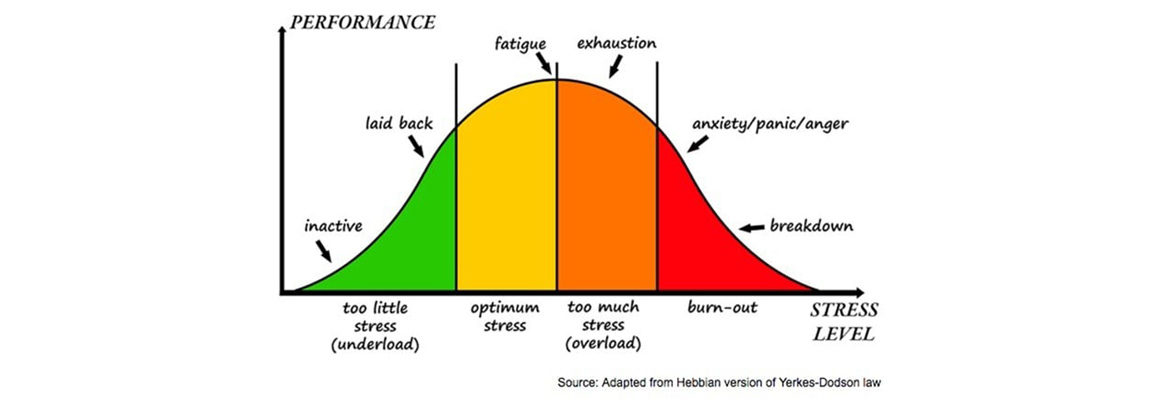
When it comes to workplace stress, and what to do about it, most people, most managers, will start to think about things in the workplace environment. Things that I would call ‘external factors’ like workload, overtime hours, the physical environment, etc. And these are all good considerations.

Yes, we should look at them. But very rarely is any attention paid to the ‘internal factors’. Those qualities, characteristics, or skills that reside inside each individual, and impact upon how much stress they will experience, regardless of the external environment. You see, in the same workplace, given the same conditions, different people will experience different levels of stress. Some people thrive on a challenge, work non stop and love doing it! Where as others seem to fall apart at the same challenges. There are individual differences, but that’s not to say that they are necessarily fixed. The studies are indicating that although people may be born with different sensitivities, and have different experience in their upbringing, personal resilience can be learned, like any other skill.

Therefore, when people respond differently to a pressure-filled environment, like many workplaces are, that is due to a combination of things relevant to the individual.


Read more on workplace stress….


As we’ve talked about previously, in our article Workplace Stress we all fall somewhere on the mental health continuum, and that can change day to day, hour to hour, minute by minute even! So if we’re already feeling a bit stressed by other things going on in life, chances are we’re going to have a bigger reaction to each new challenge put forward.

Don't forget to subscribe to our monthly eMag - WorkLife

Expert insights and tips on how to build resilient and mentally healthy workplace cultures delivered straight to your inbox each month.

Think of the analogy to the camel carrying straws on it’s back. We can carry only so much weight before we start to feel a bit strained by it all, and our knees start to shake.

But if we’re the camel, we can also build our muscles so that we become stronger, and able to carry more weight with ease. And that is ‘personal resilience’ or ‘emotional fitness’. If we do certain things to build our emotional stamina, when life (or work) does throw that extra challenge your way, you’ll be much more able to handle it in your stride.

We recently released our on line short course called ‘Creating Personal Resilience‘, which introduces people to some of those techniques that can be used to minimise stress and build emotional stamina or resilience. It’s designed with workplaces in mind, but really, the strategies are tools that can be used in any area of life – after all, we’re still human wherever we are, right?

Building your own personal resilience, focussing on those internal factors, is particularly helpful for those people who might not be in a position to change their work environment. Similarly for managers, if you can’t make changes to the workplace itself, why not think about helping your team members to develop their emotional fitness to better handle the challenges.

Author: Peter Diaz
Peter Diaz profile

Peter Diaz is the CEO of Workplace Mental Health Institute. He’s an author and accredited mental health social worker with senior management experience. Having recovered from his own experience of bipolar depression, Peter is passionate about assisting organisations to address workplace mental health issues in a compassionate yet results-focussed way. He’s also a Dad, Husband, Trekkie and Thinker.

Connect with Peter Diaz on:
Facebook-logo Podcast Icon LinkedIN-logo

stressed-anxious-worried

Workplace Stress – what are we really talking about here?

‘Workplace Stress’ is a term I am hearing people use more and more lately. And I like it. It highlights the fact that anybody can experience stress or distress in the workplace.

You see, the Workplace Mental Health Institute specialises in the field of workplace mental health, and when we think about mental health, we think about mental health at every stage of the continuum. Let me explain:

‘Mental Health’ doesn’t just refer to people who are severely distressed, who have perhaps have been diagnosed with a serious mental disorder, or are having an acute mental health emergency.

‘Mental Health’ also refers to people who may be feeling a bit down, a bit anxious about something happening in their life, or just going through a rough patch. We would also describe that as someone experiencing some mental health problems at the moment.

But not only that, mental health can also be used at the other end of the scale (in fact ‘health’ is usually considered a good thing right!!!). So, looking after your ‘mental health’, can mean the person who is coping really well with life, happy, fulfilled, and waking up every morning feeling positive about work and life in general.

Don't forget to subscribe to our monthly eMag - WorkLife

Expert insights and tips on how to build resilient and mentally healthy workplace cultures delivered straight to your inbox each month.

You see, when we think about it this way, mental health is relevant to everyone. We all sit somewhere along that scale all the time. We move up and down that scale too – it’s not fixed.

I think sometimes when we talk about ‘mental health at work’, people tend to assume we’re talking about the severe end – when everything goes wrong, when someone is suicidal, or has an episode at work. And that if that is not happening, then everything is OK.

But that’s not it. Not at all. There are plenty of people who may not yet be suffering enough for it to show up as a crisis, but have no doubts, it is still impacting on them personally, on their productivity, on their relationships with team mates and their manager. This ‘workplace stress’ needs to be addressed, and it needs to be addressed quickly – before it escalates into something much more serious. In my next article, I’ll look at some of the different approaches to dealing with it.

But for now, remember ‘workplace mental health’ is a constant. It always exists, its just a matter of where along that continuum it is right now, for any one person, or for the whole group. And depending where it is on that continuum, there are different mental health activities which need to be happening (more on that soon too).

Author: Emi Golding
Emi-Golding-blog-imageEmmaline (Emi) Golding is a registered psychologist and Director of Psychology for the Workplace Mental Health Institute. With experience both at the frontline and in Senior Management positions within mental health services, Emi is passionate about educating and expanding people’s knowledge of mental health issues, particularly within workplaces. For her own well being, Emi loves to dance and spend time with friends. She also enjoys learning languages and travelling to new and exciting places around the world.

Connect with Emi Golding on
Emi Golding on Face Book Emi Golding on LinkedIn Instagram-logo

Ten-Essential-Elements

How is your workplace’s Mental Wealth?

Back in 2014 I coined the new term ‘Mental Wealth’. Workplace Mental Wealth describes the business potential of an organisation, as a direct result of how well it fosters the mental health of its people. But what is it exactly?

It’s a measure of your organisation’s ability to create, collaborate, problem solve and take initiative. It’s a measure of your team’s resilience and ability to keep going when things are tough and uncertain. These ‘soft’ factors are more important these days than ever. It’s the passion, creativity and collaborative efforts of an organisation’s people that creates wealth for shareholders.

Mentally wealthy workplaces display the following characteristics:

  • People are focused, creative and highly productive, and free of debilitating chronic stress and anxiety
  • The dynamic between people in an organisation is one of respect and inclusion, where people feel free to voice opinions and contribute ideas, for which they are valued as an employee and as a person
  • Leaders truly recognise the value of people, encourage diversity in values and styles, and actively curtail behaviours that diminish or demean others
  • There is a positive organisational climate, absent of bullying & harassment, mental injury, stress claims and mental health crises

Read more on workplace mental health and wellbeing….


Don't forget to subscribe to our monthly eMag - WorkLife

Expert insights and tips on how to build resilient and mentally healthy workplace cultures delivered straight to your inbox each month.

How does your organisation measure up?

If you are interested in developing your management team so they can create a mentally wealthy workplace, then the Leaders Masterclass will help. Contact the office for more information at admin@wmhi.com.au

Author: Peter Diaz
Peter Diaz profile

Peter Diaz is the CEO of Workplace Mental Health Institute. He’s an author and accredited mental health social worker with senior management experience. Having recovered from his own experience of bipolar depression, Peter is passionate about assisting organisations to address workplace mental health issues in a compassionate yet results-focussed way. He’s also a Dad, Husband, Trekkie and Thinker.

Connect with Peter Diaz on:
Facebook-logo Podcast Icon LinkedIN-logo

Why-do-so-many-workplace

Why do so many workplaces fail at mental health?

There seems to be this idea floating about in the business world that in order to be profitable and productive, one needs to be hard and tough. Yet another contradictory idea seems to be that mental health is fluffy, soft, weak. Many people’s idea of good mental health is extreme. One where people have full love, consensus and agreement for all. Like everyone holding hands and singing Kumbayah. Nothing could be further from what’s required to promote and maintain a workplace’s mental wealth. Maybe that’s why so many organisations and leaders do so poorly at mental health. Either they adopt the “toughen up! take a spoonful of cement” approach, or they go too far the other way, with a “touchy, feely, anything goes” approach.

Meanwhile, 1 in 5 Australians suffer from a mental disorder and countless others detest going to work. (The stats are similar in other developed nations by the way). How has it become such a pervasive problem in our organisations and why isn’t more being done about it? To understand why, we need to look at the dynamics between the players in our organisations and ask ourselves what might be stopping them from taking action.


Read more on workplace mental health and wellbeing….


Don't forget to subscribe to our monthly eMag - WorkLife

Expert insights and tips on how to build resilient and mentally healthy workplace cultures delivered straight to your inbox each month.

The prevailing management style through much of the last couple of centuries has been to keep a professional distance from staff members. The manager’s job was to set the direction and manage the performance of the employee, and the employee’s job was to reliably perform their tasks to the best of their ability. It’s a similar relationship to that between a machine and it’s operator, which is not surprising, given much of the early work was done by men on assembly lines in factories. Employees were cogs in a machine, so to speak, and much of the management and HR thinking was (and still is) centred around ensuring enough employees are available to maintain production, and that they perform reliably and at maximum efficiency. It would be ridiculous for an operator to ask his machine, ‘Are you ok?’. Similarly, many managers today feel that asking an employee about their mental state is not appropriate – it’s too personal, or taboo, or simply ‘not my job’.

The reality is that the prevailing management paradigm is fundamentally not equipped to deal with mental health issues. And that’s the main reason so many workplaces fail. A new paradigm is needed, for a new world of work.

Author: Peter Diaz
Peter Diaz profile

Peter Diaz is the CEO of Workplace Mental Health Institute. He’s an author and accredited mental health social worker with senior management experience. Having recovered from his own experience of bipolar depression, Peter is passionate about assisting organisations to address workplace mental health issues in a compassionate yet results-focussed way. He’s also a Dad, Husband, Trekkie and Thinker.

Connect with Peter Diaz on:
Facebook-logo Podcast Icon LinkedIN-logo

women-with-mental-health-problem

Why 65% of people won’t get help if they have a mental problem

The reasons as to why people do anything, are many and complex. The research shows that around 65% of people won’t even seek treatment if they experience mental distress. The World Health Organization (WHO) says that stigma, discrimination and neglect prevent care and treatment from reaching people with mental disorders. What about the many people in workplaces that don’t have a full blown mental disorder but are at risk? Here we look at three major reasons people have identified as to why they won’t ask for help.

It’s just stress. The most common mental disorders (anxiety and depression) tend to be insidious, in that they gradually worsen over time. Many sufferers don’t even realise they have a mental health issue, until it’s been months or even years since they’ve felt happy. It’s convenient for a sufferer to dismiss their situation as temporary or ‘just stress’. But there is a difference between ‘stress’ and something more serious.

Just suck it up. People tend to compare themselves with others, and if everyone else seems fine, then they don’t want to be the exception, or the ‘weak one’. People will compare themselves to their parents who ‘did it tough and never complained’. (The truth is that it’s likely they faced the same issues and felt the same way, it’s just that the conditions were less understood and there weren’t the resources widely available to assist.) It’s also very easy to feel inadequate when you’re seeing all your friends on social media, having a great time and appearing successful, when the reality is, that while few people share their fears and failures for all to see, they most certainly have them. When everyone around you seems to be coping and thriving, the act of admitting you need help and seeking it out can feel like you’ve failed somehow. And a lot of people would rather endure the symptoms than admit they need help.


Read more on workplace mental health and wellbeing….


Don't forget to subscribe to our monthly eMag - WorkLife

Expert insights and tips on how to build resilient and mentally healthy workplace cultures delivered straight to your inbox each month.

Career suicide. Numerous surveys from Australia, the UK, US and Canada have shown that people with a mental health problems are unlikely to disclose it to their employer for fear of being treated less favourably. Even employment lawyers have been quoted advising employees to think twice before disclosing. Many employees believe that, if they disclose, they’ll be passed over for project and promotion opportunities, or that their ‘internal brand’ will be tarnished, or that the organisation will take steps to exit them.

As you can see, these are real concerns people have. There’s a need for management to take the lead and address these concerns lest them become part of the culture.

If you’d like Workplace Mental Health Institute to run the Suicide Prevention Skills course in your workplace, please Call us on (02) 8073 7686 or take the comprehensive self paced online course.

Author: Peter Diaz
Peter Diaz profile

Peter Diaz is the CEO of Workplace Mental Health Institute. He’s an author and accredited mental health social worker with senior management experience. Having recovered from his own experience of bipolar depression, Peter is passionate about assisting organisations to address workplace mental health issues in a compassionate yet results-focussed way. He’s also a Dad, Husband, Trekkie and Thinker.

Connect with Peter Diaz on:
Facebook-logo Podcast Icon LinkedIN-logo

Pillar-4-Total-Integration

Building a Mentally Healthy Workplace: 4th Pillar

What do mentally wealthy organisations differently to others? Good question, right?

What Mentally wealthy organisations do is they see resilience and wellbeing as an integral part of their culture, in the extraordinary cases – it IS their culture. It’s not just an add on.

Think back to your time in organisations over the past maybe 10 to 20 years or so.  How many ‘strategic initiatives’ can you recall?  I can think of a stack of them: Total Quality Management, Six Sigma, Employee Onboarding, Activity Based Costing, Management by Objectives, Triple Bottom Line Accounting…  And quite a few more.  How many of these really stuck and became part of the fabric of the organisation?  How many are you actively practicing today?

Probably not many, right?

And this is the problem with bolt on initiatives.  The Board or the leadership team will get hold of an idea from somewhere and decide it will be the next silver bullet that’s going to give them a strategic advantage over competitors and transform the industry landscape.  Project teams are established, consultants are hired, strategic plans are announced, budgets are approved and work begins.  But before long the project team encounters the headwinds of organisational inertia.  When push comes to shove, for example when a leader’s bonus rides on hitting a sales target, they will prioritise business as usual over supporting the project team.  With bolt on initiatives, what looks like commitment is actually in-principle support, as long as it doesn’t get in the way of ‘the important stuff’.


Read the other Pillars of Mentally Healthy Workplace….


Don't forget to subscribe to our monthly eMag - WorkLife

Expert insights and tips on how to build resilient and mentally healthy workplace cultures delivered straight to your inbox each month.

There is a ROI of 2.3 on average direct correlation between the mental health of your employees and your organisation’s financial performance.  It is no-brainer.  Therefore it is too important to chance employee mental health to the success of your ‘Wellness Program’ or ‘RUOK Awareness Day’.  Mental health built into everything you do cannot be an add-on to what you do. It needs to be in built into everything you do. It needs to be part of the how you think or how you talk in your organization. It needs to permeate your policies. It needs to permeate how you move the organization.

You can cut logs and carry them to the nearest town and then put them on a truck. Or, you can chug the logs onto the river and let the flow take it to the nearest town. Which one is easier? Don’t make your employee mental health initiative a bolt on that you have to expend additional energy to execute.  Make it flow by incorporating it into the way your leaders lead.

It can’t be like, “Oh, did we talk about mental health this quarter? We need to put something in the Board report.” No, it happens as a matter of course.  It’s what we do. It’s not a bolt-on, it’s totally integrated.

That’s it for now. I hope you’ve enjoyed this Pillar.

Talk soon and have a mentally healthy day.

Author: Peter Diaz
Peter-Diaz-AuthorPeter Diaz is the CEO of Workplace Mental Health Institute. He’s an author and accredited mental health social worker with senior management experience. Having recovered from his own experience of bipolar depression, Peter is passionate about assisting organisations to address workplace mental health issues in a compassionate yet results-focussed way. He’s also a Dad, Husband, Trekkie and Thinker.

Connect with Peter Diaz on:
Peter Diaz on Google Plus Peter Diaz on Face Book Peter Diaz on LinkedIn Twitter-logo